


A replacement 400W metal halide bulb must match the fixture and ballast, not just the wattage printed on the old lamp. Check the ANSI lamp code, starting system, base, bulb dimensions, permitted operating position, and enclosure requirements before buying. If the fixture label is missing or unreadable, have a qualified lighting electrician identify it.
For a correctly matched M59 system, the Sunlite 03663-SU is a specific conventional metal halide lamp to compare. It is not a universal replacement for every 400W HID fixture, a household screw-in bulb, or a ballast-free LED retrofit.
A specific 400W replacement to consider
Sunlite 03663-SU MH400/U/MOG: for a verified M59 application
Sunlite’s manufacturer specification sheet identifies this clear ED37 lamp as 400 watts, ANSI M59, with an E39 mogul screw base. It lists 36,000 lumens, 4000K color temperature, and a 12,000-hour average rated life. Those are manufacturer ratings, not measured results from a hands-on test.
The lamp is approximately 4.72 inches wide and 10.9 inches tall. Check physical clearance inside the actual fixture, including its lens and reflector; a matching screw base does not mean the bulb will fit. The linked Amazon variation is selected as the 400-watt, one-pack version.
Consider it when: the fixture’s approved lamp specification and ballast code match this model, there is sufficient clearance, and the lamp’s packaging instructions confirm the intended operating position and enclosure.
Skip it when: the system calls for another ANSI code, pulse-start hardware, a different bulb envelope, or an open-rated lamp. Do not infer open-fixture approval from “universal” wording or from the fact that a bulb screws into the socket.
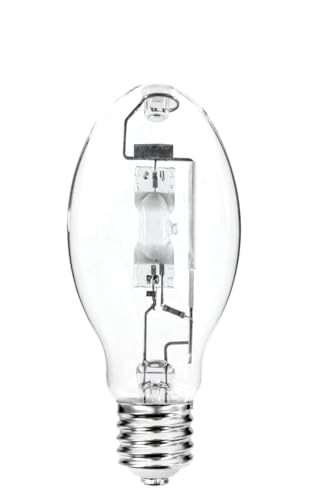
Sunlite 03663 MH400/U/MOG M59 Metal Halide Lamp, 400 Watts, Mogul Base (E39), ED37, 12,000 Hour Life Span, 36000 Lumen, Clear Finish, 4000K
As an Amazon Associate we earn from qualifying purchases.
The compatibility checklist
1. Match the ANSI lamp and ballast code
M59 identifies a common 400W probe-start metal halide lamp system. Other 400W systems use different codes and starting arrangements. A listing that says only “400W metal halide” leaves an important compatibility question unanswered.
Record the complete markings from the fixture label and old lamp. An electrician may need to inspect the ballast label safely. Compare those details with the proposed replacement’s documentation. Do not substitute a high-pressure-sodium or mercury-vapor lamp simply because its wattage and base look similar.
2. Separate base size from bulb shape
E39 refers to a mogul screw base. ED37 describes the glass envelope’s shape and size category. Neither is an electrical compatibility approval. A replacement needs the right base and envelope as well as a matching lamp-ballast system.
Confirm the maximum overall length and diameter. Shorter envelopes and large ED37 lamps may appear in the same shopping results, and a reflector designed around one lamp geometry may not deliver the same light distribution with another.
3. Verify enclosure and operating-position requirements
Some metal halide lamps require a fully enclosed fixture; some specifically approved protected designs permit other uses. Lamp designations and restrictions matter independently of wattage. “Universal” usually concerns allowed burning orientation, not permission to use the lamp in any fixture.
For example, Satco’s S5833 technical page separately lists probe-start operation, universal position, and an enclosed-fixture rating. This illustrates the separate checks; it does not establish interchangeability with your fixture. Follow the documentation for the exact bulb you buy.
4. Confirm the starting technology
Probe-start and pulse-start systems are not a shopping preference you can change by replacing the lamp alone. Pulse-start systems can use an ignitor and require compatible components. LEDVANCE’s application guidance specifies matching pulse-start ballasts and appropriate sockets for the lamps it covers.
If the old bulb’s printing is worn off, do not identify the system by glass shape alone. An unreadable label is a reason to obtain a positive identification before energizing a replacement.
Why lumens and rated life need context
A 36,000-lumen lamp rating does not mean 36,000 lumens reach the floor or work surface. The reflector, lens, dirt, mounting height, lamp age, and room layout all affect useful illumination. Use photometric information or a lighting assessment when replacing a group of fixtures or addressing poor visibility.
Likewise, average rated lamp life is not a replacement deadline or a guarantee. A lamp can lose useful output before it fails, and the fixture’s maintenance requirements may call for earlier replacement. Record the installation date and follow the lamp manufacturer’s replacement and operating instructions.
Color temperature describes the appearance of the light. It does not measure brightness, and a whiter-looking lamp does not automatically provide better task visibility. Consider glare and color rendering alongside output if the space is used for detailed work.
Metal halide versus an LED conversion
If the existing fixture is sound and an exact replacement lamp is approved, a like-for-like lamp change may be straightforward. If the ballast is failing, access equipment is expensive, or the lights operate for long periods, compare the total cost of an appropriate LED retrofit or replacement fixture.
There are different retrofit arrangements. Some LEDs require a compatible ballast; others require the ballast to be bypassed. Satco’s Type B HID-replacement example explicitly specifies ballast-bypass operation. A “400W equivalent” claim does not tell you which wiring arrangement a product needs.
Have a qualified electrician check retrofit approval, supply voltage, socket condition, weight support, enclosure temperature, surge protection, and any emergency-lighting functions. Ballast bypass is electrical work, not an instruction to screw a different lamp into an unchanged fixture. For a fair cost comparison, use complete system power and installed labor cost, not the lamp’s wattage alone.
Safe handling and a damaged outer bulb
Turn off and safely isolate the fixture before inspection or replacement, allow it to cool, and use appropriate access equipment. Do not troubleshoot energized ballast wiring or reach into a damaged socket. Elevated commercial fixtures and unfamiliar HID equipment are jobs for qualified personnel.
The FDA warns that a broken outer bulb can expose people to harmful ultraviolet radiation while the inner arc tube continues operating. If that happens, switch the light off immediately and move people away. Do not keep using it because it still produces visible light. Seek medical advice for eye irritation or skin-burn symptoms after exposure.
Inspect the protective fixture lens too. A wire guard alone does not provide the same shielding as an appropriate complete enclosure. Have damaged fixtures assessed before returning them to service.
Frequently asked questions
Can I run a 400W metal halide bulb without a ballast?
No. A conventional metal halide lamp needs the correct operating gear. A voltage value in a retail specification is not permission to connect the lamp directly to household power.
Why does it take time to come back on?
Metal halide systems require warm-up and may need a cooling period before a hot lamp restrikes. The timing depends on the lamp and ballast. Repeated cycling, abnormal delays, or unreliable starting should be investigated rather than dismissed as normal warm-up.
Can I put the old bulb in ordinary recycling?
Use an appropriate mercury-containing-lamp collection or recycling route. The EPA includes metal halide lamps in its mercury-bulb guidance. Keep the lamp intact, protect it during transport, and check local requirements; business disposal rules may differ from household arrangements.
Bottom line
Buy a 400W metal halide bulb only after confirming the entire lamp specification. The Sunlite 03663-SU is a documented M59 candidate, but the fixture and ballast decide whether it is appropriate. When the equipment identity or protective enclosure is uncertain, resolve that before ordering or switching anything on.
Image note: Examples from the product category; pictured models and variants may differ from the options discussed.


