
If your Jazzmaster sounds too dark, too hot, too thin, or simply not like the wide, airy offset sound you expected, changing the pickups can make a bigger difference than almost any other electronics upgrade. The best choice depends on whether you want authentic vintage Jazzmaster sparkle, more output for indie and alternative rock, or a thicker P-90-like response.
This guide focuses on four established Jazzmaster pickup options that are easy to compare and widely discussed by players. Rather than listing dozens of loosely related guitar parts, we have narrowed the recommendations to actual Jazzmaster replacement pickups.
Best Jazzmaster pickups: quick comparison
| Pickup | Best for | General character |
|---|---|---|
| Fender Pure Vintage ’65 | Best overall vintage-style set | Bright, clear, traditional Jazzmaster |
| Seymour Duncan Antiquity II — bridge pickup | Best premium vintage tone | Glassy, crisp, detailed ’60s voice |
| Seymour Duncan SJM-1 Vintage — neck pickup | Best classic Duncan option | Vintage output with strong clarity |
| Seymour Duncan SJM-2 Hot | Best middle ground | More output without going full Quarter Pound |
1. Fender Pure Vintage ’65 Jazzmaster Pickup Set — best overall
For players who simply want their guitar to sound more like a traditional Jazzmaster, the Fender Pure Vintage ’65 set is the easiest place to start. Fender uses Alnico 5 magnets, enamel-coated wire, cloth leads and vintage-style fiber bobbins. Both pickups are rated at 6.8kΩ DC resistance.
The result is the familiar bright, open Jazzmaster sound: plenty of top-end definition, a clear neck position and the kind of edge that works well for surf, indie, clean alternative tones and effects-heavy playing.
Choose this set if: you want a straightforward vintage-style upgrade without moving into boutique pricing.

Fender Pure Vintage ’65 Jazzmaster — Neck and Bridge Pickup Set
As an Amazon Associate we earn from qualifying purchases.
2. Seymour Duncan Antiquity II Jazzmaster bridge — premium vintage option
The Antiquity II is aimed at players chasing a brighter mid-’60s Jazzmaster voice. Seymour Duncan uses Alnico 5 rod magnets and a vintage-inspired coil wind, with the bridge and neck voiced for a glassy, crisp response.
Compared with hotter replacement pickups, the appeal here is dynamics and frequency range rather than brute output. Chords stay separated and articulate, while the bridge retains the snap and bite many players expect from a traditional Jazzmaster.
Choose this if: you want a vintage-voiced replacement for the bridge position. The linked ASIN is one bridge pickup, not a neck-and-bridge set. Seymour Duncan offers separate neck and bridge versions, so compare the cost of both pickups if you are replacing the full set.

3. Seymour Duncan SJM-1 Vintage Jazzmaster neck — classic Duncan option
The SJM-1 Vintage is Seymour Duncan’s more conventional vintage-output Jazzmaster replacement. It uses Alnico 5 rod magnets and is designed to retain the open top end and moderate output associated with older Jazzmaster pickups.
This is a strong choice if your stock pickups are too muddy or too P-90-like and you want to move back toward a cleaner, more recognizably Jazzmaster response without stepping up to the Antiquity line.
Choose this if: you want vintage-style clarity from a replacement neck pickup. The linked listing is one SJM-1 neck pickup; buy a separately specified bridge pickup if you need both positions.

4. Seymour Duncan SJM-2 Hot for Jazzmaster — best higher-output option
The SJM-2 Hot sits between traditional vintage-output replacements and the very muscular Quarter Pound. It is wound hotter than the SJM-1, which gives it more push and a fuller response while still fitting a standard Jazzmaster pickup route.
For players who use gain regularly but still want more of the Jazzmaster identity than the Quarter Pound provides, this is the most balanced choice in the Duncan range.
Choose this set if: vintage pickups feel underpowered but you do not want the strongest, thickest option. The linked SJM-2 listing is a black neck-and-bridge pickup set.

How to choose Jazzmaster pickups
Vintage clarity vs. higher output
If you mainly play clean, surf, jangly indie or effects-heavy music, start with the Fender Pure Vintage ’65, Duncan SJM-1 or Antiquity II. If you use a lot of distortion and want more midrange push, the SJM-2 or SJM-3 makes more sense.
Do not confuse a Jazzmaster pickup with a P-90
They may look similar from the outside, but a traditional Jazzmaster pickup has a different internal design and typically produces a wider, brighter response. Some Jazzmaster-style guitars ship with pickups that sound much closer to P-90s, which is one reason a replacement set can change the character of the instrument so dramatically.
Check whether you are buying a set or a single pickup
The Fender Pure Vintage ’65 and linked SJM-2 listings are two-pickup sets. The linked Antiquity II is bridge-only, and the SJM-1 is neck-only. Compare like-for-like quantities and confirm your position, cover color and included hardware before ordering.
Pickup covers are not always included
Some replacement pickups fit under your existing Jazzmaster covers rather than shipping with new ones. Check the listing contents so you know whether your current covers will be reused.
Pot values affect the result
Traditional Jazzmasters commonly use 1M controls, which preserve a lot of treble and presence. Lower-value pots can soften the top end. If a new pickup sounds much brighter or darker than expected, the rest of the wiring is worth checking before judging the pickup alone.
Which Jazzmaster pickup should you buy?
For most players seeking a recognizable vintage Jazzmaster sound, we would start with the Fender Pure Vintage ’65 set. It is straightforward, well documented and specifically designed around the classic Fender voice.
If you want a more premium vintage-style option, the Seymour Duncan Antiquity II is the stronger upgrade. For louder rock and fuzz-heavy styles, move toward the SJM-2 Hot. The SJM-1 sits between the vintage Fender/Antiquity choices and the hotter SJM-2.
Frequently asked questions
What are the best Jazzmaster pickups for clean tones?
Fender Pure Vintage ’65, Seymour Duncan Antiquity II and SJM-1 Vintage are the strongest fits in this guide because they emphasize clarity and traditional Jazzmaster character.
What are the best Jazzmaster pickups for shoegaze?
That depends on whether you want clarity through layers of pedals or more raw output. Antiquity II and Pure Vintage ’65 work well when you want definition, while the SJM-2 is better when you want to push fuzz and distortion harder.
Will these fit a Squier Jazzmaster?
Many full-size Squier Jazzmaster models use standard Jazzmaster-style routes, but not every model is identical. Check the pickup dimensions and your guitar’s routing before ordering, especially on signature or budget models that may use different pickup designs.
Are expensive Jazzmaster pickups worth it?
They can be if the rest of the guitar is already working well and you know what tonal change you want. If you are unsure, a well-priced vintage-style set such as the Fender Pure Vintage ’65 is usually a more sensible first upgrade than immediately buying the most expensive boutique option.
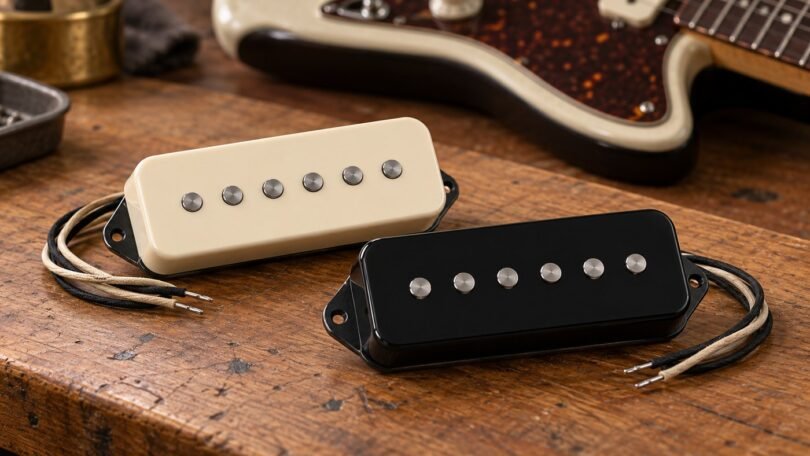
Image note: AI-generated editorial illustration of generic offset-guitar pickups; not a photograph of specific branded pickups.