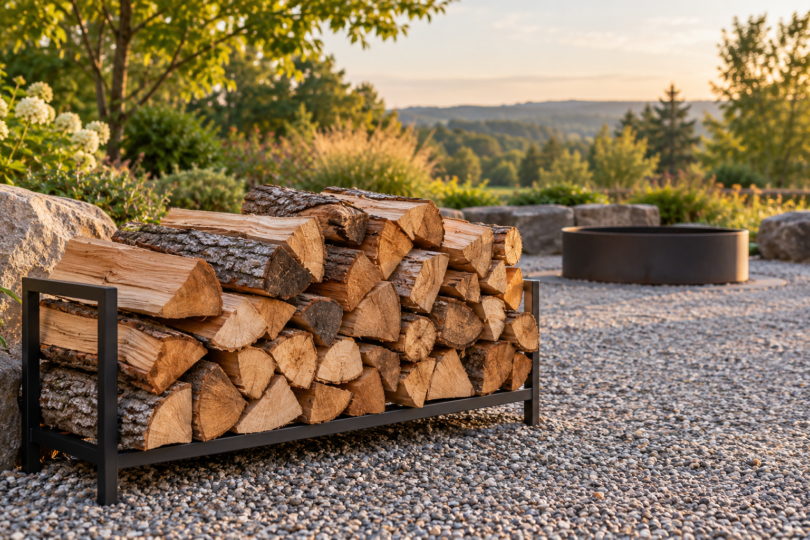

The best wood for a fire pit is dry, untreated fuel that fits your appliance. Compare Cutting Edge’s 16-inch oak logs with Smoak’s 12-inch hickory splits for conventional pits, or Solo Stove’s smaller Mini Oak pieces for a tabletop fire.
These picks compare manufacturer specifications and appliance instructions, without hands-on burn testing.
Firewood shortlist at a glance
| Product and selected pack | Useful starting point for | Main limitation |
|---|---|---|
| Cutting Edge Premium Oak Firewood, Box | A pit that accommodates 16-inch logs; approximately 50-pound box | Too long for small burn chambers; no fixed log count |
| Smoak 12 Inch Logs, Hickory, 45–50 lb size | Buyers who need shorter splits in a substantial box | Still much larger than tabletop fuel; weight is a range |
| Solo Stove Mini Oak Firewood, WD-OAK-COOK | Small wood-burning tabletop pits such as Mesa | Published piece-size ranges differ; check actual fit |
1. Cutting Edge Premium Oak Firewood Box: for 16-inch log capacity
This is the straightforward choice here when your pit has room for conventional splits. The maker specifies kiln-dried oak, 16-inch logs and a box measuring 16 × 14 × 17 inches, weighing approximately 50 pounds. Select Box, SKU V623; the larger rack is a different purchase.
Why choose it: The declared log length and box weight make it easier to compare with your storage space and appliance opening. The box also includes some kindling, matches and fire starters.
Tradeoff: The product page does not give a guaranteed piece count or numerical moisture percentage. Box dimensions are packaging dimensions, not a stated solid-wood volume. Do not force a 16-inch log into a smaller pit or assume the included starters suit every appliance.
View the Cutting Edge Premium Oak Firewood Box and specifications.
2. Smoak 12 Inch Logs in Hickory: for shorter splits
Choose Hickory and the 45–50 lbs size on Smoak’s 12 Inch Logs page. The manufacturer describes kiln-dried hardwood splits that are 12 inches long and average 3–4 inches wide. Its listed package dimensions are 17 × 13 × 13 inches, and each box includes kindling and a natural firestarter.
Why choose it: Choose a specified species and shorter splits when 16-inch logs are awkward to arrange.
Tradeoff: These are substantial logs, not small tabletop sticks. The selected size is a weight range, even though the product details also show a 50-pound weight after selection. No fixed piece count or numerical moisture level is promised on this page. Confirm the chosen species and pack before checkout.
View Smoak’s 12 Inch Logs and select Hickory, 45–50 lbs.
3. Solo Stove Mini Oak Firewood: for small tabletop fires
Solo’s WD-OAK-COOK is kiln-dried oak sold as approximately 1,296 cubic inches, with variable weight. It is a useful starting point for Mesa owners seeking small splits instead of full-size logs.
Why choose it: The maker identifies Mini Oak as fuel for Mesa, and the Mesa instruction sheet specifically lists it among the accessories.
Tradeoff: Solo’s dimensions section lists 4–5-inch lengths and 1–1.5-inch widths, while its FAQ gives 4.5–5.5 inches by 1–2 inches. Treat those as variable pieces, not a guaranteed precise cut. Check the supplied pieces against your model’s burn chamber. The Mesa instructions require wood to remain below the interior vent holes, with the holes visible; never pile oversized pieces above them.
View Solo Stove Mini Oak Firewood. Check the official Mesa instructions for setup and use.
What to check before buying firewood
Start with the appliance manual. Confirm allowed fuel, log clearance, loading height, surface and placement requirements for your exact model. For example, Solo Stove’s Fire Pit 2.0 instructions call for standard firewood, recommend dried split hardwoods and warn against covering the upper vents. That does not establish compatibility with every pit or make loose pellets interchangeable with logs. See the manufacturer’s model-specific manuals.
Check dryness and storage. “Kiln-dried” describes processing; it is not a measurement of the wood after delivery or damp storage. EPA’s archived Burn Wise guidance recommends moisture below 20 percent. Test before use, keep wood off the ground and protect the top while allowing airflow. None of these three product pages establishes a precise moisture reading for your delivered box.
Keep the fuel clean. Avoid painted, coated or pressure-treated wood, plywood, particleboard, glued/composite scraps and household waste. Never use gasoline, alcohol or lighter fluid to start or revive these wood fires. Outdoor fire pits must stay outdoors; a garage or enclosed porch is not a suitable substitute. Follow the appliance’s full instructions and keep the fire attended.
Check the destination. Before ordering, check local burn restrictions, air-quality alerts and campground firewood rules. Buying locally helps limit movement of invasive pests. A seller’s kiln-dried description does not, by itself, establish permission to transport wood across every boundary. EPA’s archived recreational-fire guidance also directs readers to local authorities.
Which one should you choose?
Choose Cutting Edge for 16-inch log capacity, Smoak for shorter hickory splits, or Mini Oak for a tabletop chamber after checking piece size. For frequent large fires, compare packaged wood with a local supplier by usable quantity, dryness and delivered cost.
Frequently asked questions
What is the best wood for an outdoor fire pit?
Start with dry, untreated wood permitted by your appliance manual. This shortlist compares two conventional hardwood log boxes and a mini oak pack; the right choice depends on log fit, storage space and the amount you need.
Does kiln-dried firewood mean a smoke-free fire?
No. Kiln drying is a processing method, not a guarantee of zero smoke or a particular moisture reading after storage. Check dryness, maintain the airflow required by your pit and avoid overfilling it.
Can I use the same logs in a tabletop fire pit?
Only if they fit within that model’s fuel and loading limits. The 12-inch and 16-inch logs here are much larger than Mini Oak pieces. Mesa’s instructions require wood to sit below its interior vent holes with the holes visible.
Can I burn scrap lumber or decorative logs?
Do not use treated, painted, coated, glued or composite wood. A decorative-log listing alone does not establish that the wood is suitable fuel. Buy wood explicitly sold for burning and follow your appliance instructions.
How many fires will one box provide?
There is no reliable fixed number from the pack specifications alone. Pit size, loading, weather and session length change consumption. Compare the stated weight or volume, and avoid treating a box’s outside dimensions as solid-wood volume.