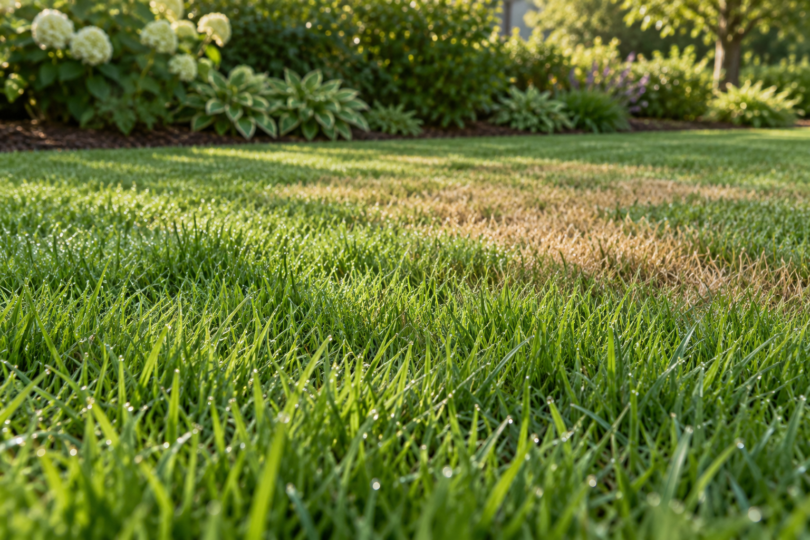

The best fungus control for lawns depends on the disease, your grass and how you want to apply it. For a U.S. home lawn with a confirmed, label-listed disease, our two picks are Scotts DiseaseEx in the 10 lb. bag for spreader application and BioAdvanced Fungus Control for Lawns in the 32 fl. oz. Ready-to-Spray bottle for a garden-hose application. Dollar spot is an important difference: BioAdvanced lists it; DiseaseEx does not.
These recommendations compare the products’ labels, package sizes and application formats. They are buying recommendations, with no claim of hands-on testing or a measured performance ranking.
Best lawn fungus-control products at a glance
| Product and package | Best fit | What to check before buying |
|---|---|---|
| Scotts DiseaseEx Lawn Fungicide, 10 lb. single bag | A homeowner who wants to apply granules with a spreader | Contains 0.31% azoxystrobin. The disease must appear on the label; dollar spot is not listed. |
| BioAdvanced Fungus Control for Lawns, 32 fl. oz. Ready-to-Spray | A homeowner who prefers a hose-end bottle, including for label-listed dollar spot | Contains 2.42% propiconazole. Do not apply above 85°F or to a lawn stressed by heat or drought. |
Before choosing either product, identify the problem. Brown grass can have overlapping causes, including environmental stress, pests and disease. University of Maryland Extension’s lawn-disease guide explains why grass type and growing conditions matter. If you cannot identify the disease, ask your local Extension service before purchasing a fungicide.
1. Scotts DiseaseEx: best for spreader application
Choose Scotts DiseaseEx Lawn Fungicide if you already have a suitable granular spreader and the label matches your lawn problem. Its listed targets include brown patch, red thread and powdery mildew. This is a 10 lb. bag of fungicide containing 0.31% azoxystrobin.
The bag’s “up to 5,000 sq. ft.” coverage applies at its preventative rate. Its labeled curative rate uses twice as much product per unit of lawn area, so a 10 lb. bag covers 2,500 sq. ft. at that rate. Compare the quantity needed for your intended label use, and use the container’s spreader instructions rather than treating a dial setting as universal.
The main reason to choose something else is a disease mismatch: dollar spot is absent from DiseaseEx’s disease list. The product is labeled for home lawns, and its directions require uniform coverage and impose an annual application limit. Its bag label permits people and pets to reenter after application; follow the directions on your specific container. Read the manufacturer-linked label and the label on the bag before use.
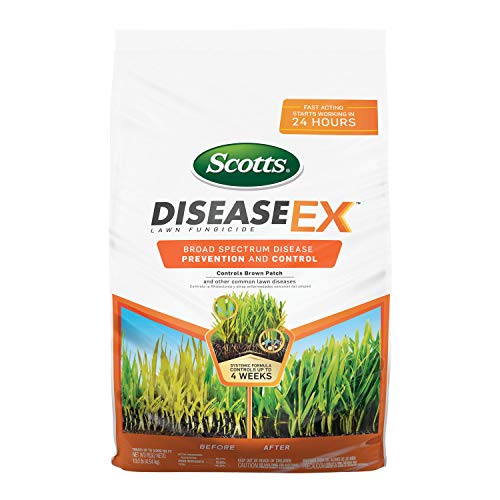
Scotts DiseaseEx Lawn Fungicide, 10 lb. single bag
As an Amazon Associate we earn from qualifying purchases.
2. BioAdvanced: best for a hose-end application
Choose BioAdvanced Fungus Control for Lawns if a garden-hose applicator suits your yard and its disease list matches the diagnosis. The selected 32 fl. oz. Ready-to-Spray bottle is model 701270A and contains 2.42% propiconazole. Its label includes dollar spot, brown patch, red thread and rust. Attach the supplied applicator to a garden hose and follow its directions; do not transfer directions from the brand’s granular product or a different concentrate.
One bottle treats up to 5,000 sq. ft., but that figure does not cover every use. The manufacturer label supplied with this listing specifies 2,500 sq. ft. per bottle for Bermuda grass decline, Fusarium blight and summer patch. Measure your lawn and check the disease-specific directions when comparing bottle quantities.
This spray has an important weather restriction: do not use it when temperatures exceed 85°F or while the lawn is stressed by heat or drought. It is for outdoor residential lawns, not edible fruits or vegetables. Keep adults, children and pets out until the spray has dried, and do not apply where spray or drift would contact them. The label also prohibits application near lakes, streams, rivers and ponds.

How to choose the right lawn fungicide
Match the label to the diagnosis and site. A lawn fungicide is not automatically suitable for every disease or every plant. Check the complete container label for the intended lawn use, disease and any grass-specific directions, then check local restrictions before buying. A product labeled for ornamental flowers, household mold or insects is not a substitute simply because its name mentions fungus or lawn care.
Compare cost per labeled treatment. Divide the current package price by the area it covers for your specific disease and intended use. Factor in the equipment you need, how far your hose reaches, and any label-permitted repeat applications. A larger coverage number on the front of a bag or bottle does not establish the lower total treatment cost.
Fix conditions that encourage disease. Avoid frequent or late-day watering, mow at the recommended height for your grass, and address drainage or compaction problems. Fertilizing more is not a universal remedy: too little nitrogen can favor some diseases, while too much can favor others. Many lawn infections cause temporary discoloration and do not require fungicide.
Keep treatment on the intended area. Both labels warn about harm to aquatic organisms. Prevent drift or runoff into water and drainage systems, and follow the container’s application, storage and disposal instructions. Neither product should be described as harmless to pets or children.
Frequently asked questions
What is the best fungus control for lawns?
For the two products compared here, DiseaseEx is our spreader-format pick and BioAdvanced Ready-to-Spray is our hose-end pick. Choose only after confirming that the label covers the disease and intended lawn use. A recommendation based on application format does not establish which product will work best on an undiagnosed brown patch.
Will Scotts DiseaseEx control dollar spot?
Dollar spot is not on the DiseaseEx label reviewed here, so we would not choose it for that purpose. BioAdvanced Fungus Control for Lawns Ready-to-Spray does list dollar spot; its weather, site and application restrictions still apply.
Does a 5,000-square-foot package always treat that much lawn?
No. DiseaseEx’s 10 lb. bag covers less area at its curative rate, and BioAdvanced’s bottle has lower coverage for certain listed diseases. Use the coverage for the exact treatment on your container label when deciding how many packages to buy.
Do mushrooms mean I should apply lawn fungicide?
Usually not. Many mushrooms grow from fungi that break down organic material without harming the grass. Maryland Extension advises that fungicide will not eliminate lawn mushrooms. Remove mushrooms if children or pets might eat them; never assume they are edible. Have associated turf damage assessed separately.
Can I spray BioAdvanced during hot weather?
Its Ready-to-Spray label says not to apply above 85°F, or during lawn stress from heat or drought. A cooler hour does not resolve ongoing drought stress. Wait for suitable conditions and follow the bottle’s complete directions.