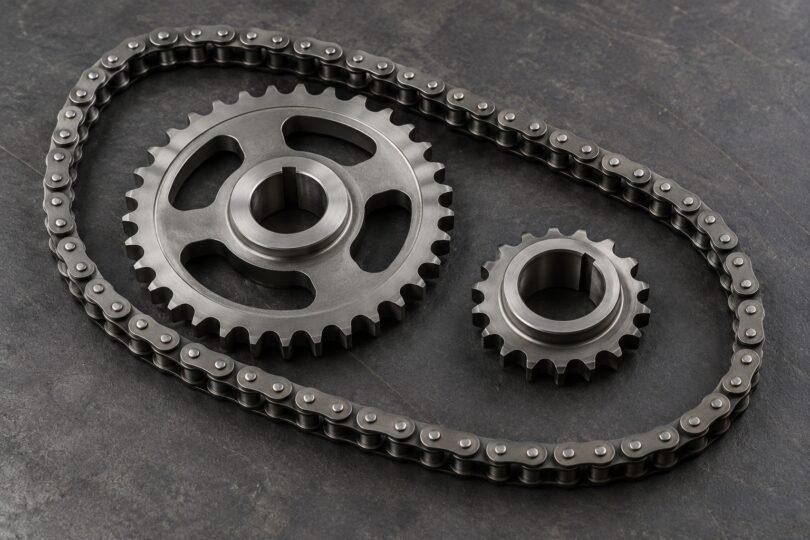

The right 5.3 LS timing chain kit starts with the engine code, camshaft attachment and variable valve timing configuration. For a stock repair, choose the catalog-listed replacement that preserves the engine’s original timing system. A kit advertised for a broad range of GM V8s can have the wrong cam gear, omit the phaser or leave out the tensioner your engine needs.
This guide focuses on identifying the correct configuration, understanding what is actually included and avoiding expensive mismatches. The part numbers below are comparison starting points, not a claim that one kit fits every 5.3-liter engine.
Identify your 5.3 before comparing kits
Write down the vehicle year, model, full VIN and engine RPO code. For an engine swap or remanufactured engine, obtain the donor or rebuilder’s specification as well. The vehicle VIN describes the original installation; it cannot prove which camshaft, crankshaft or timing set is currently inside a replacement engine.
- Gen III: LM7, L59, LM4 and L33 are early 5.3-liter engine codes. Their original camshafts use a three-bolt attachment and do not have VVT.
- Gen IV: Codes include LH6, LY5, LMG, LC9, LH8, LH9, LMF and LS4. Do not infer the cam gear or VVT configuration from this generation label alone.
- Gen V: Later 5.3-liter engines such as L83 and L84 require their own application lookup. A listing for an earlier LS timing kit is insufficient evidence of compatibility.
Melling’s LS/LT parts guide documents the camshaft attachment differences. Chevrolet identifies the L83 in its Gen V engine reference, and GM lists the L84 as a Gen V 5.3-liter V8. Displacement alone does not establish interchangeability.
Four fitment checks that matter most
1. Three-bolt versus single-bolt camshaft
Match the sprocket to the camshaft actually installed. Melling’s guide shows three-bolt Gen III 5.3 camshafts, while later applications commonly use a single bolt. The LH6 illustrates why blanket rules fail: its earlier and later versions have different attachments. An aftermarket camshaft can also change the answer, even when the block and vehicle remain the same.
2. Cam and crank signal patterns
The labels 24x and 58x describe crankshaft trigger patterns. Cam signals may be 1x or 4x, and their location matters. These numbers are not the timing sprockets’ chain-engaging tooth counts.
PSI’s crankshaft and camshaft identification chart lists the 2005–2006 LH6 in TrailBlazer and Envoy applications with a 24x crank, a 1x signal on the cam gear and three cam bolts. Its 2007–2009 entries change to 58x, 4x and one bolt. This is a useful example of why a physically similar gear can still be electrically incompatible. Preserve the required signal arrangement rather than shopping by bolt count alone.
3. VVT versus fixed cam timing
A VVT engine uses a camshaft phaser to change cam timing. The phaser and its oil-control hardware need their own checks. LC9 and LMG listings in particular should be verified by application and year rather than treated as one universal configuration.
Cloyes explains how phasers and solenoids work together. Buying a fixed sprocket because it looks simpler does not make it a suitable stock replacement for a VVT system. Keep the factory timing and cylinder-deactivation systems intact when specifying a normal repair.
4. Chain, crank sprocket and tensioning hardware
Check the crank sprocket, chain specification and damper or tensioner as a matched assembly. Melling’s chain identification chart lists its 3SRH60 as a 60-link roller chain with a 0.375-inch pitch. That is useful identification data, but a shared chain number does not make every kit using it interchangeable. The other components still determine the application.
Three kit configurations and their part-number differences
The following examples come from Melling’s earlier catalog and product announcements. Their original PDF addresses no longer resolve, so the listed contents are historical manufacturer specifications, not verified current packing lists. Use them to understand the differences, then obtain a current itemized specification before buying.
These Melling examples show why the letters at the end of a part number matter. Check the complete number in the official vehicle and part-number lookup, including any supersession, before ordering. Compare the current seller’s itemized contents with the manufacturer’s specification.
Melling 3-3SRH60SA: three-bolt replacement set
Melling’s stock-replacement catalog documents a three-piece set containing one 3SRH60 chain, one S878 camshaft sprocket and one S827 crankshaft sprocket. It lists this configuration for specified three-bolt applications, including early 5.3 engines.
Why consider it: It provides a straightforward chain-and-two-sprocket starting point when the catalog confirms the engine. What to check: The three-piece contents do not include a damper, tensioner, gaskets or repair hardware. Determine those requirements separately. Do not assume that a three-piece set completes the entire job.
Melling 3-3SRH60SB: replacement set with tensioner
Melling’s product announcement lists one 3SRH60 chain, one S894 camshaft sprocket, one S827 crankshaft sprocket and one BT5490 tensioner. Its published applications include selected later 5.3 engines, with detailed catalog verification required.
Why consider it: The tensioner is part of the documented package. What to check: It is a fixed-sprocket configuration, so confirm the non-VVT application, cam attachment and signal requirements. The similar-looking SA and SB part numbers describe different assemblies; choosing between them by price would overlook the essential fitment question.
Melling 3-3SRH60SDHVVT: package including a VVT actuator
The manufacturer’s announcement specifies one 3SRH60 chain, one S827 crankshaft sprocket, one BT5490 tensioner and one VCTA-1007H camshaft VVT actuator. This is an example to investigate when a compatible VVT engine needs the actuator included.
Why consider it: The phaser is explicitly listed in the contents. What to check: A separate VVT oil-control valve is not listed in that four-part bill of materials. Confirm its replacement requirements, the required fasteners and the exact application. The shorter SD designation and the full SDHVVT designation should never be treated as interchangeable orders.
The documented contents establish what these configurations were designed to contain. They do not establish current stock, pricing or vehicle-specific fitment. If a present listing differs, have the supplier resolve the discrepancy before purchase. For an alternative brand, use Cloyes’ application-specific part finder with the same engine details.
What a complete repair shopping list should cover
Ask for an itemized list rather than relying on the word “complete.” Separate the parts included in the box from parts needed to finish the repair:
- Correct chain, crankshaft sprocket and camshaft sprocket or VVT phaser
- Specified damper, guide or tensioner, plus its required mounting hardware
- Required new camshaft, phaser and crankshaft fasteners according to the service procedure
- Timing-cover gasket, front crankshaft seal and any other seals disturbed during access
- VVT oil-control components when required by diagnosis or the assembly instructions
- Correct fluids and any additional parts identified during inspection
An oil pump bundled with a timing kit introduces another fitment decision. Confirm the correct pump specification and pickup sealing parts for that engine. A high-volume label is not, by itself, a reason to replace the factory specification. Likewise, extra unrelated parts do not compensate for an incorrect cam gear.
Does a stock 5.3 need a double-roller timing set?
For an ordinary stock repair, start with the specified replacement system. A performance set makes sense only when the engine builder has defined the application, clearances and timing requirements.
Melling’s performance timing-set chart distinguishes cam attachment, sensor compatibility, chain construction and adjustment features. A double-roller choice also needs its own oil-pump and front-cover clearance checks. Treat these as engineered assemblies with installation requirements, not automatic upgrades.
For a machined block, ask the machine shop whether the crank-to-cam center distance has changed. Cloyes explains why undersized matched sets exist. Do not guess at an undersize to compensate for unexplained slack.
Diagnose the problem before ordering
A rattle, rough running or a correlation fault deserves diagnosis. A fault code alone does not prove that the chain is worn. GM’s PIP5102 bulletin describes P0016 or a crank/no-start condition caused by a moved crankshaft reluctor on certain vehicles built between February 1, 2012 and February 12, 2013, including listed LC9 and LMG applications. The bulletin is limited to its stated vehicles and conditions.
Have the technician verify the cause before approving a parts list. Use the exact engine’s service information for timing alignment, component inspection, fastener replacement, torque-angle procedures and post-repair checks. Generic instructions cannot safely cover all these configurations.
Quick answers
Can I buy by model year alone?
No. Model transitions, engine options and replacement engines can change the required parts. Match the RPO, installed hardware and application notes.
Is there one mileage when every 5.3 chain must be replaced?
Do not apply a universal interval. Cloyes distinguishes timing-chain maintenance from belt intervals. Follow vehicle-specific guidance and investigate symptoms or measured wear.
What is the safest buying decision?
Choose a traceable, application-confirmed set with clearly itemized contents. Before paying, resolve the cam attachment, trigger pattern, VVT configuration and missing service parts. Those checks matter more than a long compatibility headline or an oversized bundle.