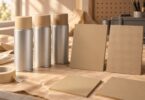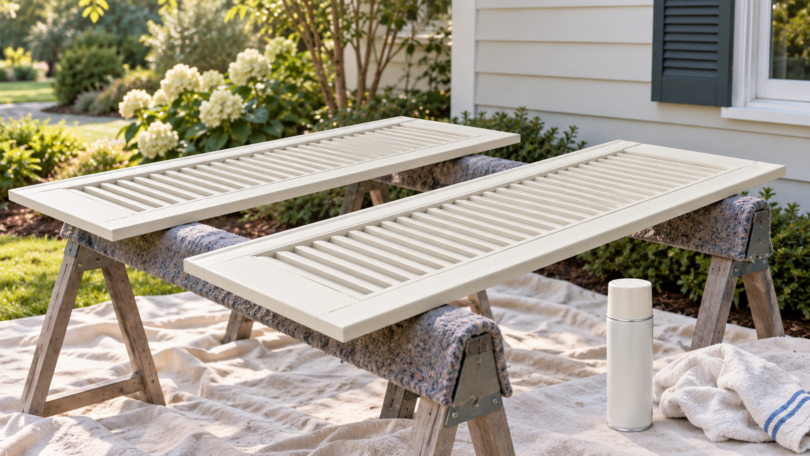

For repaintable vinyl shutters in the same color or a lighter shade, Krylon Fusion All-In-One is a sensible aerosol starting point; Rust-Oleum Universal Satin is an alternative if you prefer a lower-sheen finish and a trigger-style can. First check the shutter manufacturer’s coating instructions. A paint that bonds to plastic does not automatically make a dark color safe on sun-exposed vinyl.
This guide compares two relevant spray paints and one exterior-latex alternative. It is based on manufacturer documentation and product-identity checks, not hands-on durability testing. There is no useful reason to pad a shutter-paint shortlist with lubricants, shoe dyes or vinyl cleaners.
Check the selected color, finish and pack count before ordering.
Compare the options
| Option | Best fit | Format reviewed | Main limitation |
|---|---|---|---|
| Krylon Fusion All-In-One | A small shutter project where the manufacturer permits an aerosol coating | Gloss White, K02727007, one 12 oz can | Gloss finish; darker colors need separate compatibility approval |
| Rust-Oleum Universal Satin | A lower-sheen finish with a trigger-style spray head | Satin White, 245210, one 12 oz can | Requires surface preparation and an adhesion test on the actual shutter |
| Sherwin-Williams SuperPaint Exterior with a VinylSafe color | A larger project or a manufacturer-approved vinyl color change | Exterior acrylic latex, professionally tinted to the approved formula | Not an aerosol; requires a brush, roller or suitable sprayer |
Before buying: check material, condition and color
Look for the shutter brand and model, then ask what coating it permits. Products sold as exterior plastic shutters can have different materials and factory finishes. For example, Ply Gem’s board-and-batten shutters are described as paintable with high-quality latex paint. That does not authorize substituting an oil-based aerosol on that product.
Stop if the shutters are cracked, badly warped, brittle or losing their underlying finish. Paint cannot repair those defects. If the instructions prohibit repainting, replacement may be the practical route. Check any remaining warranty before changing the coating.
Keep a standard aerosol color the same as or lighter than the original shutter color unless both manufacturers approve the specific change. Darker paint can increase heat absorption and lead to distortion. Sherwin-Williams’ VinylSafe system offers selected darker formulas for sound vinyl, but an ordinary dark aerosol is not equivalent to a VinylSafe formula. A successful small adhesion test also cannot prove that a color will resist heat-related warping.
1. Krylon Fusion All-In-One: first aerosol to consider
Krylon specifically features Fusion All-In-One Gloss White in its vinyl-shutter project. That makes it a more relevant candidate than a generic spray chosen only because its label says plastic. The reviewed listing is K02727007 Gloss White, 12 oz, one can.
The product documentation lists indoor/outdoor use and an any-angle spray button. It also says sanding and priming are not required for its intended applications. Cleaning and checking compatibility still matter, especially if the shutter has an old coating or residue from a shine-restoring product.
- Pros: manufacturer shutter-project example; no separate sprayer to clean; useful for a small removable shutter set.
- Cons: the linked finish is glossy; aerosol overspray requires careful masking; it is not a solution for every plastic or color change.
Choose it if: your shutter maker permits this coating and you want a straightforward white aerosol finish. Follow the directions on the exact can rather than assuming another Fusion product has identical instructions.

Krylon Fusion All-In-One K02727007, Gloss White, 12 oz, 1 Can
As an Amazon Associate we earn from qualifying purchases.
2. Rust-Oleum Universal Satin: lower-sheen aerosol option
Rust-Oleum Universal Satin explicitly lists vinyl among its substrates and is intended for interior and exterior use. The selected version is Satin White, model 245210, 12 oz, one can. It offers a different finish and spray-control style from the gloss Krylon option.
The trigger and any-angle nozzle can be convenient around louver edges. That is a handling advantage, not evidence of better outdoor durability. Rust-Oleum’s application guidance calls for a clean, dry, sound surface and a hidden-area test on plastics. Follow its preparation instructions for the existing finish instead of applying a blanket no-sanding rule to both paints.
- Pros: vinyl is named by the manufacturer; satin white has less shine than gloss; trigger-style spray control.
- Cons: the shutter maker must also permit the coating; surface-preparation requirements differ from Krylon’s; it does not remove the dark-color heat risk.
Choose it if: satin white suits the house and the coating is compatible with the shutter. Do not accidentally select a clear topcoat, metallic finish or multipack from the same retailer’s variation menu.

3. For a larger project: exterior latex in an approved vinyl color
If the shutter manufacturer specifies latex paint, or you need a controlled color change, discuss SuperPaint Exterior Acrylic Latex in a VinylSafe formula with the paint supplier. SuperPaint is one of the products Sherwin-Williams lists for that color system. Ask for compatibility with the exact shutter and existing finish before buying.
Pros: a manufacturer-directed tinting route; practical for matching several shutters; no need to choose a color merely because it is stocked in an aerosol. Cons: more application equipment and cleanup; a color name alone does not establish that the correct vinyl formula was mixed. Retain the formula label for future touch-ups.
This is an alternative coating route, not a third spray can. Use the selected paint’s data sheet to choose a suitable sprayer and application settings, or apply by an approved brush or roller method.
How to plan the repaint
- Confirm the coating system. Identify the shutters, existing finish and permitted color before buying paint. Check the manufacturer’s removal and fastening instructions if taking the shutters down.
- Clean thoroughly. Remove dirt, loose residue and grease using a compatible cleaner. Rinse and let the shutters dry. Do not coat over silicone dressings, wax or a peeling finish.
- Test a hidden area. Apply the complete proposed system and allow the label’s curing time before judging adhesion and appearance. Stop if it softens, wrinkles or lifts the surface.
- Protect the surroundings. Overspray can reach siding, windows, vehicles and plants. Work in the ventilation and weather conditions specified on the label, away from flames and ignition sources, using the stated protective equipment.
- Apply controlled coats. Reach louver edges without flooding the recesses. Follow the can’s distance, coat thickness and recoat window. Do not assume every paint can be recoated after the same interval.
- Allow proper curing. Dry to the touch is not the same as fully cured. Follow the product’s handling and weather-exposure directions before reinstalling.
For quantities, measure the surfaces being painted and use the exact product’s stated coverage and coat requirements. Louvers, edges, texture and overspray make a shutter more demanding than a flat rectangle. Do not assume that one can paints a fixed number of shutters.
Frequently asked questions
Can you spray-paint every vinyl shutter?
No. The substrate, factory coating, condition and manufacturer’s instructions determine whether repainting is appropriate. Confirm those first; an aerosol’s general plastic compatibility is not universal approval.
Can white shutters be painted black?
Do not use an ordinary black aerosol over white vinyl without explicit approval for that substrate and color change. Consider an approved vinyl-color system or replacement shutters manufactured in the desired color.
Do vinyl shutters need primer?
There is no universal answer. Follow the selected paint and shutter instructions. Extra primer is not automatically helpful if it introduces an incompatible layer, and no-primer labeling does not excuse poor cleaning.
Is vinyl-and-fabric automotive paint the right choice?
Not simply because vinyl appears in the name. A product intended for flexible vehicle interiors is not automatically suitable for rigid exterior shutters. Choose a coating with support for the actual application.
Which finish should I choose?
Use an allowed finish that matches the look you want. The two linked aerosols are gloss white and satin white, so they are not interchangeable touch-up matches. Test the appearance before committing to the whole set.
How these recommendations were selected
Selection prioritized manufacturer support for exterior vinyl or a documented shutter project, clear product identification and practical differences in finish and application. Only two aerosol families met that scope for this shortlist; the latex option addresses projects where a spray can is the wrong coating route. We did not conduct weathering tests, compare measured adhesion or verify a universal service life. Prices, stock and seller offers can change.