

The best chair leg protectors are the ones that match the bottom of your chair and the care instructions for your floor. For everyday chairs on hard floors, start with Scotch’s stick-on felt pads if you want a simple adhesive option, GorillaFelt tap-in glides for suitable wooden legs, or Slipstick CB188 sleeves for legs that match the stated cap dimensions.
These picks compare documented construction, attachment and fit. They are not based on a hands-on durability test. Floor protectors can help reduce scratches, but they cannot make a floor immune to grit, heavy loads or dragging.
Best chair leg protectors at a glance
| Pick and pack | Best fit | Attachment | Floor suitability | Main tradeoff |
|---|---|---|---|---|
| Scotch SP822-NA; 32 brown pads | Flat feet that can fully support a 1-inch round pad | Peel-and-stick felt | Hardwood; exact listing also names tile, laminate and vinyl | No sleeve or mechanical fastener; inspect adhesion |
| Slipstick GorillaFelt CB257-16; 16 glides | Wooden legs at least 1 inch across the base; not metal | Steel prongs plus adhesive; hammer installation | Hard surfaces including hardwood, tile, vinyl and laminate | Prongs enter the wood; unsuitable when the foot cannot be hammered |
| Slipstick CB188; 4 clear/gray sleeves | Package/maker: round 36–42 mm diameter; square 34–40 mm side | Slip-on sleeve, internal steel plate and felt base | Hard surfaces including hardwood, tile, vinyl and laminate | Retailer bullet sizing differs; confirm the delivered package |
1. Scotch SP822-NA: best for simple stick-on protection
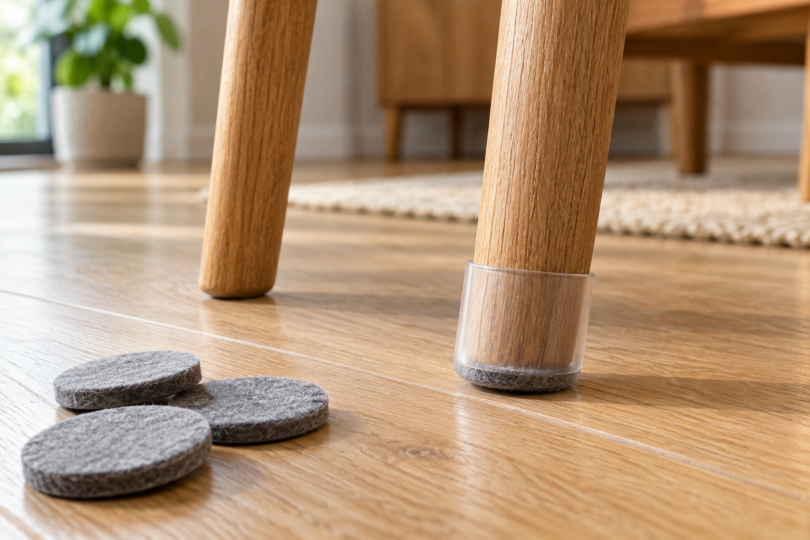
This exact pack contains 32 brown, circular felt pads measuring 1 inch across. The adhesive backing makes it a practical first option for flat chair feet when you do not want to drive a fastener into the furniture. The round pad must fit entirely beneath the foot; its diameter is not a stretch-fit range. See the Scotch SP822-NA specifications.
Pros: simple peel-and-stick attachment and enough pads for eight four-legged chairs. Cons: adhesive alone holds each pad in place, so check for shifting or exposed edges. Choose another size when a 1-inch circle does not suit the chair’s contact area.

Scotch SP822-NA 1-inch brown felt pads, 32-pack
As an Amazon Associate we earn from qualifying purchases.
2. GorillaFelt CB257-16: best for tap-in attachment to wood
GorillaFelt’s CB257-16 pack pairs 1-inch round felt glides with steel prongs and an adhesive backing. It is a more mechanically attached option for wooden legs that can accept the prongs. The exact listing excludes metal legs and feet narrower than 1 inch. Installation means cleaning the foot, removing the backing, positioning the glide and tapping it in with a hammer.
Pros: 16 glides cover four four-legged chairs, with both prongs and adhesive holding the attachment. Cons: installation punctures the wood; this is a poor choice for hollow metal feet or furniture you cannot alter. “Tap-in” describes the attachment, not a guarantee that the felt will never wear.

3. Slipstick CB188: best sleeve option for matching larger legs
The four-pack CB188 uses a clear sleeve, a felt base and an internal steel plate. Slipstick identifies it for round and square legs, including hollow steel legs. Its manufacturer sizing and the pictured package specify round diameters of 36–42 mm and square sides of 34–40 mm. Measure at the part of the leg the sleeve will grip.
Pros: slip-on attachment and a steel barrier between the leg and felt. Cons: one four-pack covers one four-legged chair, and fit needs particular care. The retailer’s bullet text instead gives 38–44 mm for round legs; its package photo agrees with the manufacturer’s 36–42 mm. Confirm the package dimensions before fitting, especially near a size boundary.

How to choose the right protector
Measure each chair’s feet before ordering. For a round sleeve, use the leg diameter; for a square sleeve, use a side measurement. For stick-on or tap-in pads, check the actual flat contact area. Do not assume that a pad’s width and a sleeve’s accepted leg range describe the same thing.
Follow your flooring manufacturer’s advice first. These selections are intended for hard-floor use; they are not recommendations for carpet, outdoor decking or every specialty finish. Bruce advises using floor protectors and regularly removing loose soil and debris to help reduce wear. Its floor-care guidance also explains that sufficient pressure can dent hardwood.
Make protector checks part of floor cleaning: look for a loose sleeve, a shifted pad or worn felt, and replace damaged pieces before using the chair again. Keep the floor clear of grit. For a heavy furniture move, use the protection method recommended for the floor rather than treating chair pads as a moving kit.
Frequently asked questions
Are felt pads or sleeve caps better?
Choose by fit and attachment. Adhesive felt is convenient for a suitable flat foot; a sleeve needs the correct leg dimensions. Tap-in felt adds a mechanical attachment, but only when the wooden foot can accept it.
Will these protectors stop every scratch?
No. Floor care still matters: remove loose debris, inspect the protectors and follow the floor maker’s moving instructions. A protector does not eliminate the possibility of scratches or pressure dents.
Can I use tap-in glides on metal chairs?
Not the CB257-16 glides recommended here. Their listing explicitly excludes metal legs and feet that cannot be hammered. A correctly sized sleeve is the relevant option in this comparison for a hollow steel leg.
How many protectors should I order?
Count the feet, not just the chairs. Four ordinary four-legged chairs need 16 protectors: one CB257-16 pack, half the Scotch 32-pack, or four CB188 four-packs. Keep spare pads if you prefer to replace worn pieces promptly.
What if a chair leg is tapered or an unusual shape?
Do not assume the round or square ranges apply. Check the measurement where a sleeve sits and ask the protector maker about the exact shape when fit is uncertain. A flat pad also needs a contact area that supports it properly.


