
A ball stretcher is an adult accessory intended to apply pressure or weight around the scrotal area. It is not a treatment for testicular pain, infertility or a medical condition, and a product’s name does not establish that it can safely produce permanent enlargement. The useful buying questions are about the exact design, materials, removal method and instructions, rather than exaggerated size or performance claims.
This guide is a non-graphic look at product identification and safety limits. It does not prescribe a wearing schedule, weight or fit. A retailer’s positive reviews cannot establish those limits for your body. If your interest comes from pain, a new lump, swelling or a change in appearance, get medical advice before considering an accessory.
Know when this is a medical problem
Sudden or severe testicular pain needs immediate medical attention. The NHS advises urgent emergency assessment for sudden severe pain, pain with nausea or abdominal symptoms, or pain that persists while resting. One possible cause is testicular torsion, which requires prompt treatment. Do not assume pain is simply an expected part of stretching.
A trapped constrictive device is also a reason to seek urgent help, especially with swelling, numbness, discoloration, coldness or difficulty urinating. Do not attempt improvised cutting, heating or forceful removal. A urology review of constriction-device injuries describes device entrapment as a urologic emergency and explains why removal can require specialist tools and several clinical teams.
For genital injury more broadly, MedlinePlus lists pain, bleeding, swelling, open wounds, urinary difficulty and blood in the urine among reasons to get medical help promptly. Tell the clinician what happened and what device was involved; accurate information helps them assess it.
One identifiable product example
CalExotics Medium Weighted C-Ring Ball Stretcher

CalExotics Medium Weighted C-Ring Ball Stretcher, Black Silicone, 1 Piece
As an Amazon Associate we earn from qualifying purchases.
This exact listing is the black, medium weighted model with a silicone ring and an attached three-snap strap. It is useful as an example of what a properly identified listing should specify. CalExotics’ product specification identifies the material as silicone with nickel-free iron rivets and lists the ring diameter separately from the strap dimensions. The manufacturer identifies it as SKU SE-1413-55-3, UPC 716770088468.
What to check: that the selected product is this medium black model, the supplied item matches its packaging, and the current instructions are available before opening it. “Medium” is the model description, not a medical fitting recommendation. An adjustable strap does not mean every part of the design is adjustable or that it will fit everyone.
Important limit: this is a weighted adult accessory, not a clinically endorsed stretching program. Identifying its materials and model does not verify safety, comfort, health benefits or long-term results. The listed single piece should not be mistaken for a set of progressively sized rings or a medical device prescribed for another purpose.
Distinguish the designs before comparing prices
Search results can mix together several very different objects. A plain flexible ring, a strap with a release fastening, a rigid metal collar and a weighted accessory do not have the same construction. Some combine more than one component. The first step is understanding what is actually being sold, including which parts open and which form a fixed loop.
Do not substitute hardware-store shaft collars, clamps, ordinary weights, jewelry or improvised fasteners. A similar shape or diameter is not evidence that an industrial component was designed for contact with this area of the body. Likewise, foot stretchers, massage balls and exercise equipment that appear in a keyword search are unrelated products.
Look for a clearly named manufacturer and model, rather than an anonymous item described only by a long list of keywords. Keep the product label and instructions. If a seller cannot identify the materials or explain how the intended release works, there is not enough information for a sensible purchase decision.
A practical listing checklist
- Complete material description: check the main body, fasteners and any coating. “Soft,” “premium” and a color name are not material specifications. If you have a known material allergy, include that detail when asking the maker or a clinician about suitability.
- Measurements that identify the part: distinguish an internal opening from an outside diameter, and a strap length from a fitted circumference. Do not treat a dimension in a product table as personal fitting advice.
- Release and removal information: read the manufacturer’s instructions before purchase. Marketing photographs may hide the back of a clasp or the fact that one component is a closed ring.
- Weight information: separate the mass of the accessory from its shipping weight. Neither number establishes a safe load, and “heavier” is not a quality rating.
- Cleaning and material care: look for instructions specific to the actual materials, including any metal components. Do not assume a generic cleaning, boiling or chemical-disinfection method is suitable.
- Returns and packaging: check hygiene-related restrictions before opening a sealed adult product. A low price does not compensate for uncertain identity or unavailable instructions.
Claims that deserve skepticism
A before-and-after photograph does not establish a safe or lasting result. Neither does an anonymous review claiming that a particular weight, duration or degree of discomfort worked for someone else. Those accounts cannot show what happened to circulation, nerves or tissue, and they do not address another person’s medical history.
Be equally cautious about borrowing advice from a different device category. FDA guidance on external penile rigidity devices discusses specific risks and warnings for those devices. It should not be repurposed as an approval, wearing-time rule or safe-weight standard for a scrotal stretching accessory. Similar terminology does not make the products medically interchangeable.
This product review did not establish a clinically validated safe stretching schedule or permanent enlargement benefit for the featured accessory. It therefore does not offer either as a reason to buy it. If a health or body-image concern is driving the decision, a qualified clinician can help separate normal variation from something that needs assessment.
Common questions
Does silicone make a product automatically safe?
No. Material identification is only one part of understanding the product. Geometry, fit, pressure, fasteners and the user’s circumstances still matter. A silicone label is not a guarantee against injury or a substitute for instructions.
Is a weighted model a sensible beginner recommendation?
This guide does not make that recommendation. A “beginner” label cannot establish a safe load or fit. Avoid choosing by heavier weight, greater restriction or a promise of faster change.
What if there is already discomfort or swelling?
Stop using the accessory and seek medical advice; use emergency care for sudden or severe pain, a trapped device or concerning injury symptoms. MedlinePlus explains that testicular pain can have several causes, including injury, infection and torsion. Do not try to diagnose the cause by experimenting with a different product.
Bottom line: exact product identity and clear instructions are minimum buying checks, not proof that stretching is safe or medically beneficial. Reject anonymous or improvised devices, avoid performance promises and treat pain, entrapment or unexpected physical changes as health concerns.
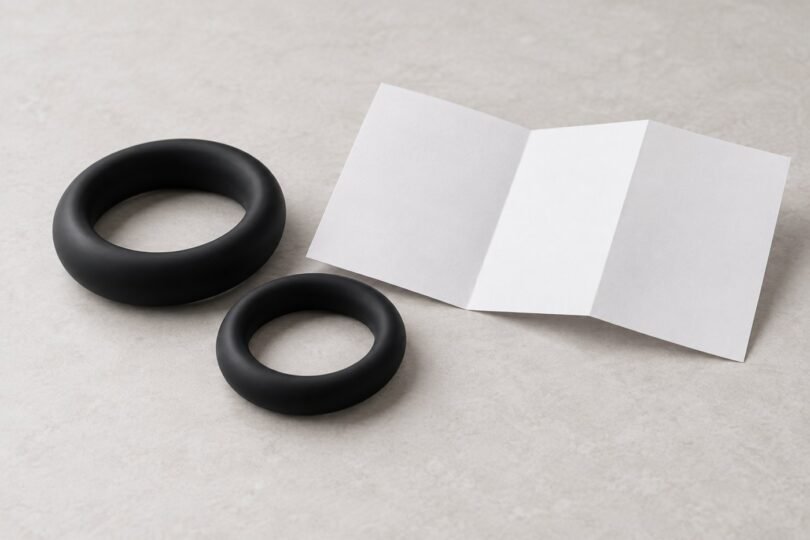
Image note: AI-generated editorial illustration; not a photograph of the named product or a compatibility/installation diagram.