
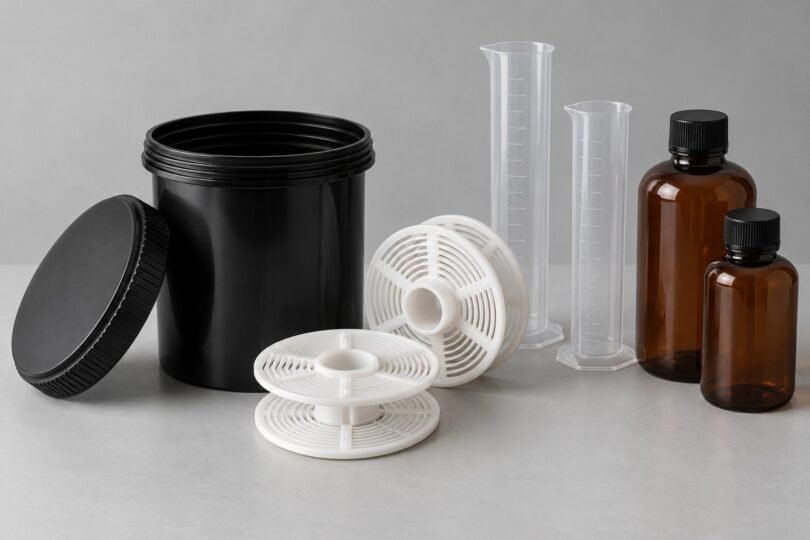

The right 35mm film developing kit depends on the film you shoot and the equipment you already own. For a first traditional black-and-white setup, the ILFORD & Paterson Film Starter Kit is a practical starting point because it combines reusable equipment with a small chemistry pack. For C-41 color negatives, you need compatible color chemistry and a way to control its working temperature.
Check the contents before buying: a developing tank is hardware, a chemical kit may contain no equipment, and a scanner only digitizes film after processing. None of those purchases automatically covers the whole job.
Start with your film’s processing requirement
- Traditional black-and-white negative film: choose a compatible B&W film developer, stop bath and fixer. Development time depends on the particular film, developer, dilution, temperature and exposure rating.
- C-41 film: use C-41-compatible chemistry. Read the film label rather than relying on the image color: ILFORD XP2 SUPER makes black-and-white negatives but is designed for the C-41 process.
- E-6 slide film: use a suitable E-6 process, not an ordinary B&W or C-41 starter kit. Kodak EKTACHROME E100 is a color-reversal film; confirm its processing requirements and the slide-kit instructions before buying.
The “35mm” designation describes the film format. It does not identify the chemistry. An unfamiliar, expired or specialty film deserves a check of its original processing specification before you commit irreplaceable photographs.
Four useful buying options
ILFORD & Paterson Film Starter Kit: a first B&W setup
This combined kit is the strongest starting point here for someone with neither a tank nor chemistry. The manufacturer’s US listing, PTP574U, specifies a Universal tank, two Super System 4 reels, three 600ml measuring cylinders, a thermometer, stirrer, cassette opener and two pairs of film clips. It also includes a SIMPLICITY pack containing developer, stop bath, fixer and wetting agent.
The supplied setup processes two 35mm rolls at a time, or one 120 roll. Its small initial chemistry supply is useful for learning, but you will need more chemistry for subsequent batches.
Still needed: a genuinely light-tight loading space or changing bag. Also check that you have a timer, scissors, protective equipment and somewhere clean to dry the film. Do not confuse this with ILFORD’s similarly named Darkroom Starter Kit, which is aimed at making paper prints from negatives.
Paterson Universal Tank with Two Reels, PTP115: build your own kit
If you prefer to choose chemistry separately, this tank-and-reel package is a sensible foundation. Paterson specifies two 35mm rolls or a single 120/220 roll for the Universal model. The smaller PTP114 is a different, single-35mm-roll tank, so check the model rather than buying from the product photograph alone.
Paterson Universal Developing Tank PTP115 with Two Reels
As an Amazon Associate we earn from qualifying purchases.
Included scope: processing hardware, not a complete chemical starter kit. Add measuring equipment, a suitable thermometer, loading supplies, drying clips and the chemistry your film requires. The center column is an essential part of the light-tight assembly; the reels must be fitted to it. Follow the tank instructions for the correct assembly and solution volume.
ILFORD SIMPLICITY Starter Pack: chemistry for an existing B&W setup
The SIMPLICITY Starter Pack contains four chemical sachets: film developer, stop bath, fixer and wetting agent. The developer, stop bath and fixer are intended for a single batch of two 35mm rolls or one 120 roll in a two-reel, 600ml tank. The wetting-agent sachet is different: ILFORD specifies enough for up to eight uses at the instructed dose.
This makes sense if you already own the equipment and want a small, clearly defined first batch. It is not a tank bundle, a color-film kit or a supply for unlimited repeat sessions. Follow each sachet’s instructions separately; “pre-measured” does not mean every chemical uses the same dilution.
For regular processing, compare the ongoing cost and usable life of separately purchased concentrates. Buy an amount you can realistically use rather than judging value from the largest bottle.
CineStill Cs41 Color Simplified: C-41 chemistry for color negatives
CineStill’s Cs41 range uses a color developer and a combined bleach/fix bath, commonly called blix. Powder and liquid versions are available; match the package size and format to the instructions supplied with that particular kit.
Choose this route when you already have suitable tank-and-reel equipment and want to process C-41 film. Budget for chemical storage and reliable temperature measurement, plus a controlled water bath if needed for your chosen method. The product is chemistry, not a scanner or a complete equipment bundle.
Do not treat an advertised roll capacity as a guarantee that mixed chemicals will stay usable until you reach that number. CineStill’s powder-kit instructions distinguish recommended solution capacities from extended reuse. Storage, air exposure, contamination and the time since mixing all affect performance. Follow the applicable reuse guidance and record each batch.
What a complete setup should cover
Use this checklist to compare the total cost of a bundle with buying parts individually. ILFORD’s beginner processing guide is a useful equipment reference.
- Light-tight loading: a changing bag or a room you can fully black out, plus the tools needed to open and trim the film.
- Tank and reels: the correct film-width setting, enough reels for your batch and all required light-trap components.
- Measurement and timing: dedicated cylinders or jugs, a stirrer, a thermometer covering the required temperature range and a timer.
- Chemistry and storage: every required bath, compatible labeled containers and enough solution for the tank’s working volume.
- Finishing: washing facilities, film clips, a low-dust drying space and negative sleeves for dry film.
- Safety and waste: appropriate protective equipment and an agreed local disposal route.
Two-reel capacity and chemical capacity are different things. A tank can hold two films while a particular chemistry batch has its own reuse limit. Both constraints matter.
Does a daylight tank need a darkroom?
A conventional daylight developing tank still needs to be loaded in total darkness. You can work in room light only after the film is inside the correctly assembled, light-tight tank. A red printing safelight is not a substitute for darkness when loading ordinary panchromatic film.
Practice the loading sequence with a sacrificial film before handling a valuable exposed roll. Lay out the reel, tank parts, opener and scissors first. Keep the reel clean and dry. ILFORD’s small-tank processing guide explains the loading workflow. Keep the light-tight assembly closed until the selected process allows opening it.
Handle and dispose of chemistry carefully
Read the package instructions and safety data sheet for every chemical before mixing it. Use adequate ventilation and the specified gloves, eye protection and protective clothing. Dedicate your equipment to photography, keep food away and never store chemicals in beverage bottles. Label containers and keep them securely away from children and pets.
Keep different baths and waste streams separate unless the manufacturer or your waste handler explicitly instructs otherwise. Do not improvise mixtures with household cleaners or try to neutralize waste yourself. The SIMPLICITY fixer safety data sheet identifies skin and eye irritation hazards and warns against contact with other photographic solutions or cleaning compounds.
Used fixer and blix can contain silver. Ask your local household hazardous-waste service or wastewater authority which materials it accepts and how to package them. Do not assume a small hobby quantity can go down the drain; avoid septic systems, storm drains, soil and ordinary trash. CineStill’s waste guidance explains why local rules and treatment arrangements matter.
Before your first roll
Choose one film and one compatible chemistry system, read the instructions from beginning to end, then write down the required quantities, temperatures, timings and agitation schedule. Do not combine the timing chart from one developer with the dilution or steps from another. A careful practice session and a complete equipment check are more useful than a large accessory bundle.

