
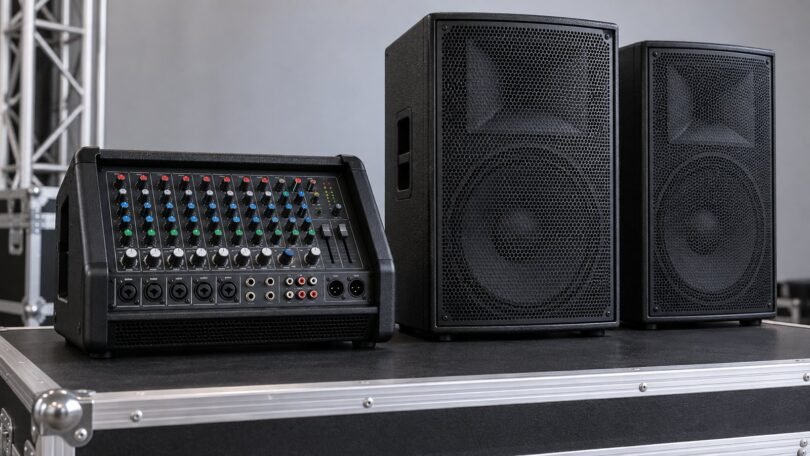

A powered mixer makes sense when you want one box to mix microphones and instruments and drive compatible passive PA speakers. If you are searching for a seven-channel powered mixer, first work out what those seven inputs need to be. Seven microphone inputs, seven mixed audio sources and a model name containing “7” can describe very different equipment.
The Yamaha EMX7 is worth considering for an existing passive-speaker setup. The JBL PRX ONE suits a different starting point: it includes the loudspeaker system and a seven-channel mixer. The choices below are based on manufacturer documentation, not hands-on sound tests.
Choose the system type first
- Already own passive PA speakers: compare powered mixers against the speakers’ impedance, power-handling guidance and connections.
- Already own powered speakers: you usually need a mixer with suitable line outputs. An additional speaker-power amplifier may be unnecessary.
- Starting without speakers: an all-in-one column PA can reduce the number of separate components, provided its input layout meets your needs.
A mixer requiring an electrical outlet does not necessarily contain a speaker amplifier. Likewise, 48V phantom power runs compatible microphones; it is not the output that drives a passive loudspeaker. Look for explicitly specified speaker outputs and amplifier ratings, rather than relying on “powered” in a listing title.
Yamaha EMX7 for separate passive speakers

Yamaha EMX7, 12-Input Stereo Powered Mixer with DSP Effects, One Mixer
As an Amazon Associate we earn from qualifying purchases.
The EMX7 combines mixing, effects and a two-channel power amplifier in a handled enclosure. Yamaha specifies a maximum of eight microphone inputs within its 12-input arrangement. That gives it a practical advantage when your “seven channels” really means several wired microphones rather than a combination of microphones, instruments and playback.
The EMX7 feature list includes 24 effects, feedback suppression, a Flex 9 graphic equalizer, speaker presets and a Hi-Z instrument input on channel 4. These functions can reduce the need for separate processing hardware. They still require sensible microphone placement and level setting; feedback suppression cannot guarantee feedback-free operation in every room.
Read the power figures carefully. Yamaha’s specifications give 710 watts per channel into 4 ohms at 1 kHz with THD+N below 10%, and 600 watts per channel under the below-1% condition. Into 8 ohms, those figures are 500 and 400 watts respectively. A headline wattage without its load and distortion condition is an incomplete comparison.
This listing is for the mixer, not a PA bundle with speakers and microphones. Budget for compatible speakers, properly rated speaker cables, microphones and any stands you need. The mixer is especially relevant when you want to retain equipment you already own and make a documented match.
JBL PRX ONE for a seven-channel all-in-one PA

The PRX ONE includes a powered bass cabinet and column array, so it addresses a complete-system purchase. JBL’s product specifications identify a 12-inch woofer, 12 column drivers, onboard effects and a seven-channel digital mixer. Its 2,000-watt figure is a peak amplifier rating, not a directly interchangeable version of Yamaha’s load-and-distortion-qualified figures.
The input layout matters more than the number seven: there are four XLR/quarter-inch combination inputs, two additional quarter-inch inputs and a 3.5mm/Bluetooth playback channel. Phantom power is available on channels 1 and 2. This is not a seven-microphone mixing desk. For a presenter or performer combining a few microphones, instruments and backing tracks, the arrangement may be convenient; a group requiring seven XLR microphones needs another solution.
The PRX ONE user guide distinguishes Mix Mode from Channel Strip Mode. The same controls can adjust the overall mix or parameters of a selected channel. Spend time learning that switch before an event. The system requires AC power, and its assembled column and bass cabinet need a stable position with cables routed away from foot traffic.
Write an input list before buying
List every source you expect to use simultaneously, including guest microphones. Record its connector, whether it needs phantom power, and whether it needs an instrument input or a DI box. A stereo keyboard may occupy two line inputs; a wireless microphone receiver still needs an appropriate mixer input.
Then decide who controls the sound. A performer adjusting levels from the stage may value clearly visible knobs. An operator moving through the audience may prefer supported remote control. Neither arrangement compensates for an input shortage, so establish the connection plan first and check the convenience features afterward.
Check speakers, monitoring and recording
For the EMX7, the owner’s manual requires a total load of at least 4 ohms per amplifier channel. Two equal 8-ohm speakers connected in parallel produce a 4-ohm load. Use proper speaker cable, and never connect a powered speaker’s line input to an amplified speaker output.
Plan your stage monitoring too. The EMX7 can allocate its amplifier channels to stereo mains or mono mains plus an AUX1 monitor. Choosing the latter changes the system layout; it does not add a third amplifier channel. Sketch mains and monitor connections before purchasing additional speakers.
USB sockets deserve a separate check. The EMX7’s USB connection is for maintenance. The PRX ONE manual describes USB charging and software/firmware functions. Neither should be bought on the assumption that its USB port provides multitrack computer recording. If recording separate microphones is essential, choose equipment with that capability explicitly documented.
Before the first event
Rehearse with the actual microphones, playback device and cables. Start with output levels down, connect equipment as its manual directs and check each source individually before balancing the group. Keep a wired playback option available if Bluetooth is part of your plan. Confirm that the audience and performers can hear comfortably without pushing the system into persistent limiting.
Choose the EMX7 when its amplifier and inputs fit your passive-speaker system. Choose the PRX ONE when you need an integrated PA and its four-microphone input limit works for you. If your requirement is exactly seven microphones plus recording, begin with that specification rather than shopping by a seven-channel label.
Image note: AI-generated editorial illustration; not a photograph of the named product.


