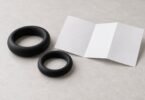

A male chastity device is an external enclosure worn around the genitals. For adults considering one, the important questions concern consent, material identification, cleaning and immediate removal. A locking mechanism, a premium price or a comfortable first impression cannot establish that a product is safe.
This guide explains what to question before buying and which symptoms require medical attention. It does not recommend a particular model or a wear schedule.
If a device is stuck, get medical help
A device trapped around the penis or scrotum needs urgent medical attention. Do not wait for swelling to settle or attempt to cut, pry or force it off. Healthdirect advises urgent care for a foreign object stuck in or around the penis because attempted removal can cause further injury. If something is tight but can be removed normally without injury, remove it immediately. Read Healthdirect’s guidance on penile injury.
Seek emergency care for severe or worsening pain, marked swelling, new numbness or discoloration, or blood at the urinary opening or in urine. Sudden inability to urinate also needs emergency treatment, as explained by the National Institute of Diabetes and Digestive and Kidney Diseases. Do not delay care while searching for a spare key or contacting a seller.
Understand the risk before comparing products
Constriction can obstruct blood flow and damage tissue. The Urology Care Foundation warns against rigid rings and objects around the penis, which can become trapped as tissue swells. Its guidance also warns that excessive tightness or time under constriction can cause injury.
Hospital reports of penile constriction injuries describe swelling, loss of sensation and other serious complications. These reports do not establish a safe size, safe duration or injury rate for a particular commercial product. A softer material or an adjustable design is not a guarantee against constriction.
Consent and independent removal come first
Any consideration of this product should involve consenting adults who understand the risks and can stop freely. A previous agreement does not remove someone’s right to change their mind. RAINN’s consent guidance emphasizes that consent can be withdrawn at any point.
The wearer must retain practical access to removal. Depending on another person’s availability, a distant key, a timer or a functioning internet connection creates a foreseeable problem if discomfort or swelling develops. Treat immediate, independent release as a minimum screening question, not proof that a device is safe.
Reject any arrangement that pressures someone to continue, punishes them for stopping or makes medical care conditional on permission. A verbal stop signal does not solve a jammed mechanism. Discuss how to get help before there is a problem, and never make access to emergency care part of an agreement.
Materials: ask what every component contains
A listing should identify the material of each part that touches skin, including rings, joints, coatings and fasteners. Color, shine and a label such as “premium” reveal little about composition. Ask for written information tied to the exact model and version.
Metal components
Ask for the alloy or grade, whether the surface is plated, and the composition of any coating. Inspect an unused item for sharp edges, rough joints, peeling finishes or corrosion. Do not assume that an attractive finish means a smooth contact surface.
People with known metal allergies should discuss material choices with their clinician. The American Academy of Dermatology explains that nickel can cause allergic contact dermatitis. A seller’s general “hypoallergenic” claim does not answer every question about a particular person’s allergy.
Silicone and other flexible materials
Ask whether the named material applies to the entire skin-contact surface or only an outer layer. Request cleaning instructions and information about coatings, adhesives or other components. Flexibility alone does not establish reliable removal or an appropriate fit.
Plastic and resin components
Ask for the specific polymer rather than accepting “plastic” or “resin” as a complete description. Look for documented intended skin contact and inspect for cracks, rough seams and damaged surfaces. For printed products, ask what finishing and material verification apply to the finished item. Do not infer suitability from photographs of a smooth prototype.
Check documentation, not marketing badges
ISO 3533 covers design, materials and user-information requirements for manufactured products intended for direct genital or anal contact. A reference to this standard in a listing is a reason to ask for evidence; it is not evidence by itself.
Request the exact model identifier, the relevant test report or conformity documentation, who performed the assessment and which parts of the product it covers. A document for a different model, raw material or earlier version does not automatically support the item being sold. Likewise, “medical grade” without a named material and supporting documentation is not enough to evaluate the finished product.
Useful questions for a seller include:
- Are dimensions clearly defined, with units and a diagram explaining each measurement?
- Are removal instructions available before purchase?
- What happens if the normal release mechanism fails?
- Which cleaning methods are compatible with every component?
- Is there a reachable manufacturer or distributor for defects and missing instructions?
- What are the unopened-return, defective-item and hygiene-related return policies?
These are screening questions. Satisfactory answers cannot guarantee personal safety, and a size chart cannot substitute for medical advice.
Features and claims that should stop a purchase
Avoid products with unexplained materials, inaccessible release mechanisms, sharp internal edges or instructions that encourage ignoring pain. Do not improvise with household rings, cable ties or other objects that were never designed for this purpose.
Do not treat urethral inserts or catheter-style attachments as routine accessories. Inserting objects into the urinary opening can cause injury, as the Urology Care Foundation explains. A marketplace bundle does not establish that an attachment is appropriate for unsupervised use.
Claims about improving hormones, treating sexual dysfunction or delivering other medical benefits require credible clinical evidence. Product testimonials and star ratings do not supply that evidence.
There is no universal safe wear schedule
Do not rely on an online timetable promising safe overnight, all-day or extended wear. The sources cited here do not validate such a schedule for these products. The absence of immediate pain also does not prove that circulation, skin or nerves are unaffected.
A conservative approach is to avoid situations in which you cannot notice a problem and respond immediately, including sleep or impairment. Do not try to adapt to pain, numbness, persistent marks or urinary difficulty. Stop and seek appropriate medical advice. A time limit from an unrelated medical device should not be transferred to a chastity device.
Cleaning, inspection and storage
Before buying, make sure the manufacturer provides usable cleaning instructions. SH:24’s nurse-written cleaning guidance recommends following product instructions, checking for damage and cleaning after every use. The correct method depends on construction and materials.
Do not assume that boiling, bleach, alcohol or a dishwasher is appropriate for a whole assembled product. A metal component does not establish the heat or chemical tolerance of its coating, seals or lock. If the instructions are incomplete, ask the manufacturer rather than inventing a cleaning method.
Let cleaned components dry fully before storing them in a clean, dry pouch or container. Reinspect for damage before reuse. Cleaning cannot repair a cracked surface or make an unsuitable material acceptable.
When to speak with a clinician
Get individualized advice before considering use if you have reduced sensation, circulation concerns, recurrent genital irritation, urinary problems or recent surgery. Bring the product description and material information; a clinician can discuss your medical risks without relying on a seller’s reassurance.
Persistent soreness, rash, discharge or painful urination needs assessment. If the foreskin becomes trapped behind the head of the penis and cannot return to its usual position, seek emergency care: the NHS identifies this as a medical emergency.
Bottom line: prioritize freely revocable adult consent, independent removal and verifiable product information. No material, price point or review score eliminates the risks of genital constriction. Missing safety information is a reason to walk away, and an entrapped device is a reason to get urgent medical help.