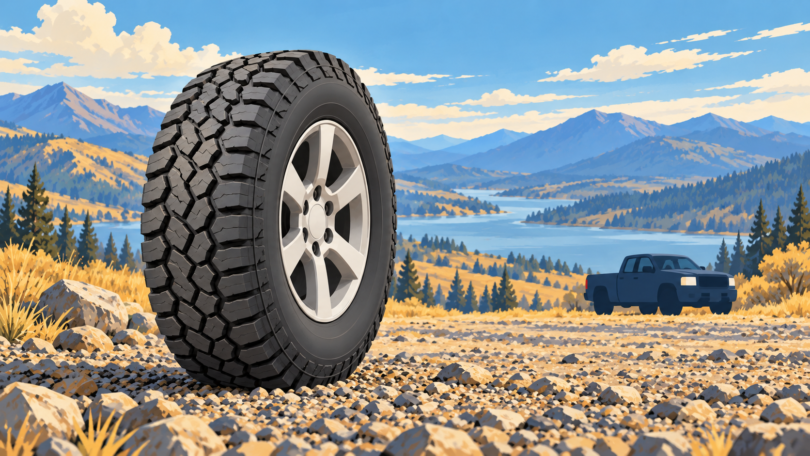

The best all-terrain tires for a diesel truck are the ones that meet its exact vehicle requirements and suit the surfaces it actually drives on. Diesel power alone does not determine tire size, construction or load capacity. For a useful starting shortlist, compare the BFGoodrich All-Terrain T/A KO3, Falken Wildpeak A/T4W and Toyo Open Country A/T III in the specific fitment your truck requires.
All three are real on-/off-road tire lines with manufacturer product information and severe-snow markings. This guide compares their documented features and shopping considerations. It does not identify a universal size for a Ram, Super Duty, Silverado or Sierra, and it does not substitute for a qualified tire professional’s fitment check.
Before choosing a brand, confirm the truck’s requirements
NHTSA’s tire guidance directs buyers to the vehicle owner’s manual and Tire and Loading Information label for the correct tire size. The U.S. Tire Manufacturers Association also says replacement tires should match the size, load index and speed-rating designation recommended by the vehicle or tire manufacturer. A smaller size or lower load capacity than specified can be dangerous.
Have a tire specialist verify the exact year, model, trim, wheel size, required load range and load/speed ratings before ordering. Include whether the truck has single or dual rear wheels and tell them about wheel or suspension changes. The final check needs the exact tire part number, not just the model name used in a search result.
No load-capacity figures or inflation settings are prescribed here. A different tire’s advertised capacity does not authorize exceeding the truck’s vehicle, axle, payload or towing limits. Ford’s load-carrying guidance, for example, explicitly says higher-limit replacement tires do not increase vehicle or axle weight-rating limits. Ask the vehicle manufacturer or a qualified specialist to resolve any discrepancy.
Three all-terrain tire lines to compare
| Tire line | Documented feature worth comparing | Published mileage coverage | Important qualification |
|---|---|---|---|
| BFGoodrich All-Terrain T/A KO3 | All-terrain compound and full-depth locking 3D sipes | 50,000-mile limited mileage warranty | Verify the exact fitment and warranty eligibility |
| Falken Wildpeak A/T4W | Three-ply DURASPEC sidewall construction on selected sizes | 60,000-mile limited tread-life warranty for LT sizes | Construction varies by size; non-LT headline coverage differs |
| Toyo Open Country A/T III | Stone-ejecting blocks and size-dependent tread designs | 50,000-mile treadwear warranty for LT and flotation sizes | The advertised “up to 65,000 miles” applies to P/Euro-metric sizes |
Warranty mileage is conditional coverage, not a prediction of how long a tire will last on your truck. Ask for the current warranty booklet and confirmation that your vehicle use and chosen part number qualify.
BFGoodrich All-Terrain T/A KO3: a gravel-road shortlist candidate
The KO3’s official page describes an all-terrain compound, an updated tread pattern and full-depth locking 3D sipes. BFGoodrich emphasizes gravel durability and even wear. Those are the manufacturer’s design claims; we have not compared wear rates against the other tires in this guide.
The tire carries the Three-Peak Mountain Snowflake marking and has a published 50,000-mile limited mileage warranty. Check the current terms and the precise size offered by your dealer.
Consider it when: regular gravel-road use is an important part of the buying decision and a suitable KO3 fitment exists. Ask before buying: which exact specification is being quoted, whether it meets the truck’s requirements and how the dealer will handle a warranty claim. Choosing the familiar brand name is only the beginning of that comparison; it is not evidence that every KO3 size belongs on a heavy diesel pickup.
Falken Wildpeak A/T4W: check the size-specific construction
The Wildpeak A/T4W is worth comparing when the dealer can explain which of its construction features applies to your required size. Falken lists staggered shoulder blocks and three-ply DURASPEC sidewall technology on selected sizes. It also identifies Heavy Duty sizes within the range. Do not assume the entire line shares identical construction.
Falken lists a 60,000-mile limited tread-life warranty for LT sizes, compared with up to 65,000 miles for non-LT sizes. The line carries the Three-Peak Mountain Snowflake marking. Warranty terms and any additional protection should be checked separately from the mileage headline.
Consider it when: you want to compare the documented construction and LT warranty with the other two candidates. Ask before buying: whether the quoted size has DURASPEC or an HD designation and whether those details suit your actual use. We cannot conclude from those labels alone that this tire will ride more comfortably, tow better or last longer on your truck.
Toyo Open Country A/T III: compare the LT specification carefully
The Open Country A/T III offers another established on-/off-road option. Toyo lists staggered shoulder lugs, stone-ejecting blocks and 3D multi-wave sipes. It also explicitly notes that tread and shoulder designs vary with construction and size. A photograph of one version may therefore differ from the tire you receive.
The line is Three-Peak Mountain Snowflake qualified. Its warranty distinction matters for diesel-truck shoppers: the product page lists 50,000 miles for LT and flotation sizes, while P/Euro-metric sizes receive 65,000 miles, subject to the warranty terms.
Consider it when: you want a third matched-fitment quote for mixed pavement and unpaved-road use. Ask before buying: for the exact construction, part number and applicable warranty, rather than accepting the highest mileage shown in a general advertisement. We have not independently measured Toyo’s wet braking, noise or tread life, so we do not assign it a performance score.
Match the purchase to the work the truck does
Mostly paved roads, with occasional dirt access
Describe a normal week to the dealer, including highway miles and the unpaved surfaces you regularly encounter. Ask them to explain why an all-terrain line is appropriate and to include a suitable highway-oriented alternative in the quote if paved-road comfort dominates. A rugged appearance is a poor substitute for discussing the actual route.
Frequent towing or hauling
Provide the truck’s specifications and the loads it normally carries, including towing use. Have the specialist assess the tire and wheel combination against the vehicle’s requirements. Toyo’s tire FAQ explains that load index corresponds to carrying capacity when properly inflated; the tread pattern or “heavy duty” wording alone does not settle the question. Avoid online recommendations based only on a similar-looking truck.
Winter travel
All three lines have a severe-snow marking, but that does not rank their braking performance or establish equal grip in every condition. Michelin explains that the Three-Peak Mountain Snowflake symbol relates to a standardized snow-traction test and does not cover pure-ice performance. Discuss dedicated winter tires with a specialist when sustained winter conditions are central to your driving.
Get comparable written quotes
- Use identical fitment requirements: have each quote identify the full size, service description, load range where applicable and manufacturer part number.
- Compare the complete total: include the tires, professional fitting, balancing, applicable valve or TPMS service, taxes and disposal charges.
- Separate warranty types: mileage coverage, workmanship coverage, road-hazard protection and retailer return policies can have different terms.
- Ask about exclusions: tell the seller how the truck is used, including work or commercial use, and request written eligibility details.
- Confirm the specification before payment: a broad model-family photograph or vehicle-selector result should not replace the final fitment check.
Questions diesel-truck owners often ask
Does every diesel pickup need Load Range E?
Do not choose a load range from the engine type alone. The exact vehicle specification, tire size and intended service must be checked together. Let the owner’s manual and a qualified tire professional determine the approved requirement.
Should I use the maximum pressure printed on the sidewall?
Do not treat it as a universal operating setting. NHTSA identifies the vehicle’s tire information label and owner’s manual as the sources for recommended pressure. For a changed tire specification, have the vehicle manufacturer or tire professional establish the correct requirement.
Which of these tires is the overall winner?
Without a particular truck and matched-size testing, there is no defensible universal winner. Begin with confirmed fitment, then compare the published features, complete cost and service terms that matter to your use.
Research method and limitations
This is a desk-researched buying guide using manufacturer product pages and safety guidance from NHTSA and USTMA. We did not road-test these tires, measure braking distances or verify fitment for an individual vehicle. We exclude unrelated cart, ATV and RC tires, omit fluctuating prices and make no installation recommendations. Manufacturer links let you and your tire specialist check current specifications before ordering.