
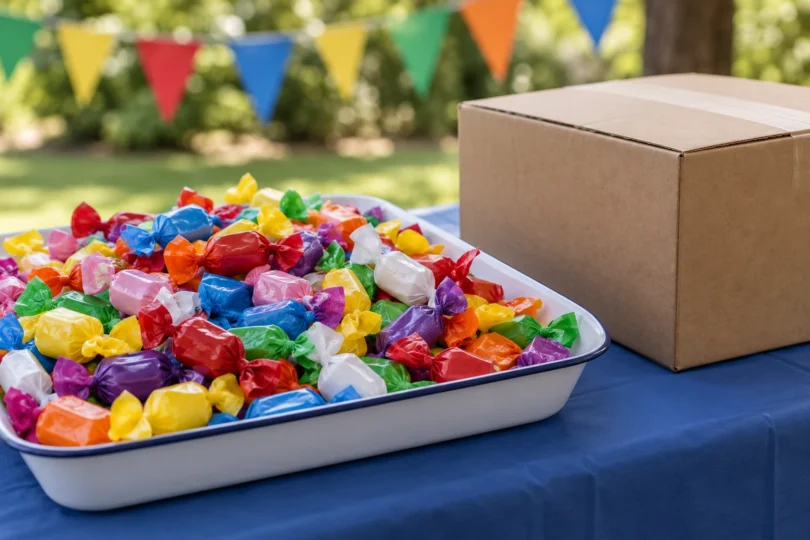

For bulk parade candy, choose an exact package of commercially wrapped treats, then plan how adults will hand them out. Dum Dums’ 600-count pack is a practical lollipop option, Fruit Punch Frooties offer a small chewy piece, and a case of Original Smarties divides into separate supply bags.
These picks compare manufacturer specifications, package labels and product photos; we haven’t taste-tested them or tested their performance outdoors. None is a blanket recommendation for young children or people with food allergies.
Best bulk parade candy: three packages to compare
| Exact option | Package to select | Useful difference | Main limitation |
|---|---|---|---|
| Dum Dums Original Mix | 600 pops: two 300-count bags | Individually wrapped lollipops; count-based planning | Hard candy on sticks; flavor mix varies |
| Tootsie Frooties Fruit Punch | One 38.8-ounce, 360-count bag | Individually wrapped chews in one flavor | Contains milk and soy; sticky candy is not toddler-safe by default |
| Original Smarties candy rolls | Case of twelve 1-pound bags; 12 pounds total | Wrapped rolls; separate bags for volunteers | Sold by weight with no verified roll count; check case availability |
1. Dum Dums Original Mix: best for counted lollipop handouts
The manufacturer’s 600-count pack contains two 300-count bags, making it easy to assign one bag to each of two distribution points. Every pop is wrapped individually. Choose this package rather than relying on the dimensions or count of another Dum Dums listing.
The assortment provides multiple flavors, but don’t promise a particular flavor to every recipient: Spangler’s FAQ says not all flavors appear in every assortment. Lollipops also have both hard candy and a stick, so reserve them for an appropriate, supervised handout. They are not a good item to throw from a float.
Check the 600-count Dum Dums pack at Spangler.
2. Fruit Punch Frooties: best for a single-flavor chewy option
Select the single 360-count, 38.8-ounce bag from Tootsie’s store. The same page offers three- and six-bag bundles, so check the pack selector before comparing totals. These small, individually wrapped fruit-punch chews suit an organizer who wants a consistent flavor rather than an unpredictable mix.
This option contains milk and soy. The manufacturer’s ingredient list includes condensed skim milk, whey and soy lecithin. “Fruit-flavored” doesn’t mean dairy-free, and a peanut-free statement does not make the candy suitable for every allergy. Its chewy texture also does not remove choking concerns for young children.
Check the single Fruit Punch Frooties bag at Tootsie.
3. Original Smarties: best for dividing a larger order among volunteers
This official-store case is twelve separate one-pound bags of the familiar wrapped wafer rolls. That is 12 pounds total, not twelve rolls. The product page doesn’t establish a guaranteed roll count, so it is less convenient than a counted pack when you need an exact number of handouts.
The separate bags are useful when several volunteers need their own supplies. Check the current case availability and delivery estimate before relying on it for a dated event. Avoid substituting the loose-tablet case: unwrapped tablets are a different product.
Keep each roll in its wrapper and retain the outer bag for ingredient information. These are small candies, so the same young-child choking precautions apply.
Check the twelve-bag Smarties case at the official store.
How much candy should you order?
Start with the number of people you expect to serve and the number of wrapped units per person. A roll, a lollipop and a miniature chew are different serving units; comparing only pounds can hide that difference.
For example, 300 recipients receiving two wrapped units each need 600 units. An optional 20% planning reserve brings that to 720. Round up to whole packages, and allow for damaged wrappers that must be discarded. This is a planning example, not a prediction of attendance or a guarantee of usable pieces.
For weight-only bags, ask the seller for a current approximate count if it matters, while leaving room for variation. Compare the final delivered cost against the units you can distribute, including shipping and any required case quantity.
Check labels and age suitability before the event
Read the ingredient list and any allergen statement on the actual package. The FDA’s nine major allergens are milk, eggs, fish, crustacean shellfish, tree nuts, peanuts, wheat, soybeans and sesame. Other ingredients can cause reactions too. A mixed bag’s contents and a repacker’s handling can differ, so don’t transfer one brand’s claim to an entire assortment.
Keep original outer packaging at the distribution point so caregivers can inspect it. If the individual wrapper lacks enough information for someone’s allergy needs, let them decline it. No option here carries an all-allergen-free promise.
The FDA advises removing hard candy, gum and other choking hazards from very young children’s treats. The CDC also cautions against small, sticky or hard foods that young children cannot chew and swallow safely. Don’t hand these candies directly to toddlers; involve their caregiver. Children should sit upright and be supervised while eating, rather than eating as they walk through the parade.
Outdoor handling and distribution
Follow the event organizer’s rules. Use designated handout areas or hand treats to caregivers without drawing children toward moving vehicles. Don’t throw lollipops, hard candy or heavy packages into a crowd or roadway.
Keep reserve bags closed, shaded and dry, and bring out smaller batches as needed. Follow the storage instructions on the received package. A non-chocolate sweet still deserves protection from heat, moisture and damaged wrappers; there is no tested maximum outdoor temperature or exposure time established for these picks here.
Check supplies on arrival and again before handing them out. Discard unwrapped, torn, wet or otherwise compromised pieces. FDA guidance calls for commercially wrapped treats and inspection for damage; CPSC guidance also tells caregivers to inspect treats before children eat them. Keep the ingredient labels until distribution is finished.


