
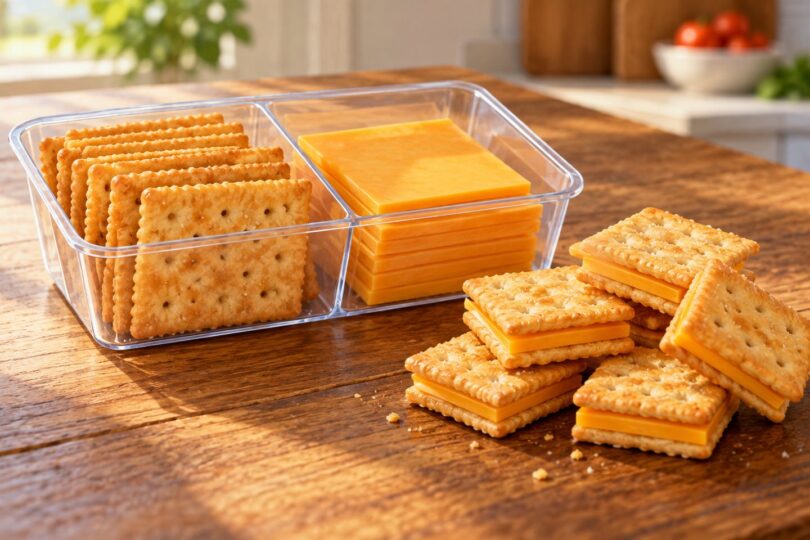

Choose cheese and cracker packs by their format and storage needs first. Handi-Snacks RITZ pairs crackers with a cheese dip that does not require refrigeration before opening. RITZ Cheese Sandwich Crackers offer a compact, ready-assembled snack. Sargento Balanced Breaks Cheese & Crackers provides separate pieces of natural cheese with mini crackers and belongs in the refrigerator.
Those differences matter more than the size of the outer box. A snack for a desk drawer has different requirements from a tray that will go straight into an office fridge. This guide compares manufacturer information and identifiable retail packs; it does not claim a taste test or a universal nutritional winner.
Which kind of cheese-and-cracker snack do you want?
| Format | Example | Useful for | Main consideration |
|---|---|---|---|
| Crackers plus a separate cheese dip | Handi-Snacks RITZ Crackers ‘N Cheesy Dip | A portioned dipping snack | Check the storage directions and intact seal |
| Cheese-filled cracker sandwiches | RITZ Cheese Sandwich Crackers | A compact pantry or desk snack | Check flavor, allergens and the number of individual packets |
| Natural cheese pieces plus crackers | Sargento Balanced Breaks Pepper Jack & Colby-Jack with RITZ Mini Original Crackers | A refrigerated lunch or snack tray | Keep cold during storage and transport |
1. Handi-Snacks RITZ Crackers ‘N Cheesy Dip: for a shelf-stable dipping snack
Snackworks describes this product as individually portioned crackers with a separate cheese dip that requires no refrigeration. The exact linked retail option is one box of twenty 0.95-ounce snack packs. Its selected size and product description both identify that count.
Choose it when you want crackers and cheese dip in separate compartments, without needing to assemble the snack yourself. The small tray also makes it easy to see the portion before opening. It is a practical candidate for a pantry stash, provided you follow the package’s storage and date guidance.
Trade-off: this is a prepared cheese dip, rather than slices or cubes of natural cheese. The manufacturer lists wheat, milk and soy as allergens. Check the actual package before eating, and follow any instructions for opened leftovers instead of assuming the unopened storage rule still applies.

Handi-Snacks RITZ Crackers 'N Cheesy Dip Snack Packs, 20 Snack Packs | Individually Wrapped
As an Amazon Associate we earn from qualifying purchases.
2. RITZ Cheese Sandwich Crackers: for individually wrapped grab-and-go packs
The manufacturer’s product page describes cheese filling between round RITZ crackers and six cracker sandwiches in an individual packet. It also identifies these as pantry and desk-drawer snacks. The linked retail bundle is six boxes of eight packets, totaling 48 snack packs.
Choose this format if you want a snack that opens as one packet, with no dip compartment to balance or separate cheese to portion. The larger bundle may suit an office or a household that already likes the flavor. A smaller box is a more sensible first purchase if you have not tried it.
Trade-off: the cheese version is not a peanut-free recommendation. The manufacturer and matched retail label list wheat, milk and soy, plus a may-contain-peanut warning. Also check that the selected offer is the cheese-only bundle; similar-looking variety packs can include peanut butter.

3. Sargento Balanced Breaks Cheese & Crackers: for a refrigerated cheese tray
This Sargento six-pack combines Pepper Jack and Colby-Jack natural cheeses with RITZ Mini Original Crackers. The manufacturer specifies six individual 1.5-ounce trays. This is the option to consider when you want actual cheese pieces to eat with the crackers.
The manufacturer identifies the Cheese & Crackers range as refrigerated. Plan fridge space and cold transport before buying. The Pepper Jack portion includes jalapeño, so consider whether everyone sharing the pack likes that flavor. The published ingredients include milk, wheat and soy ingredients.
Trade-off: it needs a cold-storage plan and takes up more room than a small cracker packet. Use the manufacturer’s product page to check local purchasing options. Other Balanced Breaks combinations may include nuts, dried fruit or different crackers, so match the full product name.
How to compare value without being misled by pack counts
Count the individually wrapped portions
Retail listings can describe boxes, packets, trays or individual crackers. Those counts are easy to confuse. For the matched RITZ sandwich offer, six boxes containing eight packets each means 48 snack packets. It does not mean 48 boxes. For the matched Handi-Snacks offer, the selected size is twenty individual trays.
Compare the delivered price per usable snack portion. Then check the portion weight, since a small dip tray and a larger packet are not the same amount of food. Do not compare a subscription price with a one-time purchase unless you actually want the recurring order.
Buy the amount you will use
A bulk bundle is useful only if the flavor suits the household and the date on the delivered product leaves enough time to use it. Keep the outer box until you have checked the contents, dates and lot information. If a delivery arrives with damaged seals, missing items or questionable condition, contact the retailer before eating it.
Check the complete label
When comparing nutrition, read the serving size along with calories, sodium, saturated fat, fiber and protein. A cheese-filled cracker and a natural-cheese tray are different foods even if both appear in the same search results. Use the panel on the actual package rather than assuming every size and regional version has the same values. Choose according to your own dietary needs instead of treating words such as “balanced” or “made with real cheese” as a complete nutritional assessment.
Allergen checks that are easy to miss
The FDA recommends reading ingredient information every time you buy a product, because recipes can change. For these snacks, read the full ingredient list and any contains or may-contain statements. Milk-based cheese and wheat-based crackers are important starting points, but they are not the only ingredients to check.
- Do not infer peanut safety from a cheese flavor. A cheese-only product can still carry a peanut warning. Follow the label and the allergy guidance you have been given.
- Examine each variety in an assortment. A box labeled sandwich crackers may mix cheese and peanut-butter products.
- Check the destination’s rules. For schools, clubs and shared workplaces, confirm snack requirements before ordering a bulk case.
- Keep labels available. If sharing individually wrapped portions, make sure recipients can check the relevant ingredients rather than relying on your memory of the outer box.
Storage and lunchbox safety
Follow each product’s label. A factory-sealed product specifically made for unrefrigerated storage is different from a refrigerated cheese tray or a snack you assemble at home. Do not use the storage instructions for one as permission to leave another warm.
For refrigerated products, USDA guidance sets refrigerator storage at 40°F or below. For a packed lunch, USDA recommends at least two cold sources, positioned around perishable food. An insulated bag alone does not provide the cold source. Put the snack in a refrigerator at the destination when one is available.
USDA advises refrigerating perishable food within two hours, or one hour above 90°F. If a refrigerated snack has been held warm beyond those limits, discard it. Keep track of the entire journey, including time in a car or on a desk. When the storage history is uncertain, do not rely on taste to decide whether to eat it.
Frequently asked questions
Do all cheese and cracker packs need refrigeration?
No. Some sealed dip-and-cracker packs are specifically made for unrefrigerated storage; refrigerated natural-cheese trays need to stay cold. The package directions determine which rule applies. Do not decide by the word cheese alone.
Are cheese crackers the same as a cheese-and-cracker tray?
No. A cheese-flavored baked cracker, a cheese-filled sandwich cracker, a cracker-and-dip tray and a natural-cheese snack kit have different ingredients and eating formats. Choose the type you actually want before comparing multipack prices.
Can I make my own portions?
Yes. Pack the cheese and crackers separately so the crackers do not sit against the cheese during transport. Keep the cheese according to its label and use an appropriate cold-storage plan. Include the original ingredient information when preparing food for someone with an allergy.
Which option is most convenient for a desk?
For an unrefrigerated drawer, start with a product whose label explicitly permits that storage. For a workplace with a fridge, a natural-cheese tray is another option. Think about the space available, how easy the package is to open and whether you prefer dipping or a ready-made sandwich cracker.
The bottom line
Handi-Snacks fits a dipping-snack preference, RITZ sandwich packets suit quick portioned snacking, and Sargento’s cheese-and-cracker tray suits a refrigerated lunch routine. Confirm the exact flavor, individual portion count, allergens and storage instructions before buying. Those checks are more useful than choosing the biggest box on the page.
Image note: Original AI-generated editorial illustration; generic objects shown, not branded product photography.


