
If you are looking for a Coleman sump pump, start with the model number on the pump rather than a list of products carrying other brands. Coleman’s own support directory identifies Franklin Electric as the manufacturer of its licensed pumps and sump pumps and directs owners to Red Lion support. That is the appropriate starting point for identifying an older unit, finding its instructions or asking about compatible parts.
A replacement may be sensible when the existing pump cannot be repaired economically, but a different brand is not automatically a direct replacement. This guide explains what to record from a Coleman installation and compares two separately branded sump pumps for a new purchase. Neither is presented as a Coleman product or as a guaranteed fit for every Coleman basin.
Identify the Coleman pump before ordering anything
Photograph the nameplate, model and serial numbers, electrical rating and the whole installation if you can do so safely. An old receipt or manual can help distinguish similar-looking products. Record whether the pump is a submersible model inside the basin or a pedestal design with a motor above it. Also note whether the problem concerns the main pump, a float switch, a check valve or a separate backup system.
Ask the manufacturer’s support contact for the correct manual and part number for that exact model. A switch advertised as universal can still have the wrong electrical rating, operating range or mounting arrangement. Do not infer compatibility from housing color, horsepower alone or a retailer’s broad keyword list. If the nameplate is unreadable, a plumber or pump technician can help identify what the installation needs.
What must match in a replacement
- Water and application: establish whether this is a groundwater sump, an effluent application or a sewage system. Do not substitute a household sump pump for a sewage pump on appearance alone.
- Discharge and plumbing: measure the outlet connection and identify the existing pipe, check valve and discharge route. Adapters can change the work and cost involved.
- Basin and float clearance: leave room for the pump, switch movement, pipes and lid. A float that touches a wall or cable can fail to operate correctly.
- Electrical supply: match the manual’s voltage, circuit and grounding requirements. Cord length is an installation constraint, not an invitation to improvise unsafe wiring.
- Flow at the required head: compare pump curves at the installation’s lift and plumbing resistance, rather than the largest advertised gallons-per-hour number.
Zoeller M53: a cast-iron automatic alternative
The Zoeller M53 is a separately branded automatic sump pump, not a Coleman replacement part. The selected listing identifies model 53-0001, with a cast-iron housing, integral float-operated switch and plastic base. Zoeller’s Model 53 specifications describe a 1½-inch discharge and a family offered in several voltages, switch arrangements and cord lengths. Check the complete part number when comparing sellers.
One important discrepancy is worth resolving before purchase: some marketplace titles call the M53 a ⅓-horsepower pump, while current Zoeller literature identifies the Model 53 motor as 3/10 horsepower. Use the manufacturer’s specification and performance curve for the exact unit, rather than treating the listing title as engineering data. The choice should depend on required flow, dimensions and switch clearance.
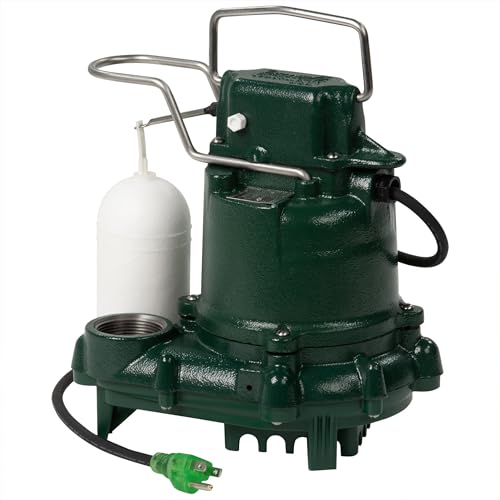
Zoeller M53 53-0001 Automatic Sump Pump, 115V, One Pump
As an Amazon Associate we earn from qualifying purchases.
Superior Pump 92572: a thermoplastic vertical-float alternative
The Superior Pump 92572 is a ½-horsepower thermoplastic submersible sump pump with a vertical float switch. Manufacturer specifications identify a 1½-inch side discharge and a 10-foot power cord. The vertical-switch layout makes it worth measuring for a confined basin, but it still needs the clearance specified in the manual.
Superior’s performance table shows why lift matters: the stated flow falls as total head increases. The highest flow figure does not describe every basement installation. Compare the table to the actual discharge system and keep the float-switch model distinct from a manual utility pump. A utility pump that requires someone to switch it on is a different proposition for an unattended sump.
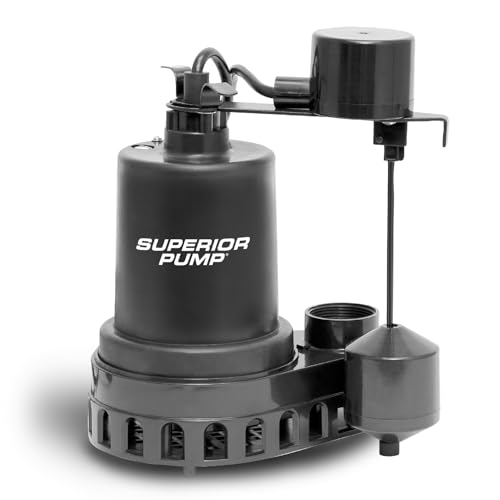
Repair, replace or add backup protection?
A replacement pump will not correct every cause of water in a basement. A blocked or frozen discharge, a faulty check valve, a jammed float, an electrical fault or excessive incoming water can affect the system. Have the cause assessed before assuming that a higher-horsepower pump will solve it. Repeated rapid cycling also deserves investigation rather than repeated purchases.
A mains-powered pump depends on electricity. If power loss is a concern, discuss a properly sized battery-backup or other suitable backup system and a high-water alarm with an installer. Confirm the backup’s actual pumping capacity, battery requirements and maintenance needs. An alarm can draw attention to rising water, but does not remove water by itself.
Safety checks before the next heavy rain
Follow the exact pump manual and local electrical and plumbing requirements. The CDC’s flood-preparation guidance also recommends planning for backup pump power. Disconnect power before servicing equipment when it is safe to do so, and never enter floodwater that may be in contact with electrical equipment. If the electrical supply or outlet is wet, damaged or inaccessible without entering water, keep clear and seek professional help. Do not lift a pump by its electrical cord.
With the system safe and accessible, arrange a functional test using the manufacturer’s procedure. Confirm that the float moves freely, the pump starts and stops, water reaches the approved discharge point and the basin lid and cables are secure. Keep the model number, manual and installer’s details somewhere accessible. For an existing Coleman unit, identifying it accurately is the most useful first step toward either a sound repair or a correctly specified replacement.
Image note: AI-generated editorial illustration of a generic sump pump.