

The right Ford Ranger shift knob depends on the truck’s original market, transmission and shifter attachment. Start with a vehicle-matched replacement if the factory knob is worn or loose. A universal threaded knob is worth considering only after its mounting system has been confirmed for the lever actually installed in your truck.
Ranger listings can mix older North American five-speed parts, global six-speed manual knobs and automatic selector covers. Those are different purchases. A familiar shape or a listing that mentions several Ford vehicles is not enough to establish fitment.
Quick choice: which type should you buy?
- Replacing a worn original manual knob: look up the OE part by VIN and transmission, then compare a genuine Ford replacement with a documented direct-fit alternative.
- Changing a manual knob’s feel or appearance: verify the lever’s fastening method, the replacement’s dimensions and any reverse-lockout clearance before choosing materials or weight.
- Refreshing an automatic selector: distinguish a fitted decorative cover from a complete replacement handle or selector assembly. Check access to every button and control.
- Working with a swapped transmission or aftermarket shifter: use the installed shifter manufacturer’s specification. The Ranger’s original parts lookup may no longer describe the mounting point.
Identify your Ranger before comparing knobs
Older North American manual trucks
For a truck with its original five-speed manual lever, an OE-style knob can be the simplest route, but there is no single thread specification to assume across every Ranger. Check the transmission identification, original part number and application notes. The visible gear pattern helps narrow the choice, but it does not reveal how the knob is retained underneath.
A useful warning comes from Dorman’s 926-328 specifications: this replacement uses a press-on attachment. It is not a threaded universal ball. Dorman cross-references Ford part numbers including 5L5Z-7213-AA, yet still directs buyers to check the exact vehicle application. That evidence supports a candidate replacement, not a promise that it fits every older Ranger.
Global manual Rangers
A Ranger sold in another market may have a different gearbox and lever, even when its model year matches a North American truck. For example, Ford’s European Ranger announcement describes a six-speed manual alongside automatic options. Match the country specification and gearbox rather than shopping by the Ranger name alone.
Reverse selection is particularly important. Ford’s Ranger manual explains that some vehicles require a collar to be raised to select reverse. A replacement must leave the required travel and clearance intact. A knob that attaches to the shaft but blocks that collar is unsuitable.
Automatic Rangers
The North American Ranger introduced for the 2019 model year used a ten-speed automatic, as shown in Ford’s model fact sheet. Its selector should not be treated as the same fitting as an older manual knob. For any automatic Ranger, identify the actual selector design and controls before buying trim or replacement parts.
Search results may call both a slip-on decorative shell and a complete handle a “shift knob.” Read the contents carefully. A cover cannot repair a broken release button, damaged retention mechanism or faulty selector. If operation is unreliable, have the assembly assessed before adding cosmetic trim.
Two documented replacement options to investigate
Genuine Ford 5L5Z-7213-AA
Ford lists SKU 5L5Z7213AA as a manual gear-change-lever knob, with five-speed transmission details including M5R1 and R1HD references. It is a sensible starting point when the VIN-based catalog or an existing correct part number identifies this specific knob.
Before ordering, ask the parts supplier to confirm the application and whether the current replacement supersedes an older number. Check whether your existing boot and its retaining parts are reused. Do not interpret the Ford brand or a matching five-speed symbol as compatibility with a six-speed global Ranger or an automatic selector.
Dorman 926-328
This black rubber-and-plastic replacement is documented as one knob per package. Dorman specifies a press-on attachment and a 0.625-inch shaft diameter. Its published overall size is 2 inches across and 2.75 inches long. Use those details to compare the part with a confirmed application, not as permission to force it onto a similar-sized lever.
The appeal is an OE-style replacement route with a published mounting specification. The boundary is equally important: the catalog’s broad Ford application summary is not an all-Ranger fitment guarantee. Run the exact truck through Dorman’s application checker, then confirm the part number on the seller’s listing and package.

Dorman 926-328 black press-on manual shift knob, one knob
As an Amazon Associate we earn from qualifying purchases.
Why universal adapters need extra care
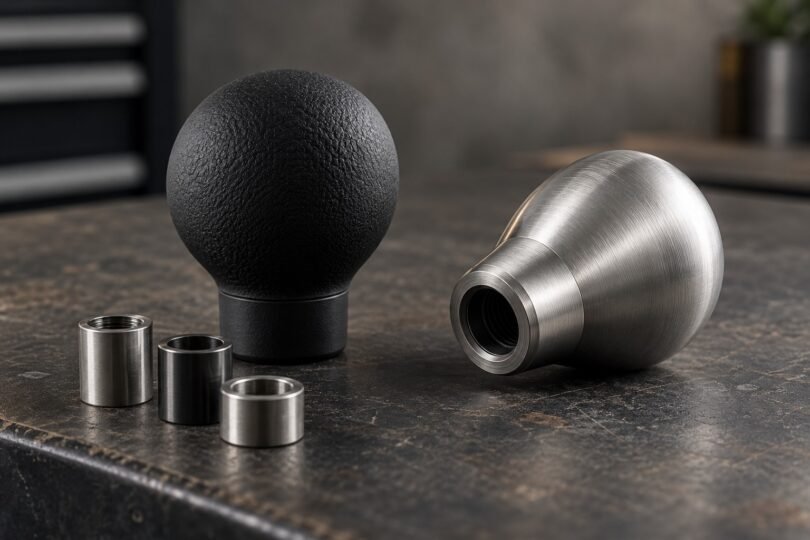
An adapter set can make a threaded knob compatible with certain threaded levers, but the included sleeves do not establish universal fit. You need the shaft diameter, thread pitch where applicable, usable engagement depth and the retention method. A listing that supplies several metric adapters may still have no suitable solution for a press-on original.
Ask for a mounting drawing or installation instructions before buying. They should explain how the adapter is secured, how the knob is oriented and how the boot is retained. “Fits most manuals” does not answer those questions. If the seller cannot explain the connection to your specific lever, choose a better-documented part.
Also check the space below the knob. A deep skirt, tall adapter or oversized base can interfere with a reverse collar or distort the boot. Do not defeat a lockout, cut the original lever, improvise a fastening method or rely on adhesive to rescue an incompatible purchase. Those changes can turn a cosmetic upgrade into a shifter repair.
Choose shape and materials after fitment
Shape: compare diameter, height and the way your hand naturally rests during a shift. A large round ball and a taller tapered knob can feel very different. Look for measurements rather than judging scale from a cropped product photograph.
Surface: textured rubber or polymer can provide a different grip from polished metal. Consider how the surface feels with wet hands or gloves and how exposed metal behaves in hot or cold weather. Leather-style listings should specify whether the covering is leather, synthetic material or simply a textured molded finish.
Weight: a heavier knob changes the feel at your hand, but it is not evidence of a healthier gearbox or an automatic improvement in shift quality. Weight cannot cure worn linkage, clutch trouble or internal transmission faults. Avoid treating claims about smoother shifts as a substitute for correct fitment and secure retention.
Markings: choose the correct forward-gear count and reverse position. A decorative pattern that disagrees with the gearbox can confuse another driver. Check product photographs and written specifications together, especially when a listing combines several pattern variants.
What to verify before removal and installation
- Confirm the truck and installed lever. Record the model year, original market, transmission and any shifter modifications. Compare the exact replacement part number.
- Obtain the correct procedure. A press-on knob, threaded knob and fastened automatic handle do not share one removal method. Do not assume that twisting harder is the answer.
- Inspect the complete connection. Check the boot, collar and specified retaining pieces. Damage to the lever itself may need attention beyond a new knob.
- Follow the documented fastening requirements. Use only the specified hardware and procedure; an invented torque value or improvised spacer is not a safe shortcut.
- Check operation before driving. With the vehicle secured and following the vehicle’s procedure, verify that the knob is stable, the boot is unobstructed and the reverse collar or selector controls operate normally. Stop if anything binds or comes loose.
Common buying questions
Will a Mustang or F-Series knob fit my Ranger?
Not simply because it is a Ford part. Some replacement catalogs cross-reference multiple vehicles, but shared branding is not a mounting specification. Require an exact application match or documented adapter compatibility for the installed shifter.
Does a loose knob mean I only need a new knob?
It may, but check whether the looseness is at the knob connection or farther down the lever. Replacing the grip will not necessarily address movement in a damaged shifter assembly. If the attachment is unclear or worn, get the cause identified first.
What is the safest buying order?
Confirm market and transmission, identify the original fastening system, verify the exact part or adapter, and then choose the finish. For a straightforward replacement, a documented OE-style part is usually easier to evaluate than a universal kit with incomplete mounting information.


