
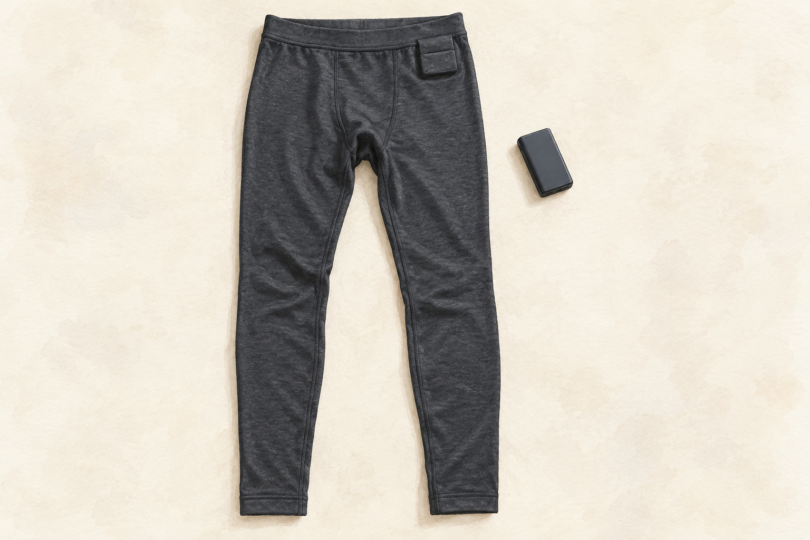

Compare actual battery-heated base-layer pants by heating-zone location, fit, battery compatibility and safety instructions. ORORO Women’s 3-Zone Heated Baselayer Bottoms and Fieldsheer Proton 2.0 Women’s Baselayer Pants are two current examples. Ordinary fleece-lined leggings and yoga pants do not provide battery-powered heating.
Important buying caveat: ORORO’s product marketing and its linked heated-pants safety manual give conflicting guidance about next-to-skin and exercise use. We would ask the manufacturer to resolve that conflict for the exact model before buying it for either purpose. This guide does not recommend ignoring a warning because an advertising description sounds more permissive.
Research checked October 4, 2026. We reviewed manufacturer product pages, care guidance and manuals. We have not tested warmth, runtime, wash durability or burn protection. This is an adult clothing comparison, not a treatment recommendation for pain, circulation problems or neuropathy.
Compare the design, then check the instructions
| Option | Listed heating zones | Controls and package | Main question before purchase |
|---|---|---|---|
| ORORO Women’s 3-Zone Heated Baselayer Bottoms | Both knees and lower abdomen | Three settings; PD 5K battery and cable listed | Which current safety manual applies to this new base-layer model? |
| Fieldsheer Proton 2.0 Women’s Baselayer Pants | Both thighs and back waist | Four settings, touch button and app control; battery and USB-C cable listed | Does its lined construction fit comfortably under your outer clothing? |
ORORO: knee-focused heat, with an instruction conflict to resolve
The ORORO product page describes a slim, ankle-length design with three heating zones and a fabric blend of 79% nylon and 21% spandex. It lists a PD 5K battery and charging cable; the specified wall charger is not included.
The page promotes a next-to-skin feel and activities such as skiing or jogging. However, the official manual index links to a heated-pants manual whose safety section says to wear a layer between the product and skin and not to power on the pants during exercise or outdoor sports.
Our recommendation: treat this as a candidate requiring clarification, not a ready recommendation for powered exercise or direct-skin use. Ask ORORO for the current model-specific instructions and how they relate to those warnings. Until clarified, do not rely on the broader marketing statement to override the manual.
Fieldsheer Proton 2.0: thigh and back-waist zones
The Proton 2.0 Women’s Baselayer Pant has a lined interior, drawstring waistband, two zippered pockets and three heating zones: one at each thigh and one at the back waist. Fieldsheer lists four heat settings, a garment control button and optional control through its MW Connect app.
The current listing identifies a 7.4V Powersheer Mini battery, model MWCB74V02322, and a USB-C charging cable. Confirm the actual package and compatible charger rather than buying a generic battery with a similar-looking connector. App control is a convenience feature, not evidence of extra burn protection.
Tradeoff: the lining, waistband and battery pocket may create more bulk than ordinary leggings. Check the size chart and try the intended outer layer while the garment is unpowered. Also obtain the complete current safety instructions for the exact model; a Bluetooth setup guide alone is not a substitute for all use restrictions.
Fit matters as much as the heat map
Start with waist, hip and inseam measurements against the maker’s current chart. A nominal clothing size does not guarantee the same fit across brands. Consider where the battery sits when you sit down, bend or wear a backpack belt.
- Compare the heated areas. Knee, thigh and back-waist coverage are different. A three-zone label does not mean the entire leg is heated uniformly.
- Avoid pressure points. The garment should not require folding, bunching or sharply bending the heating elements to fit beneath other clothing.
- Check control access. You should be able to switch the garment off promptly without an awkward search through multiple layers.
- Keep ordinary insulation in the plan. Choose clothing appropriate to the conditions even if the battery becomes depleted.
For many people, unheated thermal leggings are the simpler first purchase. They avoid charging, wiring and battery compatibility decisions. Consider powered clothing only when its approved use genuinely fits the activity you have in mind.
Safety limits deserve more attention than maximum temperature
The ORORO heated-pants manual warns that prolonged contact can cause burns, calls for the lowest comfortable setting, and says to stop immediately if discomfort occurs. It prohibits use while sleeping or when you may fall asleep, on open wounds, or when the garment is wet, including from excessive sweat.
Its exclusions also cover people with diabetes, impaired mobility, heat-sensitivity problems or inability to operate the controls. These are manufacturer restrictions, not medical conditions that this article can clear someone to ignore. If a condition, medication or device affects heat sensation or safe use, consult your clinician and the manufacturer before considering powered apparel.
Do not interpret a low-voltage battery, certification claim or selectable low setting as a guarantee against burns. If the clothing becomes uncomfortably hot, malfunctions or shows wiring damage, switch it off and stop using it. Seek medical advice for a burn rather than continuing to wear it to see whether the sensation settles.
Battery care and washing
ORORO’s care guidance says to remove the battery before washing, keep it away from water and extreme heat, and disconnect it when not in use. Use the approved battery, cable and charger arrangement for the exact garment. Do not modify connectors or attempt to repair a damaged lithium battery.
Washing instructions differ between the two products: ORORO’s base-layer page specifies cold gentle washing in a mesh bag and line drying; the Proton page permits low-heat tumble drying after battery removal. Follow the label belonging to your garment rather than applying one brand’s instructions to the other. Let the garment and connector area dry completely before reconnecting power.
Compare quoted runtimes only at the same setting and with the stated battery. The longest advertised duration generally belongs to a lower setting and is not a promise for your weather, layering and battery condition. We have not independently verified runtime for either model.
Frequently asked questions
Are heated leggings suitable for running or skiing?
Do not assume so. The ORORO marketing/manual conflict is specifically relevant to that purchase. Follow the restrictive safety warning and obtain model-specific clarification before powered sports use.
Can I sleep in them?
This guide does not recommend powered heated leggings for sleep. ORORO’s heated-pants manual explicitly prohibits it, including situations where the wearer might fall asleep.
Do they improve circulation or treat pain?
This comparison establishes no medical benefit. Choose them, if appropriate, as cold-weather clothing within the instructions. Discuss persistent pain, numbness or unusual cold sensitivity with a clinician.
Bottom line: buy for a verified use, a comfortable fit and a supported battery system. If the product page and manual disagree, resolve that first; ordinary unheated layers remain a practical alternative.
Image note: AI-generated generic editorial illustration; it does not identify a product, map heating zones or demonstrate approved use.

