The right Minka-Aire receiver replacement depends on the exact fan model and its control system. Start with the fan’s model label and the existing receiver’s part number. A remote that looks familiar, or a receiver advertised as universal, is not enough to confirm compatibility.
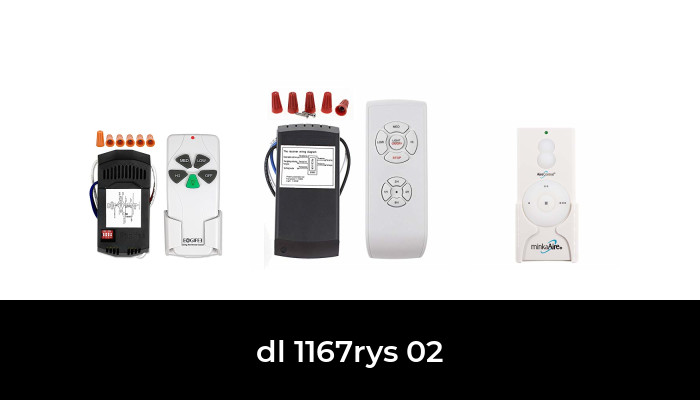
There are three different purchases commonly confused in these searches: a handheld transmitter, a transmitter-and-receiver kit, and a model-specific internal receiver. The Minka-Aire RCS223 is a receiver-inclusive kit with a documented Roto F524 pairing. The RCS212 is a handheld control and should not be bought as a replacement receiver. Other fans require a specific service part.
Identify the part you actually need
A handheld remote sends commands. The receiver installed with the fan responds to them and controls the supported functions. Buying a new transmitter will not repair a failed receiver, while replacing a receiver may be unnecessary if the problem is a depleted remote battery or a lost pairing.
Before shopping, collect the following information:
- Complete fan model: include the suffix and any revision or serial information, rather than just the collection name.
- Existing receiver identification: its complete printed part number, electrical ratings and connector arrangement.
- Remote identification: the model on the transmitter or inside its battery compartment.
- Required functions: fan speeds, remote reverse, separate uplight/downlight control and the type of light dimming, if present.
- Installation arrangement: a canopy receiver or a model-specific internal control assembly.
Photograph accessible labels clearly. If identifying the receiver requires opening the fan canopy or exposing wiring, have a qualified electrician do that with the circuit safely isolated. Do not open an energized canopy just to compare a shopping photograph.
Minka-Aire RCS223: a documented receiver-inclusive option

Minka-Aire RCS223, White 3-Speed Handheld Control and Canopy Receiver Kit, 1 Kit
As an Amazon Associate we earn from qualifying purchases.
The RCS223 includes a handheld control, canopy-mounted receiver, wall holster and battery. It is a three-speed AireControl kit with light-control capability. The exact Amazon product identifies RCS223 and UPC 706411041525; this is important because visually similar controls are sold under different model numbers.
A specific supported example is the Roto F524-CL. Its manufacturer specification sheet lists RCS223 as a compatible remote control. If that is your fan and the existing arrangement matches the manufacturer’s requirements, the kit is a documented route to discuss with your installer. Do not extend that pairing to every Roto variant or every Minka-Aire fan without checking its own documentation.
Important limits: The RCS223 instructions specify a 115/120-volt, 60-Hz application, a maximum fan-motor load of 1 amp, and a maximum incandescent lighting load of 190 watts. They also exclude solid-state fans. These are limits for this control system, not permission to adapt any motor or light that falls below a wattage figure.
The same F524-CL sheet lists four fan speeds and an included WC105-WH wall control, while RCS223 has three speed buttons. Confirm the intended control arrangement with Minka-Aire; do not assume a remote conversion reproduces every setting of the supplied wall control.
The Roto example has no light kit in its cited specification. The presence of a light button on the RCS223 does not add lighting to the fan. Likewise, this kit should not be treated as an upgrade that adds remote reverse to a fan with a manual reversing arrangement.
RCS212: a transmitter, not the receiver you are searching for
RCS212 appears in many Minka-Aire replacement-control listings, so it is worth recognizing before ordering. Minka’s AireControl accessories catalog lists the RCS212 package as a handheld remote and wall holster, while explicitly listing a canopy receiver with RCS223. The two product names should not be used interchangeably.
For example, the New Era F513-KA specification sheet identifies RCS212 as the included remote. That documents a transmitter association; it does not identify every receiver revision used inside that fan. If the F513-KA receiver has failed, request the correct receiver service part by the fan and existing-module identifiers rather than ordering another RCS212.
A transmitter-only purchase can still make sense when the original remote is missing or damaged and the compatible receiver is known to work. Keep that diagnosis separate from a receiver replacement so you do not buy the wrong half of the system.
A model-specific example: Lun-Aire F534L-WH
The manufacturer page for Lun-Aire F534L-WH gives a particularly useful instruction: using optional RCS213 or WCS213 controls also requires receiver L001041000S. This is the kind of exact pairing to look for when researching a replacement.
For that fan, ask a Minka-Aire parts supplier to confirm L001041000S against the installed fan’s identification and any current superseding part. Do not substitute an RCS223 receiver solely because the remote looks similar. No Amazon purchase box is provided for L001041000S here because an exact, reliable Amazon product match was not established.
That does not imply the service part is unavailable. It means the evidence supports a specific part-number inquiry rather than a guessed shopping link. If your fan has a different suffix, compare its own product page or manual before applying the F534L-WH note.
Check simpler causes before replacing electronics
Begin with checks that do not expose wiring. Confirm the fan has power through its normal controls and check the remote battery against the transmitter’s instructions. Observe which functions fail: the fan, the light, reverse, one speed, or everything. Note whether another compatible control still operates the fan.
Those observations help narrow the problem, but none proves that the receiver is faulty. A nonworking light can involve the light source or its associated electronics; a fan that does not run can have causes beyond the remote system. Avoid purchasing several speculative parts before getting a diagnosis.
For an otherwise intact RCS212 system, Minka’s pairing instructions describe a timed learning sequence after receiver power is restored. Follow the manual for your specific control, with the fan assembled and no exposed wiring. Do not assume a Stop-button procedure found for one model also applies to RC400, RC500 or another control family.
If the fan smells burned, trips the circuit, behaves erratically or has visible heat damage, stop using it and have it inspected. Repeatedly restoring power is not an appropriate troubleshooting method for an apparent electrical fault.
Why “universal” requires careful checking
Minka’s accessories documentation states that its 256-bit and 32-bit remote systems are incompatible. That alone rules out choosing a control by brand and button layout. Check the specified control family, not just whether the listing says Minka-Aire.
Compatibility also includes the motor’s control requirements, light electronics, available receiver space and supported functions. A receiver may physically fit under the canopy yet be the wrong electrical component. A listing that names several unrelated fan brands is not evidence of a match for your particular fan.
A complete matched kit can address transmitter-to-receiver compatibility within the kit. It does not automatically establish compatibility between that receiver and the fan. Ask the seller or manufacturer to identify the actual fan model covered, preferably in writing, before purchasing an uncertain replacement.
What to ask a parts supplier
Give the supplier the full fan model, receiver number, remote number and clear label photographs. Ask whether the offered part replaces that exact receiver, whether it works with the existing transmitter, and whether a revised receiver requires a new control as a matched set.
Also ask what is included. A “remote control system” title may describe only the handheld unit. Confirm whether the package contains the receiver, transmitter, holster and required connectors or hardware. Check return conditions for electrical parts before installation, especially if the seller cannot resolve compatibility from the label information.
Keep the written compatibility response and order details. If the received unit has different identification or unexpected connectors, pause the installation and resolve the discrepancy. Do not cut or rearrange connectors to make an unverified replacement fit.
Installation and final checks
Receiver replacement involves household electrical wiring. Use the correct manufacturer instructions and a qualified electrician if you are not trained for the work. Power must be isolated at the circuit before wiring is accessed; turning the fan off with its handheld remote does not isolate the supply.
After proper installation and reassembly, verify the functions the fan is designed to support: each speed, stop, light operation and reverse where applicable. Keep the receiver and transmitter model numbers with the fan manual for the next service visit.
The safest buying sequence is simple: identify the fan and receiver, establish the exact pairing, then order the matching part or approved kit. RCS223 is a useful documented option for a compatible F524 installation; RCS212 is a different purchase; and fans such as F534L-WH have a specific receiver requirement that should guide the search.
Image note: AI-generated editorial category illustration; not a photograph of a named or tested product. Generic fan and remote; not a depiction of a specific Minka-Aire model.