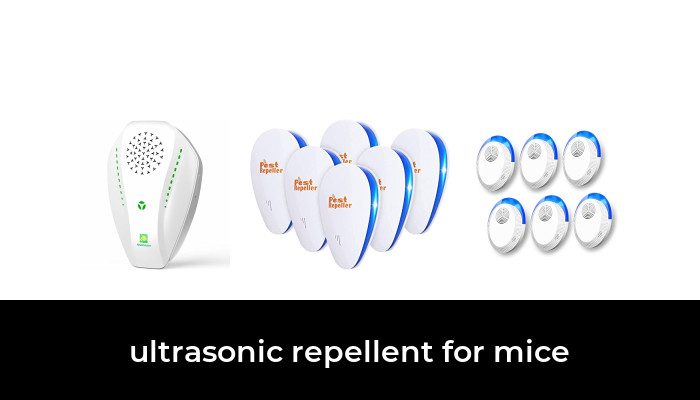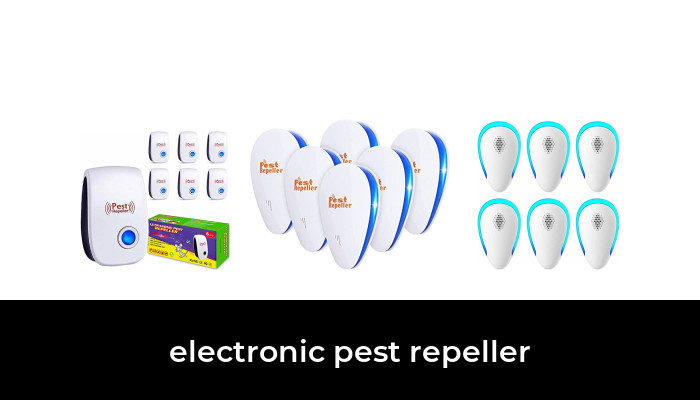

A plug-in mouse deterrent is not a dependable first purchase for a mouse problem. Ultrasonic and electromagnetic devices are marketed as an easy way to drive rodents away, but the evidence does not justify relying on them to clear an infestation. Start with finding entry points, sealing suitable gaps, removing accessible food and using properly placed mouse traps.
The University of California’s house mouse guidance, updated in July 2025, says high-frequency electronic devices are ineffective. Its detailed advice finds little evidence that sound, magnetic or vibration devices remove established mice or rats from buildings or provide prevention or control. That makes a ranked list of “best” plug-ins difficult to justify.
What ultrasonic and electromagnetic plug-ins claim to do
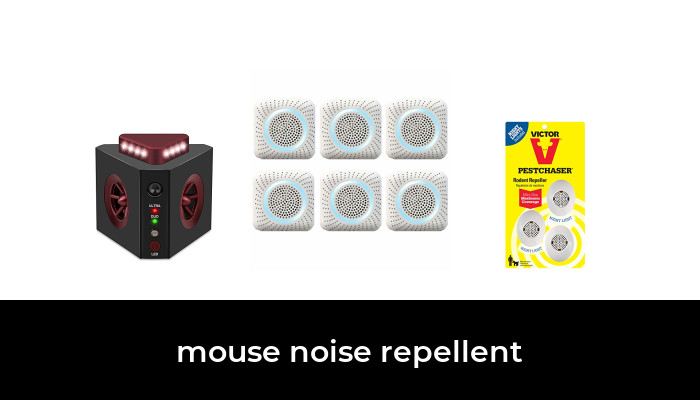
Ultrasonic repellers emit high-frequency sound. Electromagnetic products make a different claim: that changing electromagnetic conditions in household wiring will make pests leave. Some combine sound, flashing lights or several operating modes. A longer feature list does not establish that a product clears mice from a real home.
Sound has practical limits. UC IPM explains that ultrasound is directional, does not reach behind objects and loses intensity with distance. Mice can also become accustomed to repeated noise. A brief startle response is therefore different from sustained control. Moving a device to an open outlet does not turn a room-size claim into evidence that mice have left.
What the evidence does, and does not, establish
In its 2001 warning to ultrasonic-device sellers, the Federal Trade Commission said pest-control claims needed scientific support. The notice described earlier cases challenging claims that devices eliminated infestations, replaced conventional controls or improved other methods. It also discussed allegations that rodents became accustomed to ultrasound.
That notice is historical advertising-enforcement context, not a test of every model sold today. The FTC’s 2003 Lentek order likewise required evidence for that company’s pest-control, area-coverage and electromagnetic-wiring claims. It should not be presented as a new laboratory result or a finding about an unrelated brand.
The University of Arizona’s peer-reviewed sonic-repellent guidance, revised in 2015, advises against commercially available residential sonic devices because studies had not demonstrated effectiveness. Its discussion of research into specialized sonic techniques does not validate a consumer plug-in. The useful distinction is between a possible response to a sound and a demonstrated, lasting reduction in a household infestation.
For a new product, ask for controlled evidence on the exact model, target mouse species and intended setting. Look for the study methods, comparison group, length of follow-up and measured rodent activity. A testimonial, an audible test mode or a claim that mice “cannot adapt” does not answer those questions. Without suitable evidence, we would put the household pest-control budget toward exclusion and trapping.
An EPA establishment number is not an efficacy endorsement
The EPA’s consumer guide to pesticide devices explains that devices are regulated, but generally do not undergo the premarket registration review required for pesticide products. An EPA Establishment Number identifies the producing establishment. It does not mean EPA approved, certified or endorsed the device, or reviewed its safety and effectiveness.
Manufacturers still need support for their claims, and devices are subject to labeling requirements. Some states impose additional requirements. Neither the presence of an establishment number nor the absence of rodenticide inside a device establishes that it will solve your mouse problem.
How to judge common selling points
| Selling point | What to check |
|---|---|
| Large coverage area | Ask what measured outcome supports the number and under what room layout. Square footage alone does not establish control behind furniture or inside walls. |
| Results after several weeks | Ask how results were measured. Continued droppings or damage are reasons to reassess the control plan, not proof that a repeller is working. |
| Multiple frequencies, lights or modes | Request evidence for the complete device. More settings do not by themselves demonstrate better control. |
| Good reviews or a money-back offer | Reviews may describe an owner’s experience; a refund policy describes the purchase terms. Neither supplies a controlled efficacy study. |
| Safe for people and pets | Read the exact model’s warnings and permitted uses. Do not generalize a seller’s reassurance to every person, animal or installation. |
Two examples show why model-specific instructions matter. Victor’s M756K page cautions against using that device around rabbits and pet rodents. MouseBlocker’s Plug-In ProX page warns that its highest settings are audible to most people. These are documented limitations, not recommendations for either product.
What to do if you have mice now
1. Find and close entry points
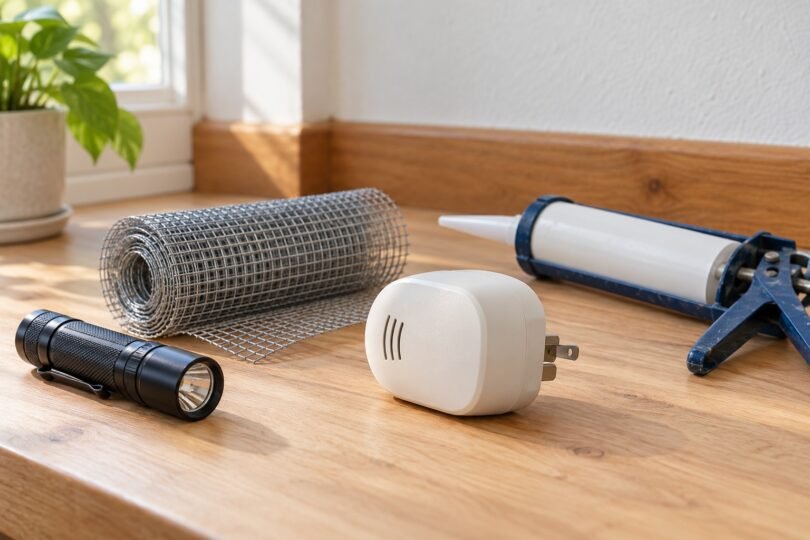
Inspect around doors, pipes, utility penetrations, cabinets and the foundation. The CDC’s exclusion guidance notes that mice can fit through an opening about 1/4 inch wide. It recommends steel wool secured with caulk for small holes and suitable metal, hardware cloth or cement repairs for larger ones. Check garages and outbuildings too.
Choose the repair for the location and keep required ventilation open. UC IPM cautions that mice can gnaw through foam, plastic, wood and other unsuitable fillers. For gaps around equipment or services that need specialist work, have a qualified professional make the repair.
2. Remove easy food and shelter
Keep food and animal feed in sturdy containers with close-fitting lids. Clear spills promptly, put pet food away after feeding and keep rubbish covered. Reduce clutter where you can inspect safely. The CDC includes these steps alongside exclusion; cleaning alone should not be treated as proof that mice are gone.
3. Set mouse-sized snap traps
The CDC recommends traditional snap traps and distinguishes traps intended for mice from those for rats. Follow the trap’s instructions. Place traps near observed activity, along walls and in sheltered routes; the baited end should face the wall. Keep traps and bait inaccessible to children and pets.
Check traps daily and continue monitoring for new activity. The CDC advises against glue and live-capture traps because frightened rodents may urinate, increasing exposure risk. If trapping does not resolve the problem, seek professional help rather than repeatedly buying more repellers.
4. Clean contamination safely
Do not sweep or vacuum rodent droppings, urine or nesting material. Follow the CDC’s rodent-cleanup instructions. Before cleaning a home or outbuilding, open doors and windows for 30 minutes and leave the area while it airs out. Wear rubber or plastic gloves. Thoroughly wet contamination with an EPA-registered disinfectant and wait five minutes or the label’s stated contact time before wiping it up with paper towels.
Put used towels in a covered rubbish container that is emptied regularly. Disinfect affected hard surfaces. Wash gloved hands before removing gloves, then wash bare hands. For dead rodents or nests, follow CDC’s separate disinfection and double-bagging steps. Seek professional or local-health-department advice for heavy infestations, contaminated ventilation systems or inaccessible spaces. A plug-in device does not remove existing contamination.
Frequently asked questions
Is there a plug-in mouse repeller worth recommending?
The sources reviewed do not provide a sufficient basis to recommend a household plug-in as dependable mouse control. Verifiable features such as a nightlight or adjustable sound are not evidence of lasting pest removal.
Will adding one to each room make it work?
That is a placement instruction used by some manufacturers, not proof of effectiveness. Buying more units does not resolve the underlying evidence gap. Prioritize entry repairs, sanitation and a monitored trapping plan.
Should I wait a few weeks if I already own one?
Do not postpone established control measures while waiting for a promised result. Keep track of fresh signs and trap captures, follow the device’s instructions if you use it, and check the seller’s actual return terms. Increasing activity calls for reassessment, not an assumption that mice are being driven out.
Can I manage mice without using rodent poison?
Exclusion, sanitation and appropriately placed snap traps are practical starting points. Success depends on the site and infestation, so persistent activity warrants professional assessment. Keep traps inaccessible to children and pets even when no rodenticide is used.