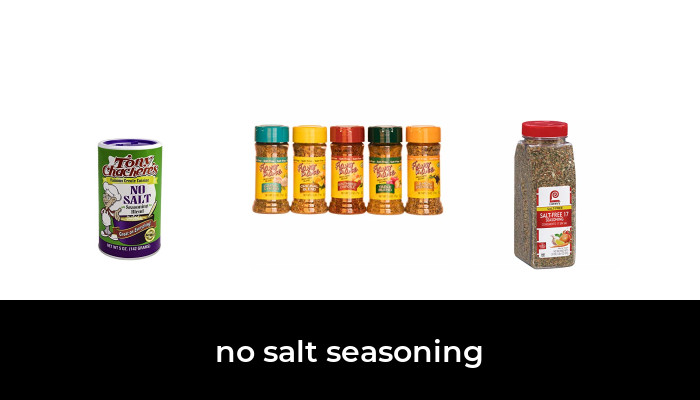

A good no-salt seasoning adds flavor with herbs, spices and aromatic vegetables instead of added salt. The most useful choice depends on the flavor you want, the foods you cook and any ingredients you need to avoid. A large variety pack is less helpful than one blend you will actually use.
Two well-documented options are Lawry’s Salt-Free 17 for a mixed herb-and-vegetable blend with sesame, and McCormick Perfect Pinch Signature for an onion-and-garlic blend with citrus ingredients. Both come in large containers in the exact versions below. These are ingredient-based comparisons, not results from a taste test or claims that one seasoning treats a medical condition.
Two salt-free blends worth comparing
- Lawry’s Salt-Free 17, 20 ounces: a broad mixture of herbs, vegetables and toasted sesame seed; consider it for everyday savory cooking if sesame is suitable for you.
- McCormick Perfect Pinch Signature, 21 ounces: onion, garlic, herbs and citrus ingredients; consider it when that aromatic profile fits your meals.
Neither jar is a small trial size. If you cook infrequently or are unsure about the flavor combination, inspect the ingredient list closely before committing to a foodservice-size container. Compare the exact size and number of containers in the listing, since a single jar and a case can share very similar product names.
Lawry’s Salt-Free 17: herb, vegetable and sesame blend

Lawry's Salt-Free 17 Seasoning, 20 oz, 1 Container
As an Amazon Associate we earn from qualifying purchases.
The manufacturer’s 20-ounce specification lists herbs and spices including black pepper, basil, oregano, celery seed, dill, sage, bay and turmeric. Garlic, carrot, onion, red bell pepper, citrus ingredients and toasted sesame seed round out the mixture. The label explicitly identifies sesame as an allergen.
This is a practical option for a household that wants one savory blend for several meals. Try it with vegetables, chicken, fish or a simple dressing, then adjust the rest of the dish around it. Its many ingredients are useful when you want complexity from one jar, but less suitable when you want precise control over each individual spice.
Watch for: sesame, celery and any other ingredients relevant to your household. Salt-free labeling says nothing about whether a product suits a particular allergy. The product here is the 20-ounce container, not the 10-ounce jar, portion packets or Lawry’s regular Seasoned Salt.
McCormick Perfect Pinch Signature: onion, garlic and citrus
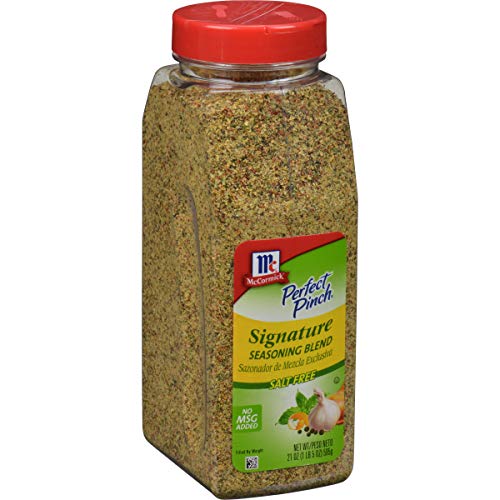
McCormick’s Signature formula starts with onion and garlic. Its listed spices include parsley, black pepper, celery seed, mustard seed, rosemary, oregano, coriander and cumin. Orange peel, lemon juice powder and lemon oil contribute the citrus side of the blend. Corn syrup solids also appear in the ingredient list.
Consider it for foods where an onion-and-herb foundation makes sense, such as roasted vegetables, poultry, a bean salad or a savory dip. Because the mixture already includes several flavors, it can be easier to build a meal around it than to combine it with another complex seasoning.
Watch for: mustard, celery and the full current ingredient list. Do not assume that salt-free also means sugar-free or free from ingredients you personally avoid. This is the 21-ounce Signature blend; Garlic & Herb and Zesty Pepper are separate formulas.
Salt-free, no-salt-added and reduced-sodium are different
The FDA’s sodium-label guide explains that salt-free or sodium-free means less than 5 milligrams of sodium per serving. Low-sodium means 140 milligrams or less per serving. Reduced-sodium means at least 25 percent less than the regular version, so the starting product matters.
No-salt-added means salt was not added during processing; it does not automatically mean sodium-free. Read the Nutrition Facts panel and serving size instead of treating every front-label phrase as equivalent. A meal’s sodium also includes its sauces, broth, canned ingredients and other components.
For a quick comparison, put two jars side by side and check three things: the sodium amount, the listed serving size and the full ingredients. If the serving sizes differ, a lower printed number alone does not establish which contributes less sodium in the amount you actually use.
Seasoning blends versus potassium-based salt substitutes
Herb-and-spice blends supply flavors such as garlic, pepper and citrus. Some salt substitutes instead use potassium to replace part or all of the sodium. That makes the ingredient list particularly important when shopping by the broad phrase “no salt.”
The American Heart Association advises discussing salt substitutes with a healthcare professional when medical conditions or medicines affect potassium. If you have kidney disease, a potassium restriction or a prescribed diet, have your clinician or dietitian help you choose. A retailer’s “healthy” badge cannot answer that individualized question.
The two blends above are compared as cooking ingredients. They are not prescribed replacements for a dietary plan, and their salt-free status does not establish that every ingredient or serving amount is suitable for every person.
Choose the flavor before the jar size
Think about your usual meals
Make a short list of what you cook most often. Someone making sheet-pan vegetables and chicken several nights a week may use an all-purpose blend steadily. Someone who mainly wants a finishing flavor on eggs might prefer a smaller jar or individual herbs already in the cupboard.
Decide how much complexity you want
A long ingredient list can save measuring, but it gives you less room to remove a flavor you dislike. If cumin or citrus regularly puts you off a dish, check for it before buying. A simpler mix of individual spices lets you adjust one ingredient at a time.
Check texture and distribution
Look at the product photographs for visible herb pieces or seeds, especially if you want a fine tabletop sprinkle. Shake a closed jar gently before measuring when ingredients settle unevenly. Use a spoon to control the amount while learning a new blend, then taste the finished food before adding more.
Make the rest of the dish work with the seasoning
A salt-free blend will not remove sodium from a salty broth or bottled sauce. The American Heart Association identifies packaged and restaurant foods as major sodium sources. Compare the other ingredients in your meal if reducing sodium is your goal.
For flavor, try a small amount of seasoning in one portion before changing an entire pot. A squeeze of lemon, a little vinegar or freshly ground pepper may complement the food; the AHA’s reduction guide suggests those approaches. You do not need to add every option at once. Keeping changes separate makes it easier to understand what you enjoy.
Keep a large container in good condition
Store the jar tightly closed in a cool, dry cupboard. McCormick’s storage guidance recommends keeping spices away from heat and moisture and avoiding shaking them directly over a steaming pot. Measure into a dry spoon or small dish first.
Keep the original label and date information. If you decant into a smaller shaker, mark its contents and retain the original package so you can check ingredients or a product notice later. Buy an amount that matches your cooking habits rather than assuming the biggest container is automatically the best value.
Bottom line
Choose Lawry’s Salt-Free 17 when its herb, vegetable and sesame mixture fits your meals; choose Perfect Pinch Signature when you prefer its onion, garlic and citrus direction. Read the actual label, account for the rest of the recipe, and treat potassium-based salt substitutes as a separate choice that may need medical guidance.
Image note: Existing category illustration retained from original article.