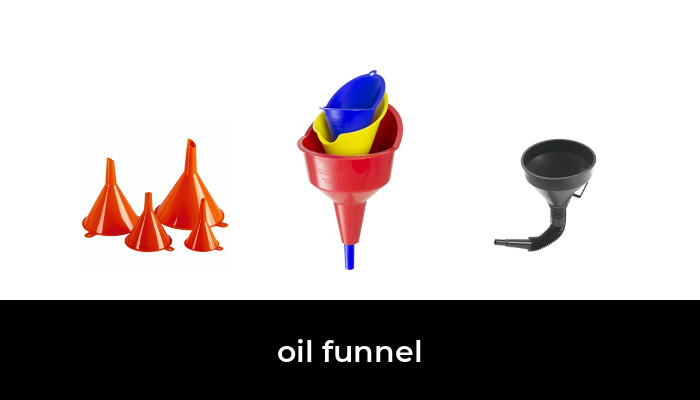

The best oil funnel is the one that fits your fill opening and stays stable while you pour. For ordinary engine-oil top-ups, a simple funnel set may be enough. When the opening is tucked behind other components, an offset design can be more useful than a bigger bowl.
Here are two documented designs from the original shortlist. We compared manufacturer information and exact product listings; we did not perform flow-rate or spill tests.
FloTool 10714MX3 Super Funnel Trio: for varied access

FloTool 10714MX3 Super Funnel Trio
As an Amazon Associate we earn from qualifying purchases.
This three-piece set gives you different funnel shapes for different fill points. It is a sensible starting point if you maintain several vehicles or want separate tools for different fluids. A set does not eliminate contamination by itself: label each funnel for its assigned fluid and store it clean.
Best fit: a basic garage kit where one funnel shape is unlikely to suit every job. Trade-off: these are open funnels, not a vehicle-specific locking oil-fill adapter. Check spout diameter and whether the funnel can sit securely without you letting go of an unstable tool.
Lisle 18232 offset funnel: for a recessed opening

Lisle’s 18232 is a translucent funnel with an offset spout, a lid and a spout cap. The manufacturer specifies a 10-inch height and a 6¾-inch offset between the center of the mouth and spout. An adapter is included for suitable dipstick tubes.
Best fit: a fill point that is difficult to reach vertically. Trade-off: its offset needs more side clearance, and the caps are for keeping it clean in storage, not for sealing a pressurized system. Compare the dimensions with your engine bay before ordering. See Lisle’s specification page.
Three checks before choosing
- Access: measure the fill opening and the space above it. A wide bowl can obstruct your view or conflict with the hood.
- Fluid: confirm the funnel material is suitable for the liquid. An automotive oil funnel is not automatically suitable for food or gasoline.
- Cleanliness: use separate equipment for incompatible fluids. In particular, do not reuse an oily funnel for brake fluid or DEF.
Use the vehicle’s filling procedure
Park and prepare the vehicle as its manual requires. Keep oil away from hot exhaust components, pour slowly, and check the specified level rather than guessing from the funnel’s bowl. A funnel does not measure the engine’s capacity or prevent overfilling. Stop if liquid backs up and investigate instead of pouring more.
Our take: choose the FloTool set for general access and fluid separation; choose the Lisle when its offset solves a specific clearance problem.
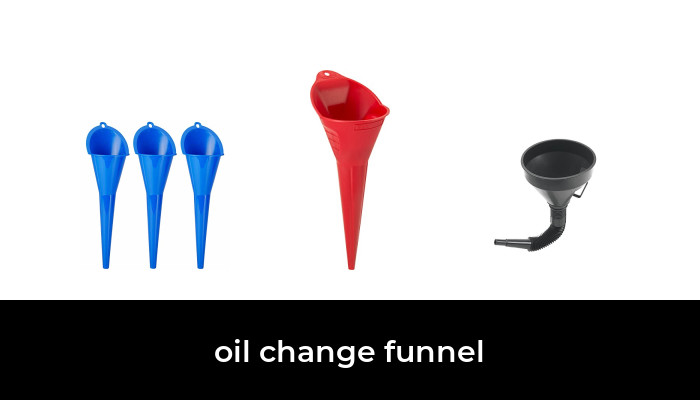
Image note: Oil-funnel examples; shapes and pack sizes vary.