

The best plants for a chameleon enclosure are correctly identified plants that fit the enclosure, provide useful foliage and have an appropriate treatment history. Tropical hibiscus, China doll and grape ivy are three candidates to compare. Choose among them by the space and plant lighting you can provide, then confirm suitability for your chameleon’s species and behavior with an experienced reptile veterinarian.
Pender Veterinary Centre includes hibiscus, China doll and grape ivy among its suggested plants and says enclosure plants must be non-toxic and pesticide-free. That common-name guidance is a starting point, not proof that every cultivar or nursery-grown specimen is ready for a cage. The buying examples below verify plant identity and format; none comes with verified batch-specific reptile-safety clearance.
Three live-plant candidates to compare
| Plant to identify | Useful form | Plant-care requirement | Main buying caution |
|---|---|---|---|
| Tropical hibiscus, Hibiscus rosa-sinensis and named hybrids | A flowering shrub that can provide foliage cover | Very bright light; moist but well-drained growing conditions | Choose a manageable plant and verify the exact cultivar and treatment history |
| China doll, Radermachera sinica | Upright, bushy foliage with many small leaflets | Bright indirect light; environmental changes can cause leaf drop | A nursery’s ornamental or pet-friendly label does not certify suitability for ingestion |
| Grape ivy, Cissus alata; often sold as Cissus rhombifolia | Trailing or climbing foliage | Bright indirect light and good drainage | Verify the botanical name; do not substitute another plant sold as “ivy” |
Tropical hibiscus: consider it for a well-lit planting
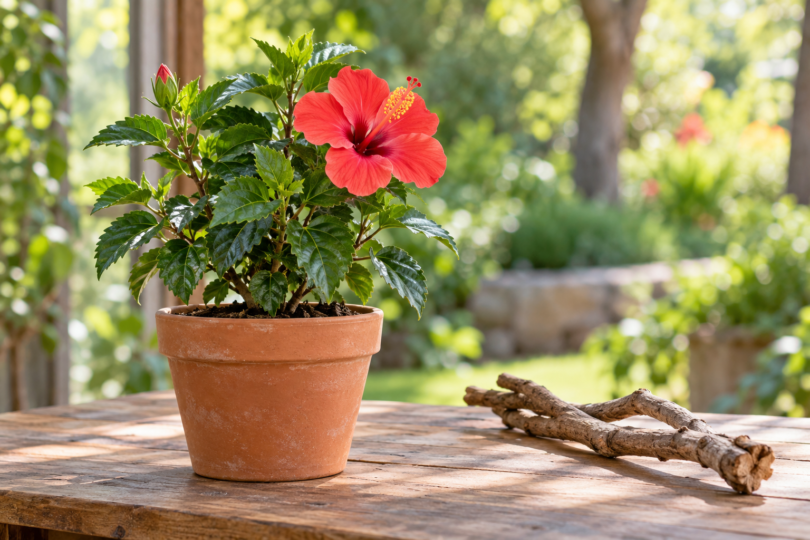
Hibiscus is a useful first candidate if you can meet its light needs without compromising the animal’s environment. Winter Park Veterinary Hospital includes hibiscus in its enclosure-plant guidance. University of Minnesota Extension identifies H. rosa-sinensis as the common tropical nursery type and explains that strong light is needed for indoor flowering. Keep the plant moist rather than saturated, and allow excess water to drain.
One exact nursery example is Logee’s Hibiscus ‘Black Dragon’, identified as an H. rosa-sinensis hybrid in a 4-inch pot. The grower lists a mature container height of 2–4 feet. That is a reason to plan for growth and pruning, not a promise that a small shipped plant supplies enough cover. Its ornamental listing does not establish pesticide-free status or approval for your chameleon to browse it.
China doll: consider it for upright foliage
China doll is Radermachera sinica, a name confirmed by Singapore’s National Parks plant database. Its bushy habit and divided leaves make it an option to assess for vertical cover. The Royal Horticultural Society recommends bright indirect light and notes that moving it or changing its environment can cause leaf drop. Inspect growth after introduction rather than assuming the nursery shape will remain unchanged.
Masson Farms’ China Doll page identifies the species and lists 6-inch and 10-inch pot formats. It is a grower reference to use when asking a retailer for the correct plant, not a direct stock guarantee. The page also says the plants are ornamental and not intended for human or animal consumption. If your chameleon bites foliage, do not treat that example as cleared for the enclosure; obtain advice and suitable stock first.
Grape ivy: consider it for trailing cover
NC State Extension describes Cissus alata as a climbing vine and lists Cissus rhombifolia among its older names. It can be trained or allowed to trail, making it a different planting shape from the two upright options. Its horticultural guidance calls for bright indirect light and good drainage. Match the scientific name: a shared “ivy” name is not evidence that two plants are interchangeable.
Wekiva Foliage’s grape ivy listing identifies Cissus rhombifolia in a 4-inch pot, with a one-plant option alongside multipacks. Ask about actual foliage size and treatment history before ordering. Check delivery eligibility too: the page’s shipping restrictions exclude California, Arizona, Hawaii and Puerto Rico. A trailing vine supplies cover; it should not be your only support for climbing. The one-plant option below is a sourcing lead: neither the grower page nor the Amazon listing verifies a pesticide-free nursery lot or suitability for ingestion.

Wekiva Foliage Grape Ivy, 4-inch pot, 1 plant
As an Amazon Associate we earn from qualifying purchases.
Why common plant lists need careful interpretation
Pothos is common in chameleon guidance, including Pender’s list. However, NC State’s Epipremnum aureum entry identifies calcium oxalate crystals and describes irritation hazards in its human and domestic-animal information. That is not a chameleon-specific toxicity trial. Neither a dog-and-cat warning nor successful use by another keeper proves safety for every reptile, so this shortlist does not call pothos universally harmless.
Ficus also appears in veterinary enclosure guides, but Pender specifically warns that sap from broken leaves or branches can irritate chameleon eyes and mucous membranes. A plant’s usefulness as cover and its suitability for chewing are different questions. Tell the veterinarian the exact plant, chameleon species and whether the animal bites leaves when discussing alternatives.
What to ask the nursery before buying
- Confirm the identity. Request the botanical name, cultivar if present, pot diameter and approximate plant height. Avoid an unidentified mixed tropical assortment or a substitution based only on a common name.
- Ask about treatments. Request the history of insecticides, fungicides, systemic products and other treatments on both foliage and growing medium. Explain that the plant may be contacted or bitten by a reptile. If the seller cannot establish an appropriate history, choose a better-documented source.
- Inspect the actual plant. Look for pests, damaged stems, loose stakes, sharp ties and unstable pots. Confirm that the delivered specimen matches the name you researched; a product photograph cannot verify its condition or treatment history.
Rinsing is not a pesticide-free certificate. The National Pesticide Information Center explains that pesticides can enter through roots and leaves, and systemic insecticides move inside the plant. Its separate produce-washing guidance says washing cannot remove every residue. Those principles do not supply a reliable waiting period or decontamination recipe for a nursery plant in a reptile enclosure. Do not use soap, bleach or a fixed quarantine interval as proof of safety.
Fit the plants around the chameleon’s habitat
Provide secure branches as well as foliage. In its panther chameleon guidance, Tree of Life Exotic Pet Medical Center recommends sturdy climbing structures, foliage cover and open basking areas. Use that layout principle with a species-specific plan: stabilize pots and supports, keep drainage and cleaning accessible, and preserve routes between sheltered and more exposed areas.
Do not change the chameleon’s heat or humidity targets just to keep a plant thriving. A plant-care light is not evidence that the reptile’s UVB needs are met. Have the lighting and planting layout checked together, especially where leaves could obstruct the intended exposure. Plant growth may require later pruning or repositioning.
Choose potting and enclosure substrates with the animal’s veterinarian. Avoid exposed fertilizer granules and loose decorative material that the animal could ingest. Tree of Life’s panther guide specifically warns against loose sand or bark ingestion. Horticultural recipes are for growing plants; do not copy their perlite, grit, fertilizer or pesticide recommendations into a reptile habitat without assessing access and suitability.
Questions about plants for chameleons
Which plant should I consider first?
Consider tropical hibiscus if you can provide suitable plant lighting and manage its size. Compare China doll for upright foliage and grape ivy for a trailing form. The best purchase is the correctly identified, appropriately sourced plant that fits the enclosure plan.
Can I put a garden-center plant straight into the cage?
Do not assume it is ready. Confirm its identity and treatment history, inspect it, and decide how the pot and growing medium will be managed. Washing or repotting alone does not establish that an unknown treatment has been removed.
Does “pet-safe” mean my chameleon can eat it?
No. Ask which animals and exposures the label covers. These recommendations concern candidate enclosure plants, not a feeding plan. A retailer’s general pet label does not settle species-specific ingestion safety.
Are artificial plants an alternative?
Some veterinary guidance permits artificial foliage, including Tree of Life’s panther guide. Its suitability still depends on the animal and enclosure. Have chewing, attachment and cleaning risks assessed; artificial leaves do not remove the need for secure climbing supports and appropriate hydration.
What matters more than getting the cheapest plant?
Correct identity, documented sourcing, the delivered plant’s condition and a manageable size. Include any suitable pot, support and plant-lighting costs in your comparison. Skip a bargain if you cannot resolve treatment history or whether the plant belongs in your chameleon’s habitat.

