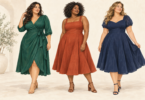

A plus-size convertible bridesmaid dress should give you a neckline you like, enough fabric for the wrap you want and a comfortable fit through the bust, waist and hips. Start with measurements and construction. A broad size range or a promise of dozens of styles does not guarantee that every wrap will work for every person.
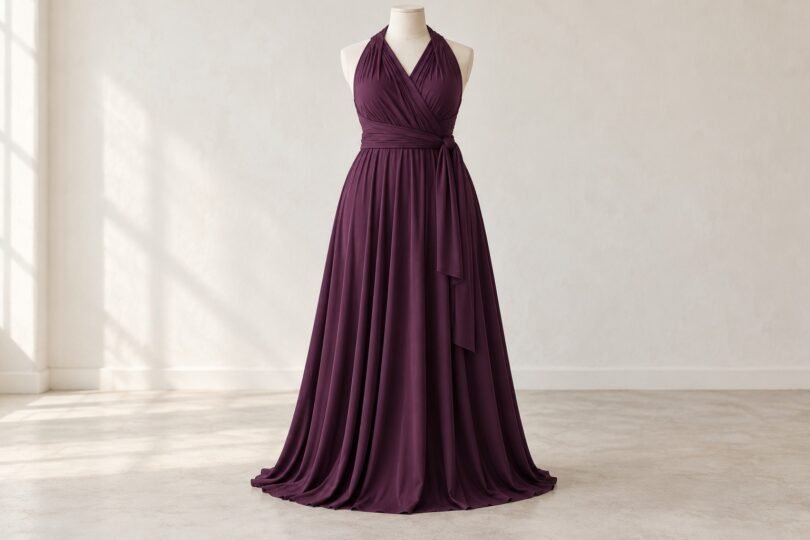
Two options illustrate the main choice: a stretch infinity dress whose long panels create the bodice, or a fitted dress with a constructed bodice and convertible streamers. The first gives you more control over wrapping; the second lets you change the neckline around an established bodice. Your preferred bra, coverage and ease of getting dressed should help decide between them.
Two convertible designs to compare
72Styles Burgundy Wine Multiway: a stretch wrap option
The 72Styles Burgundy Wine Multiway Convertible Infinity Dress lists a Plus Size Floor option for US 18–24, a 32–46-inch waist range and a 43-inch length. Its specification is 92% polyester and 8% spandex with four-way stretch, and the package includes a tube top.
The maker describes the fabric as opaque; check your actual color in daylight and flash photography with your chosen underwear. The page does not establish a separate lining, built-in cups or boning. An included tube top adds coverage but should not be assumed to provide the support of your preferred bra.
Before ordering: ask where the 43-inch measurement starts and request the plus-size strap length, strap width and tube-top measurements if those affect your chosen wrap. Confirm the exact Burgundy, Plus Size Floor selection. Specifications from a short, velvet or differently listed version should not be transferred to it.
Birdy Grey Grace Chiffon in Sea Glass: a constructed bodice
The Grace Chiffon Dress in Sea Glass, no-slit version has a strapless bodice with boning, two long front streamers, hidden styling loops and side pockets. Birdy Grey specifies a 100% polyester chiffon shell and lining, with dry cleaning required. The lining is an important distinction from a dress that only claims opaque fabric.
The product’s plus-size chart gives the following ranges in inches. The dress-length entry is 63 inches for all four rows.
| Size | US | Bust | Waist | Hip |
|---|---|---|---|---|
| 0X | 16 | 44–45.5 | 37.5–39 | 47–48.5 |
| 1X | 18 | 46–47.5 | 39.5–41 | 49–50.5 |
| 2X | 20 | 48.5–50 | 42.5–44 | 51.5–53 |
| 3X | 22 | 51–52.5 | 45.5–47 | 54–55.5 |
Use the complete chart on the linked product page when choosing. Convertible streamers do not change the fitted waist size. Boning also does not establish that everyone can comfortably wear it without a bra; try the bodice with your intended support.
Measure the garment details that affect your fit
Record your bust, natural waist and fullest hip measurements with the tape level and comfortably close to the body. Wear the underwear you expect to use. If a dress sits above or below your natural waist, also measure around that intended waistband position.
Compare all the listed measurements, not just the number you usually buy. For example, a 40-inch waist falls within Grace’s 1X waist range, but that does not settle the size if your bust or hips sit outside its corresponding ranges. Ask the brand about the specific mismatch instead of assuming the streamers or fabric will compensate.
- Waistband: ask whether a range represents body sizing, the relaxed garment or maximum stretch. Maximum stretch does not promise comfortable wear for a long ceremony and reception.
- Strap length and width: ask how much fabric the selected size provides. Wraps that cross the torso several times need more length than a simple tie, while panel width affects coverage.
- Bandeau: confirm its own bust or underarm range, height and whether it is included. The dress and tube top may need different fit checks.
- Skirt and lining: request hip room where the skirt or lining is fitted. A flowing outer layer does not tell you the dimensions of the layer beneath it.
- Length: distinguish skirt length from a shoulder-to-floor measurement. Compare using the same starting point and the shoes you intend to wear.
Birdy Grey’s measuring guidance starts at the high shoulder point where the shoulder and neck meet, passes over the fullest bust and continues to the floor. That is not directly comparable with an unspecified length on a wrap-dress chart. Confirm the measuring method before planning alterations.
Plan the neckline around your preferred support
If wearing your usual bra is a priority, begin with a wrap that covers its straps and band. Spread the fabric rather than twisting it tightly when you want broader coverage. Try the back view as well as the front: a neckline can look complete from one angle while leaving a bra band or a gap visible from another.
A halter or crossed wrap can feel different after sitting, eating and moving. During a fitting, loosen any tie that creates pressure and try another configuration. You do not need to make an uncomfortable style work simply because it appears in a tutorial.
For a structured convertible dress, follow that model’s loops and fastening instructions. For an infinity wrap, practice the complete tying sequence and check that the knot remains secure during normal movement. Use the maker’s tutorials as a starting point and choose the version you can put on and adjust reliably.
Check fabric, color and package contents
Request a fabric swatch when coordinating a bridal party. Match the named color, fabric and supplier; Burgundy in one fabric or brand is not a promise of the same shade elsewhere. Ask about matching orders if everyone will buy separately.
At the fitting, inspect the skirt and bodice while standing and seated, in ordinary daylight and the lighting you expect at the event. Look for gaps created by the wrap and any underwear showing through stretched fabric. Lining, opacity and bust support are different questions, so check each one.
Keep the chosen dress length, size, color and included accessories together in the order details. Confirm whether a bandeau, belt, buckle or other styling accessory is actually supplied; do not infer a bundle from a photograph. Verify the selected variant’s availability and delivery estimate before relying on it for the wedding date.
Try the full outfit before making alterations
- Put on the intended underwear and shoes, then tie the exact ceremony style.
- Sit, walk, raise your arms and use stairs where available. Check coverage, pressure and the hem.
- Try the reception style too if you plan to change the wrap; a different waistband position can change the effective length.
- Check the front, sides and back in a mirror or photographs, including the tube top if supplied.
- Review return and alteration conditions before trimming, removing tags or having the dress changed. Have a tailor assess an uncertain hem rather than assuming every convertible fabric can simply be cut.
Allow time for a fit check and any alteration or exchange before the event. Follow the care label for the delivered garment; washing instructions for a stretch infinity dress should not be applied to a dry-clean-only chiffon dress.
Common questions
Does one size fit all mean I can skip measuring?
No. Use the actual size chart and check coverage, waistband comfort, strap length and skirt length. A listed size range is a starting point, not a fit guarantee.
Can I wear the same dress in every advertised style?
Not necessarily. The available fabric length, your preferred coverage and the underwear you want to wear can limit the practical options. Find at least one comfortable, secure style during the return window.
Is a bandeau the same as a built-in bra?
No such equivalence should be assumed. Confirm its construction and try it for coverage; choose whatever additional support feels comfortable to you.
Should everyone in the bridal party order the same size system?
Use the exact brand and garment chart for each person. A 1X from one brand and a plus-size wrap from another describe different measurements and construction. Agree on color and overall styling while allowing each person to choose a fit that works.