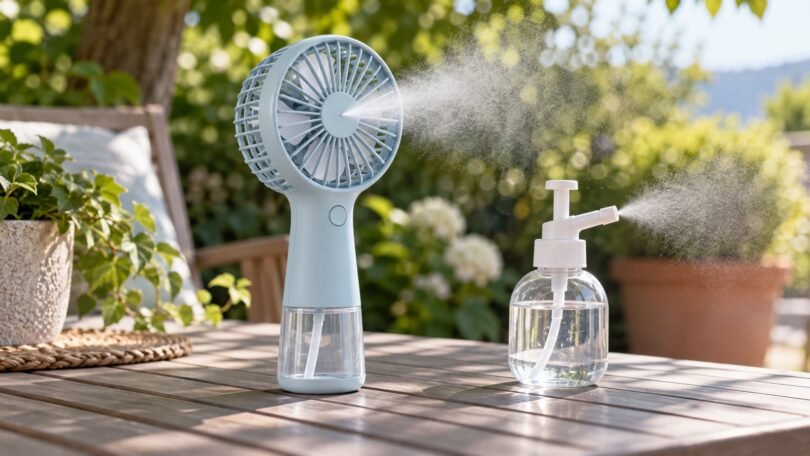

A portable mister is easiest to choose when you start with the water supply. For walking around, a refillable handheld fan keeps the setup small. For a patio with a nearby faucet and outlet, a hose-fed blower avoids repeated refills. For a campsite or sideline without plumbing, a battery-powered bucket-top fan offers another route, provided you can carry the water.
This guide compares those setups using product specifications and manuals. The recommendations reflect practical fit rather than hands-on cooling tests.
Choose the right kind of portable mister
- Manual spray bottle: simplest for occasional personal misting. It needs no charging, but you squeeze the trigger for each spray and get no powered airflow. Choose a clean bottle intended for water; do not reuse a container that held garden chemicals.
- Handheld misting fan: combines a small fan with a refillable reservoir. Check whether spraying is manual or automatic, which batteries it needs, and how easily the reservoir opens for drying.
- Hose-fed misting fan: suits a fixed outdoor seating spot. It needs an appropriate water connection and, for a corded model, a suitable outlet within reach.
- Bucket-top fan: can pump from a separate bucket. Plan for the bucket, clean water, charged battery, stable ground and transport space.
Water evaporation underlies mist cooling, so humidity matters. The Department of Energy explains that evaporative cooling works best in arid conditions. That principle helps explain why the same setup may feel different on a dry afternoon and a muggy evening. It does not establish a temperature reduction for any fan below.
O2COOL Deluxe: a handheld option for personal use

O2COOL Deluxe FML000100E024PUR, Purple Handheld Misting Fan, Single
As an Amazon Associate we earn from qualifying purchases.
The purple, single-fan O2COOL Deluxe is the compact choice here. Its fan has one speed and uses two AA batteries, which are not included. A trigger controls the water spray, giving you separate control over when to add mist. These are straightforward controls for someone who wants short bursts while sitting outdoors or taking a break.
The manufacturer’s product page confirms the one-speed design and battery requirements. The FML0001 family instructions call for clean water and ice only, prohibit freezing water in the bottle, and direct owners to empty and dry it for storage. Keep the fan away from eyes and hair, and follow its child-safety warnings.
Choose it for: close-range personal airflow and manually controlled mist. Consider the trade-off: you carry and refill the bottle yourself; it is not a shared patio setup.
Lasko Misto 7050: a hose-fed outdoor blower
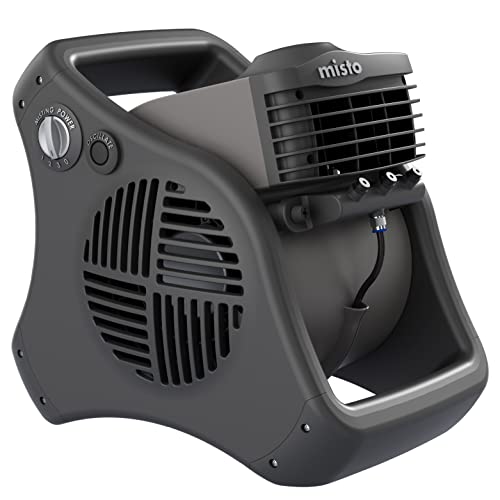
The black Lasko 7050 makes sense when the seating area already has access to water and power. It uses a standard garden-hose connection, three fan speeds, a pivoting head and powered internal louvers. The louvers direct airflow across the seating area; the entire cabinet does not need to swing from side to side. An adjustable water valve controls mist output.
The important limitation is installation. The 7050/7054 manual specifies outdoor use, a grounded receptacle and testing the GFCI plug before each use. It expressly prohibits extension cords. Check the outlet location before choosing this fan, and unplug it before moving or cleaning it.
Choose it for: a regular outdoor sitting area within reach of the required connections. Consider the trade-off: its carry handle makes relocation easier, but it still depends on a hose and household power. See Lasko’s model specifications for the connection and control details.
RYOBI PCL851K: a battery kit for bucket or hose use

The PCL851K kit includes the misting fan, a 1.5Ah battery and charger. Its fan can connect to a standard garden hose or draw water from most five-gallon buckets. A pivoting head and separate high/low fan and mist settings give more control than a handheld trigger bottle. The bucket is a separate purchase.
The official kit listing distinguishes this package from the tool-only PCL851B. That distinction matters if you do not already own a compatible battery and charger. Check the model suffix and included components rather than relying on a similar-looking product photo.
The PCL851 operating manual says to leave the pump off when using a garden hose. Move the fan and bucket separately; they do not lock together. Keep children away from buckets, even when they contain little water, and remove the battery before maintenance.
Choose it for: a stationary outdoor setup where a power cord or hose would be awkward. Consider the trade-off: battery charging, water refills and a separate bucket all become part of the packing list. A larger water supply also adds weight, so decide how you will move and refill it before leaving home.
Water, cleaning and placement checks
Before each outing, inspect the reservoir, intake, hoses and nozzles. Use the water specified in the instructions and avoid adding fragrances, oils or cleaning chemicals to operating mist water. Never point mist toward electrical equipment, plugs or charging gear. Keep hoses and cords out of walking routes, and stop or reposition the unit if surfaces become slippery.
Empty reservoirs after use and follow the model’s cleaning and drying instructions. CDC’s guidance for recreational misters recommends preventing stagnation and regularly draining and cleaning reservoirs. A fresh refill does not remove existing buildup. Follow manufacturer-approved maintenance methods rather than improvising a disinfectant mixture.
For a clogged Lasko nozzle, its manual provides a separate removal-and-soaking procedure for the nozzles and screen filter. The fan body has different cleaning instructions. Do not immerse the electrical assembly or assume a removable nozzle’s cleaning treatment is suitable for the whole appliance.
Keep cooling expectations realistic
A misting fan is a comfort accessory, not a reason to remain outdoors during dangerous heat. Plan shade, breaks, drinking water and access to an air-conditioned location. CDC’s heat guidance emphasizes those protective measures. None of these product comparisons establishes protection from heat illness.
For the simplest carry-along setup, start with the O2COOL. For a regularly used patio, check the Lasko’s outlet and hose requirements. For an outdoor spot without those connections, consider the RYOBI kit after accounting for its bucket and water. Matching the setup to the place you will actually use it is more useful than choosing by an advertised cooling number.
Image note: AI-generated editorial illustration; not a photograph of the named product.