
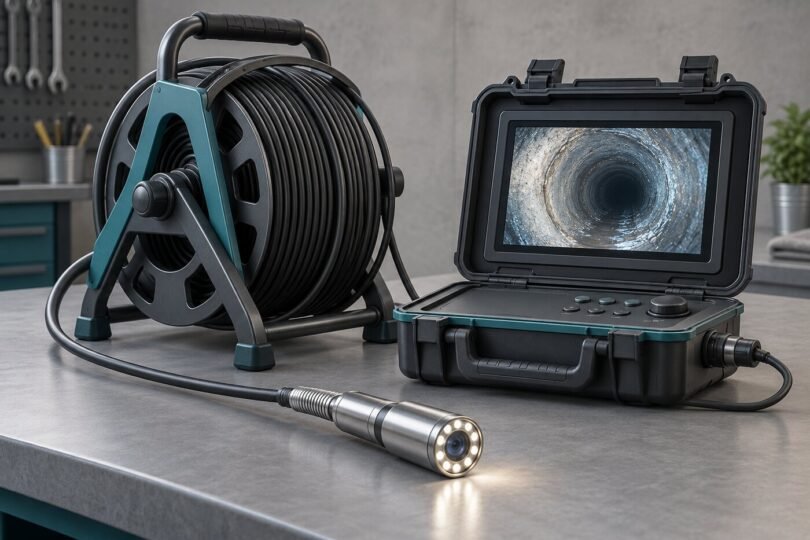

The best sewer camera is the one that fits your pipe, reaches the area you need to inspect and can be retrieved safely. For repeat professional inspections, our specification-based shortlist starts with the RIDGID SeeSnake Compact C40 system. The Sanyipace S8951DSRTM68R is worth comparing when you want a self-contained recording kit with an included locator. The Wöhler VIS 360 suits qualified operators who need to pan and tilt the camera for a closer look at pipe walls.
These are three purpose-built push-rod camera systems. A short USB inspection scope can help with a nearby opening, but it is a different buying decision from inspecting a buried sewer lateral. For a single unexplained blockage, a professional inspection or an appropriate rental may make more sense than ownership.
Reviewed October 4, 2026. This is a research-based buying guide using manufacturer specifications and manuals, not a hands-on test. We have not independently measured image quality, pushability, locator accuracy or durability.
Affiliate disclosure: Main Street Mobile may earn a commission from qualifying purchases through affiliate links, at no extra cost to you. The product links below go to manufacturer pages so you can check the exact configuration.
Best sewer cameras at a glance
Our selections reflect different inspection needs rather than an overall performance ranking. Cable length is the length supplied, not a promise that a camera will reach that far through your plumbing. Confirm the current package contents, seller, warranty, delivered price and return terms before ordering.
| System and exact configuration | Head and push rod | Display and locating | Best fit and main constraint |
|---|---|---|---|
| RIDGID SeeSnake Compact C40, catalog 63828 | 25 mm self-leveling head; 131 ft / 40 m cable; 6.7 mm outer cable diameter | CS6x Versa monitor, battery and charger; built-in 512 Hz sonde; separate receiver needed | Recurring inspections in manufacturer-rated 1.5–6 in lines; pipe condition and bends still determine access |
| Sanyipace S8951DSRTM68R, 100 ft / 30 m with S68R locator; SKU S8951DSRTMS68-30M | 23 mm head; 5 mm fiberglass cable | 9 in recording monitor; advertised self-leveling and 512 Hz sonde; selected bundle includes S68R | All-in-one camera-and-locator shopping; obtain confirmation of fit for your pipe and bends |
| Wöhler VIS 360, item 14139 | 1.5 in pan/tilt head; 100 ft rod, 0.26 in diameter | 7 in removable monitor; internal/USB recording; built-in transmitter; L 200 locator is an accessory | Detailed wall viewing by qualified operators; larger head needs suitable clearance |
Configuration sources: RIDGID C40 specifications and ordering list, Sanyipace 100 ft locator bundle and Wöhler VIS 360 package.
1. RIDGID SeeSnake Compact C40: shortlist for repeat professional inspections
The C40 combines a self-leveling camera with an HDR sensor and a TiltSense camera-angle display on compatible CSx monitors. Those features are useful reasons to request a demonstration if you inspect drains regularly and need to document what you find. They do not replace inspection experience or establish pipe grade on their own.
Choose the complete package carefully. Catalog 63828 includes the C40 reel, CS6x Versa monitor, battery and charger. Catalog 63668 is reel-only. Neither description makes a separate locating receiver part of the kit. The 63828 configuration is the one compared here, rather than the newer C40 DSL variant.
Tradeoff: this is a professional system to evaluate as a complete equipment purchase. Compare the camera, recording workflow, locator and service support together. A reel-only offer is not an equivalent price comparison. Check the exact RIDGID C40 configurations.
2. Sanyipace S8951DSRTM68R: shortlist for a bundled camera and locator
We selected the 100 ft / 30 m option with the S68R locator, not the 165 ft option or the camera-only choice. Its combination of a recording screen, distance counter and locating equipment makes it a useful all-in-one candidate.
Tradeoff: the manufacturer page retains older S8951DM wording and also describes some features as optional. Its current title advertises self-leveling and a sonde, while its linked manual covers an earlier model. Before buying, ask the seller to confirm the selected SKU, head functions, included receiver and suitability for your tightest fitting. We did not establish a dependable minimum pipe-and-bend specification for this exact bundle, and we would not infer one from its 23 mm head alone. Check the selected Sanyipace bundle.
3. Wöhler VIS 360: shortlist for pan-and-tilt inspection
The VIS 360 can turn its viewing direction through 360° and tilt through 180°. That makes it a different option for inspecting a joint or looking around the pipe wall, rather than only viewing ahead. Item 14139 includes the monitor, camera, reel, battery and charging equipment in a case.
Tradeoff: the 1.5 in head needs more clearance than the smaller heads above. Pan-and-tilt changes where the lens looks; it does not mechanically steer the whole head around a tight elbow. Wöhler specifies qualified personnel as its intended users. Request a demonstration using pipe and fittings comparable to your work, and include the separate L 200 receiver in your quote if locating matters. Check the Wöhler VIS 360 package and operator manual.
How to choose a sewer camera that will work in your pipes
Start with access, head size and bend geometry
Write down the pipe’s internal diameter, accessible entry point, likely run length and tightest bends. The head, spring assembly and any protective guide must all pass through the route. A head narrower than the pipe can still fail at a trap, sharp elbow, offset joint or obstruction.
Cable thickness also matters: stiffness helps transmit a push, while flexibility helps negotiate turns. Those needs compete. RIDGID specifies a 2.5 in minimum bend radius for the C40 cable; this is a cable-handling specification, not a guarantee that every elbow in a 1.5 in pipe is passable. Its manual explicitly makes pipe capacity dependent on pipe conditions. See the C40 manual.
Separate USB borescopes from push-rod sewer systems
Short USB or phone-connected borescopes suit close-access visual checks. For example, Teslong lists household USB inspection scopes with 16.4 ft probes. A sewer system adds a purpose-built push rod and reel for feeding a camera along a drain. A long flexible wire or a high pixel count alone does not establish the ability to push through a buried lateral. Compare the mechanical system first, then the screen.
Allow for more than the advertised cable length
Some cable is used between the reel and access point, and friction grows along a winding route. Extra cable is useful only if the rod and camera can negotiate that route. For an unknown line, discuss the access and likely distance with a rental supplier or inspection contractor before choosing a 100 ft system.
Understand what a locator actually does
A sonde is a transmitter near the camera; a compatible receiver helps estimate its underground position. The on-screen distance counter measures paid-out cable and cannot identify the exact surface location on its own. Confirm both the transmitter frequency and receiver mode.
Depth and position estimates can be affected by signal distortion, nearby utilities and the sonde’s orientation. Treat them as measurements requiring verification, not permission to excavate. Follow local utility-location requirements before any digging. RIDGID’s Scout manual explains locating uncertainty and depth limitations.
Check recordings, cleaning and replacement parts
Ask for an original exported recording, not just a polished sales video. Confirm how files are saved, viewed and delivered, and whether the counter is visible in the recording. Screen resolution and recorded-video resolution are separate specifications: Wöhler, for example, lists a 1024 × 600 display and lower video recording dimensions. See its technical data.
Also check the cost and availability of a replacement head, push rod, battery, connector and protective guides. Read the cleaning instructions and waterproof limits for each component. A waterproof camera head does not make the monitor, charger or case safe to immerse.
Rent, buy or hire a professional?
- Hire an inspection professional when you need an interpretation for a home purchase, recurring backups, suspected structural damage or a repair decision. Ask for the video, inspected extent, access point and any sections that could not be assessed.
- Consider renting for an occasional job if you can safely use the equipment. Confirm the actual head, cable, recording feature, locator, cleaning obligations and damage charges before reserving it.
- Consider buying for repeated inspections where the equipment fits your typical lines. Compare your expected rental or contractor costs against ownership, repairs, cleaning, training and downtime.
For one home blockage, the cheapest useful outcome may be a diagnosis rather than a camera purchase. Buying a system also leaves you responsible for recognizing its limitations and interpreting the footage.
Safety and retrieval limits
A sewer camera is inspection equipment. Do not use the head or rod to break through a blockage, and do not force a stuck camera or jerk the cable. Excessive force can damage the rod or leave equipment trapped. Stop and obtain professional help when the route or retrieval is uncertain. Follow the manufacturer’s protective-equipment and cleaning instructions. RIDGID handling guidance; Wöhler safety guidance.
Never enter a sewer, manhole, septic tank or other confined space to inspect a line or retrieve a camera. Hazardous gases, low oxygen, electrical hazards and engulfment can be fatal. Those environments require trained specialists and appropriate confined-space controls. OSHA’s sewer-system hazard overview explains the risks.
Frequently asked questions
What is the best sewer camera for a homeowner?
For a one-off problem, start by comparing a professional inspection with a suitable rental. If you expect repeat use, choose a recording push-rod system only after confirming it can pass through your access point and fittings. There is no universal homeowner model that fits every drain.
Will a 100 ft sewer camera inspect a 100 ft line?
Not necessarily. The access path uses cable, and bends, friction and blockages can limit reach. Supplied cable length is a maximum physical length, not a guaranteed usable inspection distance.
Do I need self-leveling, pan-and-tilt or a locator?
Self-leveling helps keep the image upright. Pan-and-tilt lets you change the viewing direction. A sonde and receiver help locate the camera underground. Choose the features your inspection requires; they solve different problems.
Can a sewer camera clear a clog or find every leak?
No. It shows the visible pipe interior and may help identify an obstruction or defect. It cannot clear the line, see through opaque water or certify the condition of concealed and uninspected sections. A plumber may need other diagnostic methods.
Are all advertised sewer cameras fully waterproof?
Check the exact component, depth and time limits. For example, Wöhler specifies IP67 for the VIS 360 head and states that the case contents must be protected from water. Do not apply a camera-head rating to the whole kit.
How we researched this guide
We reviewed current manufacturer product pages, ordering information and available operating manuals on October 4, 2026. We shortlisted three actual push-rod inspection systems with distinct use cases and compared exact configurations, head and rod dimensions, recording, locating equipment and practical limitations.
Recommendations are editorial judgments from those published specifications. No hands-on testing, numerical scores or independently verified performance claims are presented. We omitted fixed prices and stock promises because packages and offers change. Where manufacturer wording was ambiguous, we identified the question to resolve rather than filling the gap with an assumed specification.
Image disclosure: The featured image is an AI-generated editorial illustration, not a photograph of a reviewed product or evidence of hands-on testing.


