
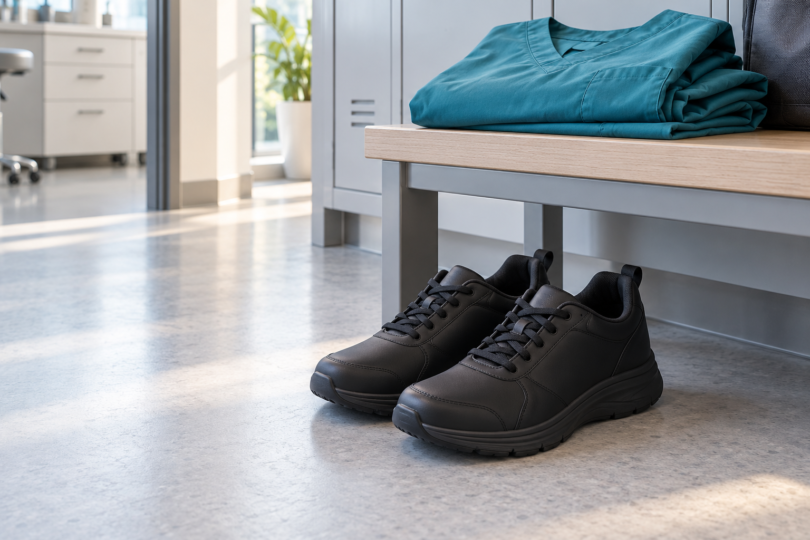

For a dental assistant who wants a closed-heel work sneaker, Shoes For Crews Liberty is our first option to compare. Its synthetic upper, removable insole and published slip-resistance information address practical work-shoe priorities. Crocs Bistro is the simpler molded-clog option if your practice permits its heel-strap design. Dansko XP 2.0 suits someone who prefers a structured clog, while Skechers Squad offers a knit slip-on alternative where the workplace allows that upper material.
Start with your practice’s footwear rules, then fit. These picks compare manufacturer specifications and care information; they are not results from wearing the shoes through clinical shifts. None comes with a promise to prevent falls, relieve pain or feel comfortable on every foot.
Best shoes for dental assistants: the shortlist
| Exact model compared | Why consider it | Important limit |
|---|---|---|
| Shoes For Crews Liberty, women’s Black, 37255, medium width | Easy-clean synthetic upper and removable insole | Water-resistant treatment is temporary, not a fluid barrier |
| Crocs Bistro Work Clog, Black, 10075 | Molded construction; soap-and-water cleaning | Heel-strap clog design needs workplace approval |
| Dansko XP 2.0, women’s Black Waterproof Pull Up, regular width | Leather clog with removable footbed | Distinctive heel movement and a 1.7-inch heel |
| Skechers Work Relaxed Fit: Squad, women’s Black, 77222 BLK, medium width | Fixed stretch laces and cushioned insole | Knit upper with a water-repellent treatment |
The links identify models and finishes, not a recommended size for every reader. Select your own size on the maker’s page. Women’s, men’s and unisex size labels are not interchangeable, and a familiar model name does not establish that another color, material or version has the same specifications.
1. Shoes For Crews Liberty: best starting point for a work sneaker
The women’s Black Liberty, style 37255, has a synthetic upper the maker describes as easy to clean. Its removable insole gives you a way to assess the fit with a replacement insert; check that the replacement leaves adequate room rather than simply stacking it on top.
Shoes For Crews lists an SRO-rated outsole under ASTM F3445-24 and references ASTM F2913-24 test methods. That is useful documentation to compare with a practice’s requirements, without treating it as a guarantee on every floor. The page describes the water-resistant treatment as temporarily slowing liquid entry, so this should not be read as a waterproof or infection-protective shoe.
Choose it for: a conventional work-sneaker shape with a closed heel and wipeable synthetic upper. Check first: fit, local cleaning rules and whether the listed medium width suits you. The US women’s size selector includes 3, 4 and 5 through 11, with half sizes through 9.5; a listed size is not a stock guarantee.
See Shoes For Crews Liberty 37255.
2. Crocs Bistro Work Clog: best for simple routine cleaning
This is the Black Bistro Work Clog, style 10075, rather than a ventilated Classic Clog. Crocs lists an enclosed toe, a thicker area over the forefoot and a molded body that can be cleaned with soap and water. The heel strap remains an important fit and workplace-policy consideration.
The current US page states ASTM F2913-24 testing and ASTM F3445-24 certification for its Crocs Lock tread. Those statements concern slip performance under specified conditions; they do not establish clinical fluid protection. Soap-and-water care also does not establish compatibility with every disinfectant used in a dental office.
Choose it for: molded-clog construction and straightforward routine washing. Check first: whether the practice accepts a strap-backed clog, the current Crocs size chart, and the fit while turning and walking. If the policy calls for a fully enclosed heel, this is not the right design.
See Crocs Bistro Work Clog in Black.
3. Dansko XP 2.0: best structured clog to try on
The version here is the women’s XP 2.0 Black Waterproof Pull Up in regular width, style 3950470202. It has a removable dual-density polyurethane footbed, an EVA midsole and a rubber outsole the maker describes as slip-resistant on dry, wet and oily-wet surfaces. We are not assigning it an ASTM certification absent from this product page.
Dansko specifies a 1.7-inch heel and EU whole sizes 35–43 for this version. The brand’s fitting instructions say the heel should rise and fall inside its closed-back clogs as you walk. That feel is different from a closely held sneaker heel, making an indoor try-on especially useful. The care instructions call for a damp cloth and Dansko Leather Cream.
Choose it for: a structured leather clog with a removable footbed. Check first: the instep, heel movement and room with your own insert. “Waterproof Pull Up” identifies this leather finish; it is not evidence of protection from bloodborne pathogens or chemical exposure.
See the selected Dansko XP 2.0 finish.
4. Skechers Squad: best knit slip-on option where permitted
The women’s Work Slip-Resistant Relaxed Fit: Squad, 77222 BLK, combines a flat-knit and synthetic upper with fixed stretch laces and a Memory Foam insole. Its forefoot fit is described as roomy. The current linked page shows medium width; check the actual width and size before buying rather than assuming every Squad listing is the same.
Skechers lists an SRO-rated outsole for wet, dry and oily surfaces. Its separate ASTM F2892 reference is for electrical-hazard footwear, not a slip-test designation. The Scotchgard treatment is described as water-repellent, which is different from an impermeable upper.
Choose it for: a slip-on design without laces that need tying. Check first: whether your practice permits knit footwear and how it expects shoes to be cleaned after contamination. Fixed stretch laces also give you less adjustment than conventional laces. Do not assume this model is machine-washable merely because some other Skechers are.
What matters in a dental workplace
Check the practice’s exposure and footwear policy
A shoe marketed for healthcare does not automatically meet your employer’s requirements. Ask about toe and heel coverage, permitted upper materials, cleaning, and any additional protective equipment required for your duties. OSHA’s interpretation on medical-office footwear places the exposure assessment with the employer and distinguishes ordinary street shoes from appropriate protective equipment when blood exposure is reasonably anticipated.
Read slip-resistance claims precisely
ASTM F2913 describes a whole-shoe test method, while F3445 specifies performance requirements using that method. The F3445-24 scope explains that controlled laboratory results do not establish performance in every possible situation. Surface, contaminants and workplace conditions still matter. A generic “non-slip” phrase is less informative than a clearly identified model and test designation.
Separate cleaning from disinfection
An easy-clean upper can make routine care more convenient. It does not tell you which clinical disinfectants are compatible, how long they must remain wet or whether the footwear is suitable after a particular exposure. Follow the practice’s procedure and the shoe maker’s material-care instructions together; check before using alcohol, bleach, heat or a washing machine.
Try the fit with your work socks
Walk, turn, sit and stand in the shoes indoors while the return conditions still allow a fit check. Look for toe pressure, rubbing at the instep and unwanted movement. If you use an insert, bring it to the try-on. Choose the shoe that fits your foot and duties rather than the one with the strongest comfort slogan.
Common questions
Are Crocs acceptable for a dental assistant?
Ask the practice about the specific model. Bistro’s enclosed upper is different from a ventilated casual clog, but its heel strap may still conflict with a fully enclosed-heel rule. Brand name alone is not approval.
Can ordinary running shoes work?
They may fit a practice’s rules, but running cushioning does not establish occupational slip performance, cleanability or fluid protection. Compare the exact upper and outsole specifications with the requirements for your role before choosing them.
Which pair should I choose first?
Start by trying Liberty if you want a closed-heel synthetic sneaker. Consider Bistro when molded clogs are allowed, XP 2.0 when you prefer a structured leather clog, and Squad when knit footwear is permitted. Personal fit and the practice’s policy should decide the final purchase.

