
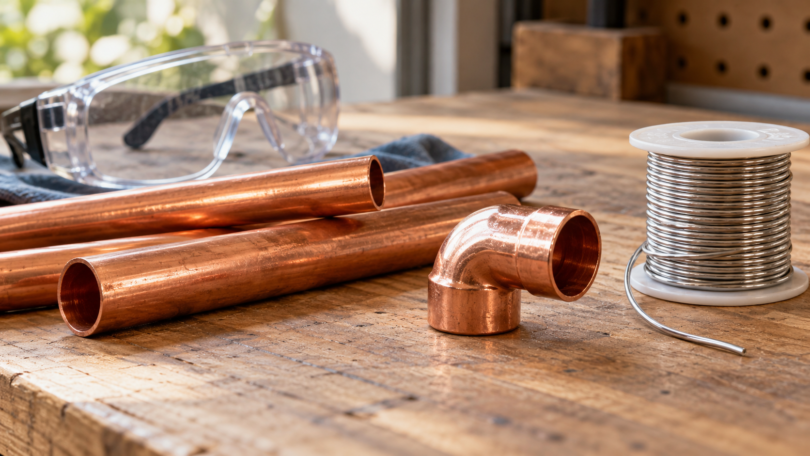

The best solder for copper pipe starts with the right application: a lead-free plumbing solder identified for potable-water work, paired with compatible plumbing flux. For an ordinary copper water-line project, Oatey Safe-Flo 29025 is our first option to compare. Oatey 95/5 and 97/3 are useful alternatives when their alloy and melting range fit the job specification.
This shortlist compares three documented Oatey alloys. The recommendations are based on manufacturer product information and technical instructions, not hands-on joint-strength tests. None is a substitute for checking the pipe, fitting, valve and local installation requirements.
Best solder for copper pipe: three options compared
| Product | Best reason to choose it | Manufacturer melting range | Key limitation |
|---|---|---|---|
| Oatey Safe-Flo 29025, 1 lb. | Lower starting melt temperature in this shortlist | 420–460°F | Separate flux required; not an aluminum solder |
| Oatey 95/5 22018, 1 lb. | Specified tin-antimony plumbing alloy | 450–464°F | Narrower melting interval; do not confuse with 95/5 electrical solder |
| Oatey 97/3 20973, 1 lb. | Specified tin-copper alloy for copper and brass joints | 440–572°F | Highest upper end of the three melting ranges |
These are alloy melting ranges, not torch settings, service-temperature ratings or a promise that any particular joint will pass inspection. Compare the exact part number and spool weight before ordering.
1. Oatey Safe-Flo 29025: first choice to compare for routine copper plumbing
View Oatey Safe-Flo 29025 product details
Safe-Flo is a silver-bearing tin, copper and bismuth alloy intended for copper plumbing and potable-water lines. The current Oatey product documentation gives a 420–460°F melting range and identifies NSF/ANSI/CAN 61 approval. The 29025 selection is a 1-pound spool.
Its lower starting melt temperature makes it a sensible first comparison for a buyer who has not been instructed to use a particular alloy. That is a specification-based preference, not evidence that it produces a stronger joint than the other choices. Correct preparation and heating still matter.
- Pros: Explicit copper-plumbing and potable-water application; lower melt start than the other two alloys here.
- Cons: Flux is a separate purchase. Oatey does not recommend this solder for aluminum.
- Buying check: Confirm 29025 and 1 lb. Retail descriptions may show a different melting range or wire diameter; use the current manufacturer documentation and the supplied label for the product you receive.
2. Oatey 95/5 22018: for a tin-antimony plumbing specification
View Oatey 95/5 22018 product details
This solid plumbing wire contains 95% tin and 5% antimony. Oatey identifies potable-water use and applications involving temperature changes and vibration. Part 22018 is the 1-pound size; its documented melting interval is 450–464°F.
Choose it when the job calls for a tin-antimony plumbing solder or you already work successfully with that narrow melting interval. The useful comparison with Safe-Flo is the different alloy and melt behavior. We have no comparative testing that establishes a universal durability winner.
- Pros: Clearly identified plumbing formulation; exact composition and size are documented.
- Cons: Starts melting at a higher temperature than Safe-Flo and has a much narrower melting interval.
- Buying check: Look for plumbing solid wire and part 22018. A spool labeled 95/5 rosin-core or acid-core solder is a different product.
3. Oatey 97/3 20973: for a tin-copper plumbing alloy
View Oatey 97/3 20973 product details
Oatey 97/3 contains 97% tin and 3% copper. The manufacturer lists it for sweating copper and brass plumbing joints and identifies NSF/ANSI/CAN 61 approval for potable-water applications. Part 20973 is a 1-pound spool.
The main tradeoff is its 440–572°F melting range. It starts melting below 95/5 but reaches the upper end of its range considerably later. Consider it when a tin-copper alloy is specified and your technique and components suit it. A broader melting interval does not make oversized gaps or poorly fitted joints acceptable.
- Pros: Documented copper/brass and potable-water use; a defined tin-copper alternative to the other alloys.
- Cons: Higher upper melting temperature than either Safe-Flo or 95/5.
- Buying check: Match 20973 and 1 lb.; do not treat a supplier’s carton quantity as the weight or number of spools in an individual offer.
The product links above go to the manufacturer because we could not fully verify the exact selected new Amazon offers. That does not mean these products are unavailable on Amazon or elsewhere.
How to choose the right solder and flux
Start with the water service. For drinking-water pipework, use solder and flux whose manufacturer identifies that application. “Lead-free” on an electronics product is not enough to establish plumbing suitability. Tin-lead electrical and stained-glass solders such as 60/40 and 63/37 do not belong in this shortlist.
Choose compatible plumbing flux. These solid-wire solders need separately applied flux. One documented option is Oatey H-20 No. 95 water-soluble tinning flux. Its manufacturer information specifies compatibility with common plumbing solder alloys; the technical sheet lists NSF Standard 61 and ASTM B813 for the flux base. It is not for electrical parts, aluminum, stainless steel or magnesium. Tinning flux contains solder powder, but it does not replace the solid wire needed to complete the joint.
Respect the fitting instructions. Some valves contain heat-sensitive components, and not every piping system uses soldered joints. Do not choose an alloy solely because its melting temperature is below a torch’s advertised flame temperature. If the installation specifies brazing, press fittings or another joining method, these plumbing solders are not interchangeable substitutes.
Budget for preparation and safe handling. Copper and fitting surfaces must be clean and properly fitted. Oatey’s copper-pipe project guide covers cutting, deburring, cleaning, fluxing, heat control, cooling and leak checks. Follow the exact solder, flux and torch instructions, provide ventilation, protect eyes and hands, and protect nearby combustible materials. Lead-free does not mean fumes, hot metal or flux are harmless.
Which one should you buy?
Compare Safe-Flo 29025 first for an ordinary copper potable-water project with no prescribed alloy. Choose 95/5 22018 for a tin-antimony requirement and 97/3 20973 for a tin-copper requirement. Buy the spool size you need, add compatible plumbing flux, and confirm the joint method before beginning. If the required alloy or installation procedure is unclear, get the fitting manufacturer’s guidance or use a qualified plumber.
Frequently asked questions
What solder should I use for copper drinking-water pipes?
Choose a lead-free plumbing solder whose manufacturer specifically identifies potable-water use, plus compatible plumbing flux. The three Oatey products here meet that application description, but the fitting instructions and local requirements still govern the installation.
Can I use 60/40 or 63/37 electrical solder on copper water pipes?
No. Those tin-lead electrical alloys are not appropriate choices for potable-water plumbing. Use a product specifically identified for lead-free plumbing service rather than treating all solder wire as interchangeable.
What is the difference between Safe-Flo, 95/5 and 97/3?
Safe-Flo is a silver-bearing tin, copper and bismuth alloy with a manufacturer melting range of 420–460°F. Oatey 95/5 is tin-antimony at 450–464°F, and Oatey 97/3 is tin-copper at 440–572°F. These differences do not establish a universal joint-strength ranking.
Do I still need solder when using tinning flux?
Yes. Tinning flux contains solder powder to help prepare the joint, but solid plumbing solder is still required to fill it. Follow the flux and solder instructions, including cleaning and removal of residual flux.
Does lead-free plumbing solder require ventilation?
Yes. Follow the ventilation and protective-equipment directions in the solder and flux safety data sheets. Lead-free describes the product formulation; it does not remove the hazards associated with heating metal, handling flux or using an open flame.


