
The best store-bought kielbasa for your meal depends on the meat blend, package size and whether you want a fully cooked rope or fresh sausage that needs cooking. For a straightforward supermarket comparison, start with Hillshire Farm Polska Kielbasa, its beef and turkey versions, and Johnsonville Polish Kielbasa Smoked Rope Pork Sausage. These are distinct recipes, so choosing by the brand name alone can miss an important difference.
This guide compares manufacturer labels and preparation directions. We have not conducted a taste test, and a place in the shortlist is not a claim that one sausage tastes better than another. Store selection, recipes, package sizes and delivery options can change; the label on the pack you actually buy takes priority.
Store-bought kielbasa worth comparing
| Product | Pack compared | Meat or casing detail | Useful starting point |
|---|---|---|---|
| Hillshire Farm Polska Kielbasa | 14 oz rope | Pork, beef and mechanically separated turkey; beef collagen casing | A mixed-meat, fully cooked option for a skillet dinner |
| Hillshire Farm Beef Polska Kielbasa | 12 oz rope | Beef recipe; beef collagen casing | Shoppers specifically seeking the beef version |
| Hillshire Farm Turkey Polska Kielbasa | 13 oz rope | Turkey recipe; beef collagen casing | Lower labeled calories and fat than the other options here |
| Johnsonville Polish Kielbasa Smoked Rope Pork Sausage | 14 oz rope | Pork recipe; beef collagen casing | A pork-based alternative with a manufacturer gluten-free claim |
Hillshire Farm Polska Kielbasa: mixed-meat weeknight option
The 14-ounce Polska Kielbasa is fully cooked and comes as a rope you can portion yourself. Its current manufacturer ingredient list includes pork, beef and mechanically separated turkey. That matters if you thought “Polska” identified a pork-only sausage.
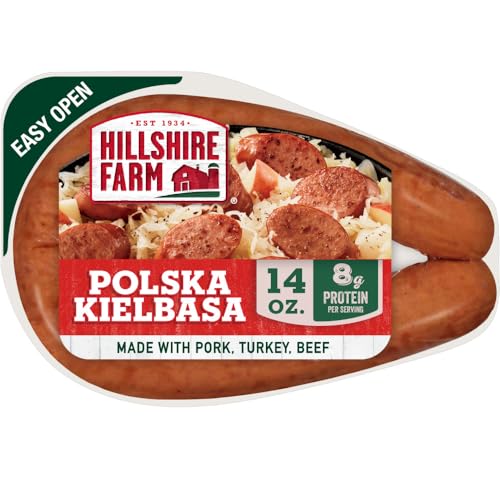
Hillshire Farm Polska Kielbasa Smoked Sausage, 14 Oz.
As an Amazon Associate we earn from qualifying purchases.
A rope is convenient when you want coins for cabbage and potatoes, larger pieces for a grill, or small pieces distributed through a soup. The practical advantage is control over the cut. For a household that will use only part of the package, decide how to store the remainder before opening it.
This is the 14-ounce standard version. The brand also sells a larger family pack and several similarly named smoked sausages. Check the complete product name and net weight rather than assuming every red package contains the same recipe.
Hillshire Farm Beef Polska Kielbasa: choose it for the beef recipe
The Beef Polska Kielbasa is a fully cooked 12-ounce rope. Its listed meat ingredient is beef, and the casing is beef collagen. It suits a shopper who specifically wants the beef formulation, but the word “beef” should not be treated as a halal, kosher or other certification.

The smaller net weight is easy to overlook when comparing shelf prices with a 14-ounce rope. Compare the price per ounce, and then consider how much of either package you will actually use. A lower checkout price can simply mean less food.
There is no verified taste winner here. If beef is your preference, this is a more relevant starting point than a ranking based on untested claims about smoke intensity or casing snap. A full ingredient check still matters for allergies and dietary requirements.
Hillshire Farm Turkey Polska Kielbasa: lower labeled calories and fat
The Turkey Polska Kielbasa comes in a 13-ounce package and is fully cooked. On the manufacturer’s current label, a 2-ounce serving has 100 calories and 6 grams of fat, compared with 170 calories and 14 grams of fat for the two Hillshire alternatives above.

That gives you a specific reason to compare it if those numbers matter to your shopping decision. It does not establish better flavor, a lower-sodium diet for any individual, or an overall health ranking. Sodium, portion size and the other ingredients in your meal still count.
A particularly important detail: the manufacturer lists a beef collagen casing. This is a turkey-based sausage, not a product made exclusively from poultry ingredients. Anyone avoiding beef should read the casing information as carefully as the main meat description.
Johnsonville Polish Kielbasa rope: a pork-based alternative
Johnsonville Polish Kielbasa Smoked Rope Pork Sausage uses pork as its meat ingredient and lists a beef collagen casing. The manufacturer identifies the product as gluten free. Treat that as a claim for this exact rope product and verify the current package, rather than extending it to every Johnsonville sausage.
The rope is useful for the same flexible cutting styles as the options above. Johnsonville also sells other formats, so distinguish the rope from individual links and foodservice cases when ordering. A listing with “Polish Kielbasa” in its title can still be a different pack.
Its stated stovetop method is to cut half-inch slices and cook in a nonstick skillet over medium heat for about 7–9 minutes, stirring, until heated through. The manufacturer also provides grill, oven and air-fryer directions. Use the directions for the exact product you purchased.
Compare nutrition on the same serving size
The figures below are from the manufacturers’ product pages, all using a 2-ounce/56-gram serving. They are useful for like-for-like comparison, not a recommendation for how much you should eat. Check your package for changes.
| Product | Calories | Total fat | Sodium | Protein |
|---|---|---|---|---|
| Hillshire Farm Polska Kielbasa | 170 | 14 g | 490 mg | 7 g |
| Hillshire Farm Beef Polska Kielbasa | 170 | 14 g | 510 mg | 6 g |
| Hillshire Farm Turkey Polska Kielbasa | 100 | 6 g | 360 mg | 8 g |
| Johnsonville Polish Kielbasa rope | 180 | 16 g | 560 mg | 8 g |
A 4-ounce portion doubles every number in its row. Sides and sauces change the meal further, especially salty additions such as sauerkraut, prepared stock and mustard. For dietary restrictions, compare the ingredient list and allergen statement as well as the nutrition panel. Online retailer ingredient text can lag behind a manufacturer’s reformulation.
How to choose the right pack at the store
- Decide on the meal first. A rope is easy to cut for a pan dish; individual links can be more convenient for separate servings. Choose the format you need rather than buying a larger case solely for a lower unit price.
- Read the cooking status. Look for fully cooked or ready-to-eat wording, or instructions indicating that the sausage needs thorough cooking. A smoked appearance is not proof that it is ready to eat.
- Check the meat and casing. Pork, beef and turkey blends differ, and a poultry sausage may still use a beef casing. Ask a deli counter for the ingredient information when it is not visible.
- Compare equal quantities. Divide the pack price by its net ounces. Consider how much will fit your meals and refrigerator or freezer space.
- Inspect the package. Choose an intact, properly refrigerated pack and follow its storage and date instructions. Avoid leaking or damaged packaging.
A local Polish deli or butcher may offer additional fresh and smoked varieties. Those can be worth exploring, especially if you want a particular texture or seasoning, but ask exactly what is in the sausage and whether it is cooked. “Traditional” alone does not tell you the preparation requirements.
Cooking and storage: the distinction that matters
USDA’s sausage guidance distinguishes uncooked sausage from ready-to-eat products. Raw sausage made from ground pork or beef needs to reach 160°F; raw poultry sausage needs 165°F. Use a food thermometer, not color, to check raw sausage. For a commercially cooked product, follow its package heating directions.
Keep refrigerated sausage at 40°F or below. USDA’s general chart allows up to two weeks for unopened cooked sausage and seven days after opening; follow the package instructions and use-by date. Fresh raw sausage has a shorter refrigerated window of one to two days. Once sausage becomes part of a cooked meal, treat it as leftovers and use it within three to four days. Freeze portions you will not use in time.
Refrigerate perishable food promptly and do not leave it out for more than two hours, or one hour above 90°F. FoodSafety.gov gives additional precautions for people at higher risk of foodborne illness and recommends reheating leftovers to 165°F. Follow those precautions when applicable rather than assuming that a cooked sausage is risk free.
Buying kielbasa online
Check the exact meat blend, net weight and number of packs before comparing a delivery offer with a supermarket price. An Amazon product page identifies a product; it does not establish that refrigerated delivery is available at your address. Check delivery service, cold packing and arrival timing during checkout.
USDA advises that perishable delivered food should arrive frozen, partly frozen with ice crystals, or refrigerator cold. Open the shipment promptly and check it with a food thermometer. If refrigerated food arrives above 40°F, notify the seller and do not eat or taste it. Smoking and vacuum packing do not make an otherwise refrigerated sausage shelf stable.
Quick answers
Is all kielbasa fully cooked?
No. The word can appear on fresh and cooked sausages. The package’s cooking instructions are the deciding evidence, especially at a butcher or specialty deli.
Which option is the best value?
Compare the local price per ounce for the exact version, then account for leftovers and delivery costs. A package you can finish safely may be better value than a bulk order you do not have room to store.
Which would you choose first?
Start with the meat recipe you want: the standard Hillshire blend, its beef version, its lower-calorie turkey version, or Johnsonville’s pork rope. Check the actual package and choose the format that fits your meal. That is a more useful decision than an unsupported universal “best tasting” award.
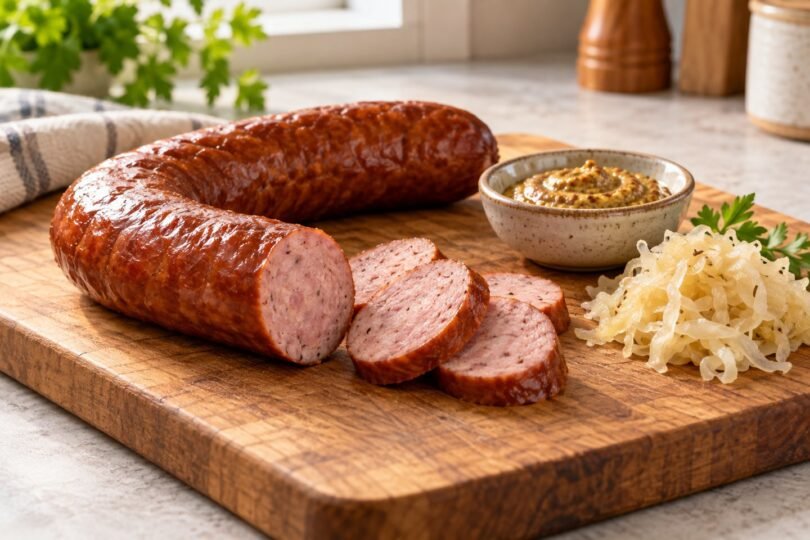
Image note: AI-generated editorial illustration of generic items; not a photograph of a named or tested product.