


For a 120V fuel transfer pump, start with the fuel you will move, the available electrical supply and the amount of time the pump must run. A diesel-only pump is unsuitable for gasoline, and a high flow-rate claim does not tell you whether the pump can run continuously or whether its package includes a hose and nozzle.
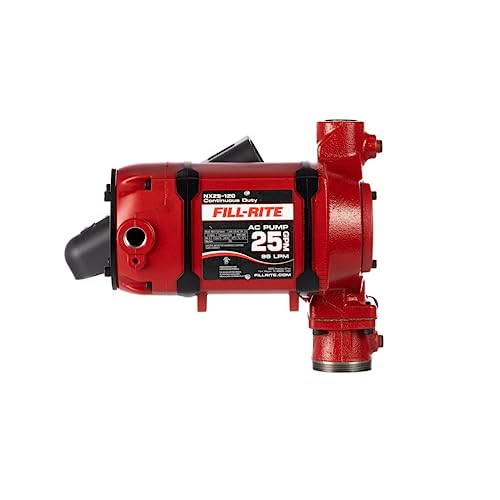
Two Fill-Rite models illustrate the main choice: the FR610H is a 15 GPM manual-nozzle kit for intermittent use; the NX25-120NB-PX is a 25 GPM continuous-duty, pump-only option for a separately specified dispensing system. This comparison uses manufacturer documentation and exact retail listings, not hands-on flow or durability tests.
First check the electrical rating
The wording “120V fuel transfer pump” commonly appears in listings for this equipment class, but read the actual technical rating. Fill-Rite specifies the FR610H at 115V AC, 60 Hz. The current NX25-120 technical documents specify 115V AC, 50/60 Hz, although the product is marketed as 120V and older product imagery uses that label. The NX25-120 manual also warns that it is not a dual-voltage pump.
Have the installer match the delivered pump’s nameplate and manual to the available supply. Neither model is a 12V battery pump. Do not infer a plug-in connection from the voltage in the title: electrical connection, location and protection are part of a compliant fuel-dispensing installation.
Fill-Rite FR610H for intermittent fueling with a manual nozzle
The FR610H is a cast-iron rotary-vane pump rated at up to 15 gallons per minute. Its stated duty cycle is 30 minutes on followed by 30 minutes off. That makes it a practical model to compare for periodic equipment refueling when the workload leaves room for the required rest period.
The selected kit includes the pump, a 3/4-inch by 12-foot discharge hose, a manual nozzle and installation components. It uses a 2-inch NPT bung mount, a 1-inch NPT inlet and a 3/4-inch NPT outlet. Fill-Rite describes this AC model for stationary aboveground tanks. Confirm the suction arrangement against the depth and design of the actual tank.
Approved fluids: gasoline and gasoline/ethanol blends through E15, diesel, biodiesel blends through B20, kerosene and mineral spirits. These are the fluids listed for the FR600 family in the H-series operating manual.
Main limitation: the rest cycle matters if several machines need filling back-to-back. Thermal protection is an emergency safeguard, not permission to exceed that cycle. This is the manual-nozzle FR610H kit; the similarly named FR604H is a different, pump-only package.

Fill-Rite FR610H Fuel Transfer Pump, 115V AC, 15 GPM, Hose and Manual Nozzle, One Kit
As an Amazon Associate we earn from qualifying purchases.
Fill-Rite NX25-120NB-PX for continuous-duty fuel transfer
The NX25-120NB-PX is the more relevant comparison when scheduled pump cooldowns would interrupt the job. It has a variable-speed motor and a continuous-duty rating for fuel transfer, with a stated maximum flow of 25 GPM. This exact version uses a 2-inch NPT bung mount, a 1-1/4-inch NPT inlet and a 1-inch NPT outlet.
Package distinction: PX is the pump-only version. It does not supply a dispensing hose, nozzle or meter. Include correctly rated accessories and professional installation when comparing the total system cost with a ready-configured kit. Do not mistake the separate foot-mount version or a different accessory suffix for this bung-mounted model.
Approved fluids: the current NX25-120 specification sheet lists diesel, gasoline, biodiesel through B20, E15, kerosene, mineral spirits and methanol up to 15%. That additional methanol allowance should not be assumed for the FR610H or another pump.
Main limitation: a bare pump transfers responsibility for the rest of the system to the buyer and installer. The manual describes automatic shutdown after 20 minutes in bypass, when no fuel is being dispensed. Continuous duty does not make unattended dispensing or indefinite dry-running an acceptable operating plan.
Compare the complete dispensing system
Start with the tank and the equipment receiving fuel. A nozzle that suits a large diesel filler may be wrong for a gasoline vehicle. Check fuel compatibility and fitting size for every wetted component, including the hose, nozzle, seals, filter and meter. A pump’s approved-fluid list does not automatically approve an accessory fitted to it.
- Workload: Estimate the volume per fill and how many consecutive fills are likely. Use that to judge intermittent versus continuous duty.
- Tank arrangement: Confirm the approved tank, mounting thread, suction depth and venting requirements with the installer.
- Hose reach: Measure the needed route without creating an unnecessary trip hazard or relying on the longest hose you can find.
- Filtering and metering: Include them if needed, but account for their flow restrictions and compatibility.
- Delivery rate: Treat 15 or 25 GPM as a published rating, not a guaranteed rate through every hose, filter, lift and nozzle combination.
For example, transferring 50 gallons at an uninterrupted 15 GPM would take about 3 minutes 20 seconds; at 25 GPM it would take 2 minutes. Those are simple planning calculations, not measured fill times. Setup, restrictions and the final portion of a fill can add time.
Installation and operating safety
Fuel vapors and electricity make this a job for a qualified installer. The H-series manual requires electrical wiring by a licensed electrician. The NX25-120 manual likewise emphasizes code-compliant wiring, grounding and appropriate conduit and sealing. Follow the exact manual and applicable local requirements rather than adapting a general-purpose extension cord or improvising an electrical connection.
Both manuals require precautions against static discharge when handling flammable liquids, including suitable conductive hose and keeping the nozzle in contact with the receiving container during filling. Keep ignition sources away. The NX25 instructions prohibit enclosed-area use with hazardous or explosive fluids and require good ventilation. Portable containers must be placed on the ground rather than filled in or on a vehicle.
Use an appropriately secured and vented tank, and have the installer address siphoning protection where the system requires it. Do not bypass a safety device to improve flow. Stop using the system if it leaks, overheats or behaves abnormally, and follow the manufacturer’s service process. These pumps are not for drinking-water transfer or aircraft fueling.
Common questions
Can any diesel transfer pump handle gasoline?
No. Buy only a pump and accessory system explicitly approved for gasoline. The generic terms “fuel pump” and “oil transfer pump” are insufficient.
Is a continuous-duty pump always the better purchase?
It is useful for sustained transfer work, but an intermittent-duty kit can suit a lighter workload. Compare the required rest cycle, included accessories and installation cost.
Can I use these pumps for E85, B100 or DEF?
Those fluids are outside the approved lists above. Select equipment explicitly documented for the exact fluid and concentration instead of assuming compatibility.
Image note: Relevant existing category illustration retained.