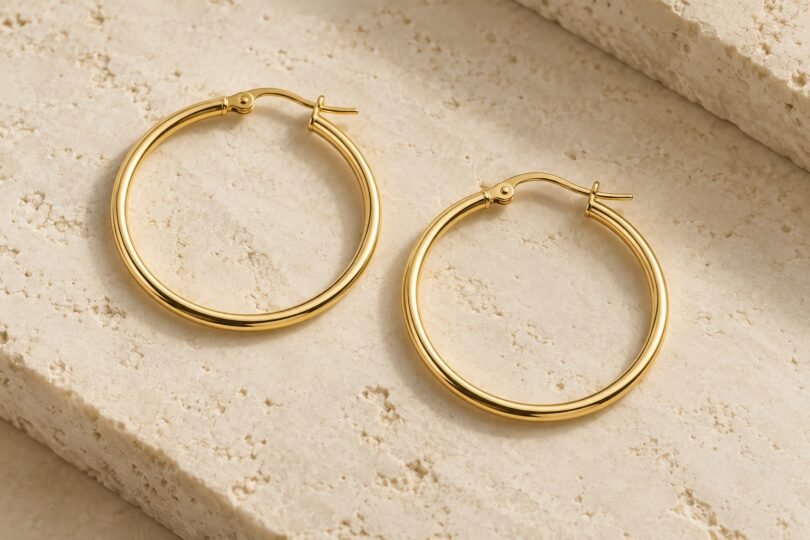

A good pair of 30mm 14k gold hoop earrings starts with three details: the diameter being measured, the gold construction, and the weight you will actually wear. Two hoops can look almost identical in a product photo while differing substantially in tube thickness, hollow construction and closure. A listing that says “14k gold plated” also describes a different product from an earring made from a 14k gold alloy.
For a slender profile, start with a 2mm tube. For a more noticeable rounded hoop, compare 3mm and 4mm tubes at the same diameter. The options below have published 30mm specifications; where a seller leaves a measurement or construction detail unclear, that gap is identified rather than filled in.
30mm 14k gold hoops worth comparing
These are specification-based shopping options, not a hands-on ranking. The links lead to the relevant jewelry listings. Confirm the selected metal, size, quantity and return terms before ordering, especially when a page offers both single earrings and pairs.
Black Bow 2mm x 30mm classic round hoops: a slim tube profile
Black Bow’s E13265 classic round hoops are described as polished 14k yellow gold with a hollow tube, a hinged post, 2mm thickness and approximately 30mm diameter. The page lists an approximate weight of 1.86 grams, but does not clearly label that figure as per earring or per pair in its specification bullets.
This is the starting point if you want a narrow gold outline rather than a chunky tube. Before buying, ask whether 30mm is the outside diameter, confirm the weight basis and check that the order includes two earrings. The hollow construction should remain part of the comparison even though the tube itself is made from karat gold.
Zales 3mm x 30mm hoops: a middle-width option
The Zales 30mm Hoop Earrings in 14K Gold, item 20630912, have a polished yellow-gold finish and latch backs. The product description specifies 3.0 x 30.0mm for each hoop. That puts their stated tube dimension between the 2mm and 4mm choices here.
The retrieved specifications do not give a gram weight or settle whether the tubing is hollow or non-hollow. Ask Zales to confirm those points, the diameter convention and pair quantity before treating the price as comparable with another 30mm design. A familiar retailer name does not replace a complete specification.
Kinn Classic Hoop Earrings Medium: a fuller tube with explicit weight
Kinn’s Classic Hoop Earrings Medium list a 30mm total diameter, 4mm thickness, hollow construction, hinged back closure and a weight of 1.2g per earring. The yellow-gold option is 14k. The page offers both a pair and a single earring, so select the intended quantity deliberately.
This is a useful comparison for someone who likes a broader tube but wants an explicit per-earring weight. Kinn uses “solid gold” as material language while separately disclosing that this design is hollow; it should not be mistaken for a solid cross-section. The brand cautions that hollow pieces need gentle handling because dents can be difficult to repair.
What does 30mm actually measure?
Thirty millimeters is 3 centimeters, or about 1.18 inches. That tells you little about fit unless you know whether the seller means outside diameter, inside diameter or overall hanging length. “Medium hoop” is not a standardized measurement, and a model photograph cannot establish exact scale.
For a simple circular hoop with uniform tubing, outside diameter minus twice the tube thickness gives an approximate inside opening. A hypothetical 30mm outside-diameter hoop with a 2mm tube therefore has about a 26mm opening; with a 4mm tube, the opening is about 22mm. This is a geometry example, not a substitute for the seller’s measurement. Hinges, tapering and posts can change the usable opening.
Measure a pair you already like from outer edge to outer edge, then compare its thickness and hanging length separately. If you do not own a suitable pair, draw a 30mm circle on paper to judge the scale beside your face. That helps with appearance, but it will not predict the weight, balance or position of the post in your piercing.
14k, hollow, plated and gold-filled are different descriptions
The FTC’s jewelry buying guidance explains that 14k gold contains 14 parts gold and 10 parts other metals. It also uses “solid gold” to mean an item that is not hollow. Because retailers sometimes use that phrase less precisely, ask two separate questions: what is the metal, and is the earring hollow?
- 14k gold alloy: the karat description concerns gold content, not the shape or emptiness inside the tube.
- Gold plated: a surface layer of gold covers another material; that layer can wear away.
- Gold-filled or gold overlay: a gold layer is mechanically applied over a base metal. It is not the same construction as karat gold throughout.
- Vermeil: gold plating over sterling silver, rather than an all-14k gold earring.
A hollow 14k hoop can still be made from genuine 14k gold alloy. The important distinction is that its interior contains empty space. Do not assume “real gold” answers the construction question, or that “14k” in a long marketplace title applies to every component.
Thickness, weight and closure: the practical checks
Compare grams on the same basis. A 2.4g pair and a 1.2g single earring may represent the same per-earring weight. Shipping weight and package weight are not jewelry weight. If a listing supplies only one unlabeled number, ask for clarification. Compare with a pair you already find comfortable rather than relying on the adjective “lightweight.”
Do not use thickness as a weight estimate. A wider hollow tube can contain less metal than a narrower non-hollow design. Tube width mainly helps predict appearance; it does not prove durability, comfort or value. Also check whether a quoted millimeter dimension describes the tube or just the broadest decorative section.
Inspect the closure information. A hinged post or latch back needs to align and close properly. An endless-style hoop uses a different opening motion and may require more dexterity. Before wearing a new pair out, check the alignment without forcing the metal. If a post misses its catch or the closure feels unreliable, contact the seller instead of repeatedly bending it.
Check the whole order. Select yellow, white or rose gold intentionally; those are separate variants. Confirm whether the listing is for one earring, one pair or several pairs. Read the return conditions before trying the earrings on, because rules for worn, personalized or final-sale jewelry may differ from the general store policy.
Sensitive ears and everyday care
A 14k label alone does not identify all the other metals in the alloy. If you already know you react to a particular metal, ask the seller about the hoop, post and closure separately. A generic “hypoallergenic” label is not enough to guarantee that a specific person will tolerate an earring.
For its plain gold jewelry, Kinn recommends gentle cleaning with warm water, mild dish soap and a soft brush, avoiding harsh chemicals and abrasive materials. Its care guide also advises taking hollow hoops off for sleep and strenuous activities, checking the clasps, and avoiding chlorine. Follow the instructions for the actual earrings you buy, particularly if they have stones or other materials.
Store hoops where they cannot be crushed beneath other jewelry. Remove them before activities where a towel, helmet strap or clothing could catch the hoop. If the shape changes or the hinge becomes loose, a jeweler can assess it; trying to squeeze hollow tubing back into shape can make the problem worse.
Which pair should you choose?
Choose the 2mm Black Bow design to investigate a slender silhouette, the 3mm Zales option for a middle-width comparison, or Kinn’s 4mm Medium hoops when a fuller profile and a published per-earring weight matter most. None of those choices eliminates the need to verify fit and the selected quantity.
The strongest purchase is the one with clear answers: genuine 14k material, a defined 30mm measurement, disclosed hollow or non-hollow construction, a usable closure and a weight you are comfortable wearing. If the seller cannot resolve one of those points, keep comparing before paying for the word “gold.”