

A 365 nm UV flashlight is a longwave ultraviolet inspection light. It can make certain materials fluoresce, which is useful for examining suitable minerals, fluorescent markings, or compatible inspection dyes. For this job, a filtered 365 nm model is a more relevant starting point than an ordinary white flashlight or a blacklight specified only as 395 nm.
Two documented options are the uvBeast V3 365nm MINI for onboard USB-C charging and a compact format, and the larger V3 365nm for users willing to carry a separate battery charger. Neither should be treated as a medical diagnostic device, a germ detector, or a surface sterilizer. The comparison below uses manufacturer specifications and exact listings, without claiming independent optical-output or runtime testing.
Two filtered 365 nm flashlights to compare
uvBeast V3 365nm MINI: compact and USB-C rechargeable
The V3 365nm MINI uses a filtered 365 nm LED and an onboard USB-C charging connection. The current manufacturer page specifies a removable protected 21700 lithium-ion battery and a double-click power-on action. Earlier descriptions mention 18650 cells, so check the instructions and included battery for the particular revision you receive.
Good fit: short inspection sessions or carrying a light where convenient charging matters. Trade-off: compact size does not establish a particular detection distance, and the beam will not make every material fluoresce. Its charging port and battery instructions deserve the same attention as its wavelength.
The verified Amazon model is uvB-V3-365-MINI in anodized black, one flashlight. We have not repeated the listing’s questionable dimensions or promises about constant output. Confirm the supplied accessories and revision rather than relying on an older review photo.

uvBeast uvB-V3-365-MINI UV Flashlight, Filtered 365 nm, Anodized Black, 1 Flashlight
As an Amazon Associate we earn from qualifying purchases.
uvBeast V3 365nm: larger body with an external charger
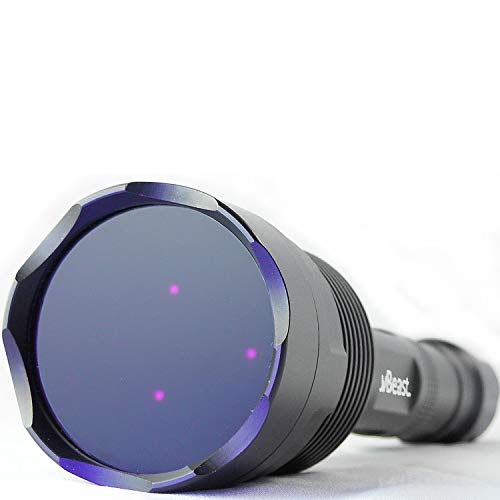
The larger V3 365nm, model UVB-V3-365, also uses filtered 365 nm ultraviolet output. The manufacturer’s standard package specifies two protected 18650 lithium-ion cells and a two-bay USB battery charger. It is a different model from the V3 385–395 nm and the V3 365nm PRO.
Good fit: users who prefer a larger handheld light and are comfortable managing removable batteries and an external charger. Trade-off: there is more equipment to carry and keep organized. Use the prescribed matched battery arrangement and charger; similar-looking loose cells are not automatically suitable.
The manufacturer markets this model for longer-range work, but useful range depends on the target, ambient light, beam, and fluorescence. Treat those advertising distances as a reason to examine the specification, not a guarantee that a particular stain or rock will be visible from across a room.
What 365 nm means
Nanometers describe wavelength, not brightness. Both 365 nm and 395 nm are in the UVA region, but they can excite materials differently and produce different amounts of unwanted visible light. A product labeled “UV” without a stated wavelength leaves an important question unanswered.
Fluorescence is the visible response of a suitable material under excitation. The purple glow of the lamp itself is not the same thing as the glow you are trying to see from the object. A visible-light-blocking filter can improve contrast by reducing unwanted visible spill. It does not make ultraviolet exposure harmless.
For mineral collecting, the Fluorescent Mineral Society explains that minerals may respond differently to longwave, midwave, and shortwave UV. A specimen that needs a different excitation wavelength may show little under a 365 nm light. Buying a more powerful longwave flashlight does not necessarily solve that mismatch.
Compare output figures carefully
Visible-light lumens are not a useful stand-alone ranking for a UV inspection beam. Look for a clearly stated wavelength, optical radiant output, beam information, and the conditions behind any measurements. Electrical wattage consumed by the lamp is different from ultraviolet optical power leaving it.
Radiant power is commonly expressed in milliwatts. Irradiance describes power falling on an area, so a distance and measurement method are essential when comparing those numbers. A concentrated beam and a broad beam can have different uses even when total output is similar.
For a tabletop specimen, comfortable handling and the ability to control spill may matter more than maximum range. For a wider search area, consider coverage, battery management, and whether the area can be darkened safely. Avoid treating a large LED count as a substitute for an actual wavelength and output specification.
Know what a glowing mark can and cannot tell you
Use fluorescence as a clue that warrants closer inspection. A glowing mark does not by itself identify a substance, prove that a surface contains pathogens, or establish when contamination occurred. Likewise, a surface that does not glow is not certified clean.
For pet-related marks, combine normal visual inspection and the history of the area with appropriate cleaning. Follow the cleaner’s label and surface-care instructions rather than repeatedly adding chemicals because a fluorescent trace remains. The CDC distinguishes cleaning from disinfecting and recommends following product instructions for pet supplies.
For leak detection, confirm that the dye, system, and required excitation wavelength are compatible. A flashlight alone does not replace the correct diagnostic process. For resin or adhesive curing, use the material manufacturer’s specified wavelength, intensity, exposure, and protective equipment; a light sold for inspection is not automatically a validated curing setup.
Protect eyes and skin during use
Do not stare into the emitter or aim it at another person’s eyes, exposed skin, or animals. Keep the beam on the intended object, minimize unnecessary exposure, and store the light where children cannot activate it. The FDA notes that UVA can damage skin and that some medicines and products can increase UV sensitivity.
Use protective eyewear specifically appropriate for the light’s wavelength and intensity, following the manufacturer’s safety guidance. Lens darkness alone does not establish UV protection. Do not assume ordinary sunglasses are suitable protection for a close, concentrated inspection source. For workplace use, have the protection chosen through the workplace’s safety assessment.
Keep reflective surfaces in mind, especially during close inspection. Turn the light off before looking at the lens or changing batteries. If you experience eye pain or other symptoms after an exposure, stop using it and seek medical advice.
A 365 nm inspection light is not a disinfectant
Do not rely on either flashlight to sanitize food, skin, rooms, or equipment. The FDA’s warnings about certain UVC disinfecting wands concern a different UV category and show why disinfection claims require proper evidence and safeguards. A bright fluorescent response is not evidence that germs have been killed.
Bottom line: choose the MINI when portability and onboard USB-C charging suit your work, or compare the full-size V3 if you accept an external charger and larger package. Confirm the exact 365 nm model, battery revision, filter, and intended application. Use it to inspect appropriate materials cautiously, with realistic expectations about what fluorescence can prove.
Image note: AI-generated generic editorial illustration; not a photograph of a named or tested product.