

For outdoor cedar furniture, choose the finish around exposure, the appearance you want and the maintenance you will do. A pigmented penetrating oil is worth comparing when visible grain and straightforward renewal matter. A clear film finish creates a different look and preparation commitment. Clear oil is an option when natural greying is acceptable.
This guide compares colored Osmo Decking-Oil, the General Finishes Exterior 450 stain-and-clear system, and Osmo Garden Furniture Oil 028. These recommendations concern exterior furniture. An indoor chest, food-contact surface, child’s item or surface constantly holding water needs a separately confirmed finish specification.
Research checked October 4, 2026, using manufacturer directions, linked safety data and Western Red Cedar Lumber Association guidance. We have not weather-tested these finishes. No fixed service life, preservation of original wood color, price or stock level is promised. Match instructions to the formulation sold in your region.
Compare three approaches
| Option | Appearance | Why compare it | Main limit |
|---|---|---|---|
| Colored Osmo Decking-Oil | Transparent color with visible grain | Manufacturer lists exterior furniture and cedar preparation | Color changes the cedar; preparation may include weathering |
| General Finishes Exterior 450 | Colored stain with clear film topcoat | Coordinated exterior stain/topcoat system | Clear coating does not prevent underlying wood color change |
| Osmo Garden Furniture Oil 028 | Clear satin | Furniture-specific option when greying is acceptable | No promise to retain fresh cedar color in sunlight |
Colored Osmo Decking-Oil: compare for exposed furniture
Osmo’s UK Decking-Oil page lists exterior wooden decking and furniture as intended uses. Choose a colored version when UV resistance matters: the manufacturer distinguishes its pigmented colors from clear 007 Teak Oil, which allows natural greying. Sample the exact color on your cedar instead of choosing from a photograph of another wood species.
The product page requires clean, dry, frost-free wood with moisture content no greater than 20%. It specifies a three-month weathering period for cedar to improve absorption and warns that freshly sanded wood may need renewed weathering. That is an instruction for this system, not a universal rule for every cedar coating.
Application check: Osmo calls for thin, even coats along the grain and good ventilation. Follow the full directions for your color and product. Buying an exterior oil does not eliminate preparation or justify applying it over an unidentified old varnish.
General Finishes Exterior 450: a coordinated film-finish option
Exterior 450 Water-Based Wood Stain includes colors shown on cedar. Its current instructions require a topcoat and specify three coats of Exterior 450 Topcoat. Use the current product directions rather than older articles describing a stain-only method.
The clear topcoat page lists patio furniture among its exterior uses, while emphasizing vertical surfaces and excluding decks. For exposed horizontal seats and tabletops, describe the exact furniture and exposure to General Finishes before choosing it. A broad furniture listing does not resolve every water-exposure situation.
The clear coating’s UV additives protect the film; the manufacturer expressly says they do not prevent the underlying wood from changing color in sunlight. Its ideal-condition schedule is at least two hours between coats, five days before exterior exposure and 21 days before full use. Humidity and heavy coats can extend drying. Do not equate touch-dry with ready for cushions or daily service.
Compatibility check: the topcoat directions warn against use with linseed or Danish oils. Keep to a confirmed system, especially when the furniture has already been treated.
Osmo Garden Furniture Oil 028: clear, with greying accepted
Garden Furniture Oil 028 is a clear satin finish intended for exterior wooden furniture. Osmo calls for two coats and describes recoating when wear becomes visible. Its published cedar guidance specifies approximately 12 weeks of weathering and a maximum 20% moisture content before application.
The important tradeoff is color. Osmo states that exposed surfaces in full sun will naturally grey and suggests a colored Decking-Oil when slowing that process matters. Clear oil may still change the freshly finished appearance, so test it on a representative offcut.
This is a reasonable comparison when you like visible grain and accept weathering. It is a poor match for a brief that demands the exact fresh-sawn cedar color indefinitely. Do not select it solely because the word clear sounds maintenance-free.
Identify the surface before opening the can
The Western Red Cedar Lumber Association’s finishing guide explains that surface condition affects coating performance. It also warns that a previous film-forming coating must be removed before switching to a penetrating finish, and residual paint can still interfere with absorption.
Start with these questions:
- What is the wood? Confirm the species if possible. A stain color named cedar is not evidence that the underlying furniture is cedar.
- What is already on it? Locate the previous product name, receipts or care instructions. Unknown wax, polish or coating history makes a compatibility trial particularly important.
- How exposed is it? Describe direct sun, rain, covered storage, horizontal surfaces and places where water collects. Photograph the actual furniture when asking technical support.
- What appearance is acceptable? Decide whether you want visible grain, tinted grain, a clear film or natural greying before comparing brands.
- Can the work stay protected while curing? Plan enough space and time for the whole system, including the undersides and awkward joints where the directions require coating.
Preparation instructions are product-specific
Do not assemble a recipe using one brand’s sanding grit, another brand’s weathering period and a third brand’s topcoat. The Osmo cedar weathering directions and General Finishes’ preparation schedule serve different systems. Ask the selected manufacturer how to prepare your actual new or previously finished furniture.
Make a sample that includes every intended layer, using the same cedar and surface preparation. Check the color and feel after the stated drying period. A sample helps identify an unacceptable appearance before the whole chair is coated; it does not prove years of outdoor durability.
Read safety data before finishing
The Decking-Oil safety sheet linked by Osmo warns that oil-soaked cloths can self-ignite. Never leave oily rags crumpled in a pile. Follow the can’s exact handling instructions and local fire/waste-disposal requirements; do not pour leftover finish into drains.
That linked sheet is dated 2018, so obtain the current regional SDS matching your can if its formulation or safety directions differ. The April 2024 Exterior 450 Satin SDS specifies eye protection, suitable gloves and protective clothing. Water cleanup does not mean exposure precautions can be skipped. Follow ventilation and application-method requirements, especially if spraying.
Frequently asked questions
Will a clear finish keep cedar from turning grey?
Do not assume it will. The specific clear products discussed here disclose color-change limitations. Compare the manufacturer’s documented purpose with the appearance you actually want.
Can I put polyurethane over a penetrating oil?
Only when the exact manufacturers support that combination and preparation. This guide does not approve stacking unrelated products, and Exterior 450 specifically warns against linseed and Danish oils.
How often should I refinish?
Inspect the actual furniture and follow the selected system’s maintenance criteria. Exposure, wear and preparation vary too much for this guide to promise a fixed interval or wood lifespan.
Which option should I compare first?
Start with a colored exterior oil for visible grain with pigment, the Exterior 450 system when you want a film finish and its exposure limits fit, or clear 028 when greying is acceptable. Resolve compatibility and curing space before buying a large quantity.
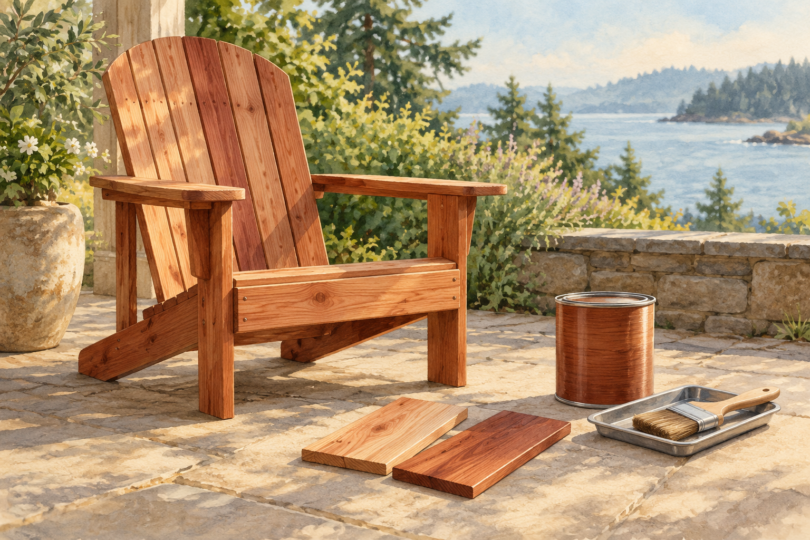
Image note: AI-generated generic editorial illustration; it does not identify a coating or prove color, compatibility, durability or a finishing procedure.

