
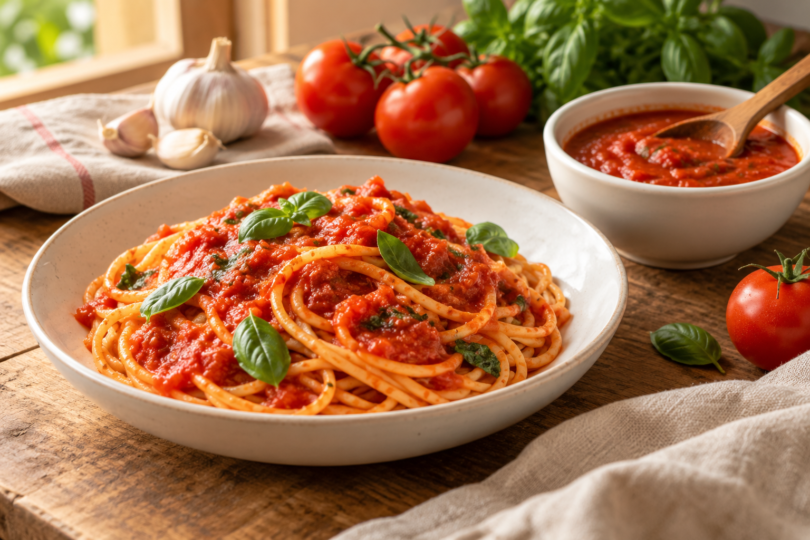

The best jarred marinara sauce is the one that suits the meal you actually cook. For a straightforward tomato-and-olive-oil sauce, start with Rao’s Homemade Marinara. If your priority is less sodium per labeled serving, consider Yo Mama’s Original Marinara. Mezzetta Family Recipes Marinara is another useful option if you want a blend of Italian and California plum tomatoes.
These are three practical shopping picks based on current manufacturer ingredient lists, nutrition panels and storage guidance. We have not conducted a side-by-side tasting, so the recommendations describe recipe and label differences rather than declaring a flavor-test winner.
Marinara sauces at a glance
| Sauce and jar size | Why consider it? | Labeled serving | Sodium per serving | Added sugars |
|---|---|---|---|---|
| Rao’s Homemade Marinara, 24 oz | Short ingredient list with Italian whole peeled tomatoes | ½ cup (125 g) | 420 mg | 0 g |
| Yo Mama’s Original Marinara, 25 oz | Lowest sodium per labeled serving among these three; recipe includes white wine | ½ cup (118 g) | 130 mg | 0 g |
| Mezzetta Family Recipes Marinara, 24.5 oz | Italian and California plum tomatoes with olive oil and herbs | ½ cup (125 g) | 520 mg | 0 g |
The volume serving is the same, but the gram weights differ. These are label comparisons, not values normalized to an equal weight. All three contain naturally occurring sugars despite listing 0 g added sugars. Check the jar you receive because recipes, labels and package sizes can change.
1. Rao’s Homemade Marinara: a straightforward all-purpose pick
Choose the 24 oz Marinara if you want a ready-made tomato sauce with a concise recipe. Rao’s lists Italian whole peeled tomatoes, olive oil, onion, garlic and herbs; this is the regular Marinara, distinct from its Tomato Basil, Arrabbiata and creamy sauces. Its 24 oz jar is labeled as about five servings.
Why it makes the shortlist: the ingredient list is easy to compare, and the maker provides clear heating and storage directions. It is a practical starting point for a pasta dinner when you want to add your own vegetables, cooked meat or extra herbs.
Trade-off: the 420 mg sodium in a 125 g serving is substantially more than Yo Mama’s 130 mg in a 118 g serving. A short ingredient list does not automatically make a sauce suitable for a particular diet.
Storage: Rao’s says the unopened sauce can stay at room temperature until its best-by date. After opening, refrigerate and use within 5–7 days. Follow the instructions on your particular jar.
See Rao’s Marinara ingredients, sizes and where-to-buy information.
2. Yo Mama’s Original Marinara: the lower-sodium option in this comparison
The current 25 oz Original Marinara is worth comparing if sodium is your main shopping filter. The manufacturer’s displayed nutrition panel gives 130 mg per ½ cup (118 g), with six servings per container. Its ingredient panel includes tomatoes, onions, garlic, white wine, olive oil and several herbs.
Why it makes the shortlist: it offers a clearly documented alternative to the higher sodium figures in the other two jars. The wine and herb recipe also gives shoppers a concrete formulation difference to consider, without relying on a tasting score.
Trade-off: the recipe contains wine. Do not assume the finished sauce is alcohol-free from its name or cooking method. Buy the current Original Marinara by its label; the older two-jar listing and older recipe descriptions are not a reliable substitute for the current 25 oz formulation.
Storage: the manufacturer’s FAQ says to refrigerate opened sauce and consume it within two weeks. Use the jar’s instructions if they differ. That guidance applies to the sauce, not to an entire cooked meal made with it.
See Yo Mama’s Original Marinara and its current label images.
3. Mezzetta Family Recipes Marinara: an Italian and California tomato blend
Mezzetta’s 24.5 oz Family Recipes Marinara combines plum tomatoes from Italy’s San Marzano region with California plum tomatoes. The recipe also lists olive oil, fresh onion, garlic, basil, black pepper and spices. The regional description does not mean every tomato in the jar is Italian or establish a protected-origin certification.
Why it makes the shortlist: it is a clearly identified classic marinara with a different tomato sourcing mix. The maker offers both a single 24.5 oz jar and a six-jar case, making it easy to compare a first purchase with a pantry restock.
Trade-off: at 520 mg per ½ cup (125 g), it has the most sodium in this three-sauce comparison. Compare total delivered cost per ounce before buying a case, and make sure the listing says regular Marinara rather than Spicy Marinara or another flavor.
Storage: Mezzetta recommends refrigerating its opened pasta sauces and using them within 5–7 days. Its FAQ also discusses freezing extra sauce.
See Mezzetta Family Recipes Marinara and its jar and case options.
How to choose a jar you will actually use
Start with the exact recipe and serving size
Compare the regular marinara labels before moving to roasted garlic, spicy, cheese or cream varieties. A brand name alone does not identify the recipe. For sodium, compare both the milligrams and the serving amount, then consider how much sauce you plan to use. Adding salty cheese or other ingredients changes the meal’s total.
Treat dietary labels as specific information
Check the full ingredient list and any allergen statement on the actual jar. A gluten-free claim does not establish that a product is free of every allergen or suitable for every dietary need. Mezzetta’s FAQ says allergens can be processed on shared equipment. If an allergy makes cross-contact important, ask the manufacturer about the exact product and current production information.
Buy a manageable amount first
Try one jar before committing to a multipack. Compare the checkout total divided by the combined net weight, rather than comparing a one-jar price with a case price. A large pack is useful only if you will use the unopened jars before their printed dates and finish each opened jar within its storage guidance.
Use the sauce as a starting point
For a simple dinner, warm the amount you need according to the jar’s directions and toss it with cooked pasta. Taste before adding salt. If you prefer extra basil, chili or cooked vegetables, add them to your portion. Save the remaining sauce according to its label instead of heating the whole jar repeatedly.
Which marinara should you buy?
Start with Rao’s for a simple Italian-tomato recipe. Choose Yo Mama’s when its lower sodium figure is the deciding factor and you are comfortable with the wine-containing formulation. Consider Mezzetta if its Italian-and-California tomato blend and available pack sizes fit your shopping preferences. Taste preference remains personal; buying a single jar is the most useful next step.
Frequently asked questions
Which marinara has the least sodium here?
Yo Mama’s Original Marinara lists 130 mg per ½ cup (118 g), compared with Rao’s 420 mg per ½ cup (125 g) and Mezzetta’s 520 mg per ½ cup (125 g). The gram weights differ, and these figures describe the listed sauces rather than a complete meal.
Does no added sugar mean marinara is sugar-free?
No. All three sauces list 0 g added sugars, but their tomatoes contribute naturally occurring sugars. Read both the total-sugars and added-sugars lines on the jar.
How long does opened marinara last in the refrigerator?
Rao’s and Mezzetta give 5–7 days for their opened sauces. Yo Mama’s FAQ gives two weeks. Follow the instructions on your exact jar if they differ, and do not apply sauce-only storage guidance to a cooked dish containing other ingredients.
Can I use marinara as pizza sauce?
You can use it as a tomato topping if its texture suits your pizza. Start with a modest amount so the crust is not overloaded. Pizza sauce and marinara are different product categories, so check the recipe and consistency instead of assuming every jar works identically.
Is every marinara sauce vegan or free of allergens?
No. Recipes vary, and a flavor or brand name does not establish dietary suitability. Check the current jar’s ingredients and allergen labeling, and contact the manufacturer if you need information about shared equipment or cross-contact.


