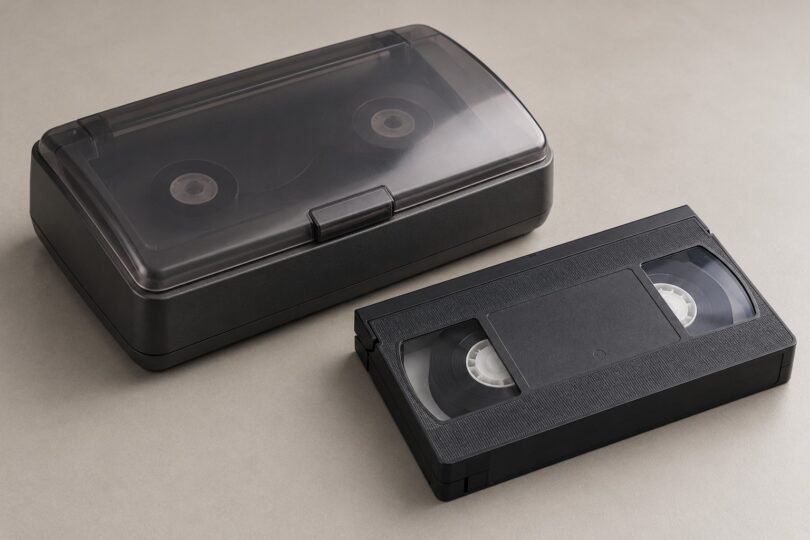

A VHS rewinder is useful when you want to rewind a full-size VHS cassette while keeping your VCR free for playback. The best purchase is a correctly identified, working unit with the right power supply and a usable stop/eject mechanism. A familiar brand name or an unopened vintage box does not establish its condition.
Before buying one, identify your tape format. Full-size VHS, compact VHS-C and audio cassettes need different equipment. If a tape holds irreplaceable recordings or shows damage, prioritize an assessment and transfer plan before trying an unfamiliar rewinder.
Which type of rewinder do you need?
| What you have | What to look for | What to avoid assuming |
|---|---|---|
| Full-size VHS cassette | A rewinder explicitly documented for full-size VHS | A small camcorder-tape rewinder will accept it |
| VHS-C camcorder cassette | A VHS-C-compatible camcorder or dedicated rewinder; use an adapter only as its instructions allow | Every VHS rewinder supports VHS-C in an adapter |
| Video8, Hi8, Digital8 or MiniDV | Equipment documented for that exact format | A VHS-C adapter converts any small video cassette to VHS |
| Compact audio cassette | A compatible audio cassette player or rewinder | A VHS rewinder also works with music cassettes |
Read the format marking on the cassette and check the device manual. The National Archives’ video-format guide illustrates common video cassettes and explains why matching playback equipment matters.
A cassette adapter is a separate accessory. Check both the adapter instructions and the rewinder manual before combining them. Compatibility with a VHS VCR does not establish compatibility with every standalone rewinder. Do not force a cassette or adapter into equipment that is not documented to accept it.
A documented example: RadioShack 44-1223
The RadioShack 44-1223 is a historical one-way VHS rewinder with a manufacturer owner’s manual available through a college document archive. Its original RadioShack manual specifies a power cord for a standard 120V AC outlet. It describes starting when the cassette compartment closes, automatic opening at the end of rewind, and a STOP/EJECT button to end the operation early.
Those are useful details to check against an actual used unit. Match the model label, confirm the cord and plug are intact, and ask the seller to demonstrate rewinding and stopping with an ordinary, replaceable cassette. This is a documented model example, not a promise of current stock, a current warranty or a recommendation that every surviving unit is safe to use.
The manual also warns against opening the case and refers servicing to qualified personnel. A seller’s claim that the motor runs is not evidence that the tape-handling and stop functions work correctly.
How to evaluate a used VHS rewinder
Compare the individual item, not just the listing title. Request photographs and a demonstration that answer these questions:
- Is the model identifiable? Ask for a clear picture of the underside or rear label and find the matching manufacturer instructions. Similar-looking cases can conceal different power requirements and functions.
- Is it complete? Confirm the included power cord or adapter. If an external adapter is required, have its specification checked against the exact manual and device label. A plug that fits is not enough.
- What has actually been tested? Look for a demonstration of a tape winding, the manual stop control working and the unit stopping at completion. A power light alone proves very little.
- Are there visible condition problems? Reject cracked housings, damaged plugs, frayed cables, corrosion, liquid damage or missing safety labels. Have uncertain electrical condition assessed by a qualified technician.
- What happens if it fails on arrival? Read the seller’s return conditions and whether an untested item is being sold only for parts. Compare the delivered cost of a working, returnable unit with the cost of using equipment you already own.
A demonstration is a screening step, not a guarantee that an old machine will treat every tape gently. Do not make a valuable home movie the first tape used in an unfamiliar unit.
One-way versus two-way rewinders
A one-way unit rewinds. A two-way unit is intended to offer both rewind and fast-forward, but its exact controls and stopping behavior must come from its manual. Choose the functions you will use, then judge condition and documentation.
Automatic stop and eject are convenient features to verify in a demonstration. They do not establish that a machine can protect a weakened or damaged tape. Likewise, do not choose by an unsupported “rewinds in seconds” claim or assume a standalone rewinder will extend tape life.
When you should not try rewinding
Check the cassette externally before loading it. Visible mold, a damaged shell, loose tape outside the cassette, sticking or unusual resistance are reasons to stop and seek knowledgeable help. Do not pull on exposed tape or repeatedly restart a machine that is struggling.
The National Archives’ magnetic-video condition guide calls for inspection before playback and professional help with mold. Its table also distinguishes tape-pack problems and detached leaders from ordinary playback issues. A faster rewinder is not a repair for any of these conditions.
For a wedding video, family footage or another unique recording, discuss inspection and digitization with an experienced audiovisual transfer or preservation service. Tell the service about visible damage before delivering or shipping the cassette.
Do you need a separate rewinder at all?
If your compatible VCR works properly and you rewind only occasional tapes, using its rewind function according to its manual can avoid another purchase. A separate unit makes more sense when you regularly want to rewind one healthy cassette while playing another.
If the goal is saving recordings, a capture device is only one part of the process: the tape still needs compatible playback equipment. VHS-to-digital converters, head-cleaning cassettes and blank VHS tapes serve different jobs and should not be compared as rewinders. The National Archives’ playback and digitization guidance explains the distinction between maintaining the original and making an accessible digital copy.
Rewinding is not a preservation routine
Do not repeatedly rewind a collection simply because it has been in storage. The Canadian Conservation Institute’s tape-care guidance says tapes with an even, sound wind may be best left alone. It emphasizes clean, properly aligned equipment and explains that winding practices affect tape tension. For long-term VHS storage, its guidance favors a smooth wind produced by playback rather than a fast rewind.
Keep cassettes upright in protective cases, in a stable, cool and dry indoor location, and remove tapes from equipment when it is not in use. The National Archives’ storage advice also recommends protecting tapes and playback equipment from sunlight, flooding and uncontrolled storage environments.
Buying checklist
Before paying, confirm the tape format, exact model, original operating instructions, correct power requirements, demonstrated stop/eject operation, included accessories and return conditions. For ordinary playback, a verified working unit can be convenient. For damaged or irreplaceable recordings, put preservation and a careful transfer ahead of rewinding speed.