


The best motivational or inspirational book depends on what you need help doing. For a practical routine, start with Atomic Habits. For sustained effort toward a meaningful goal, consider Grit. If you feel overwhelmed by everything you could be doing, Four Thousand Weeks offers a different way to think about time. For a reflective, spiritually informed read, try The Book of Joy.
This guide compares four actual books, with specific English-language print editions identified below. The recommendations are based on publisher descriptions, samples and edition details, not a claim that reading a particular book will transform everyone’s life.
Choose by the kind of encouragement you want
- A manageable next step: Atomic Habits by James Clear, a practical guide to everyday behavior.
- Persistence with a long-term interest: Grit by Angela Duckworth, a discussion of passion and perseverance.
- Permission to choose priorities: Four Thousand Weeks by Oliver Burkeman, a philosophical approach to limited time.
- Perspective and compassion: The Book of Joy by the Dalai Lama and Desmond Tutu, with Douglas Abrams, built around their conversations.
Four motivational and inspirational books to consider
1. Atomic Habits: for building a practical routine
James Clear focuses on making small behaviors easier to repeat. The book connects habit formation with your surroundings, the way you set up a task and the process of getting back on track after interruptions. Avery’s description and sample make it a useful starting point for readers who want concrete changes rather than a collection of quotations.
Choose it when you can name a behavior you want to work on: reading a little more, beginning a project earlier or putting an item back where it belongs. Its practical emphasis can help you turn a broad intention into a smaller experiment.
Trade-off: a habit framework does not remove financial, health or caregiving constraints. Use ideas that fit your circumstances; difficulty following a routine is not evidence of a character flaw.
Edition linked: Avery hardcover, 320 pages, ISBN 9780735211292. Check the author and format so you receive the original book rather than a separately published summary or workbook.

Atomic Habits: An Easy & Proven Way to Build Good Habits & Break Bad Ones
As an Amazon Associate we earn from qualifying purchases.
2. Grit: for thinking about long-term effort
In Grit: The Power of Passion and Perseverance, psychologist Angela Duckworth explores sustained interest and effort through research, interviews and examples from demanding settings. The Scribner edition includes discussion of developing interests and supporting persistence over time.
This is a good fit if you enjoy an explanatory book with stories and research alongside its advice. It asks you to consider what is worth continuing, rather than merely how to summon a burst of enthusiasm this afternoon.
Trade-off: read its emphasis on perseverance with judgment. Changing direction, resting or leaving an unsuitable situation can be sensible choices. The recommendation here is for reflection on a worthwhile goal, not an instruction to persist at any cost.
Edition linked: Scribner trade paperback, 368 pages, ISBN 9781501111112. The hardcover, ebook and audiobook are different editions.

3. Four Thousand Weeks: for an overfull to-do list
Oliver Burkeman’s Four Thousand Weeks: Time Management for Mortals examines the limits of time and personal control. Its central subject is choosing how to live with those limits. Macmillan’s book page and sample show a reflective, conversational approach that draws on philosophy and the author’s experience with productivity systems.
Choose it if you keep searching for a method that will finally let you fit everything in. Its value for this reading list is the invitation to decide what deserves attention and what can remain undone.
Trade-off: it is more philosophical than a planner or a step-by-step scheduling manual. The title also brings mortality into the discussion, which may not be the tone you want in a light, celebratory gift.
Edition linked: Picador paperback, 304 pages, ISBN 9781250849359. This edition includes an interview with James Hollis; do not assume every format has identical extras.
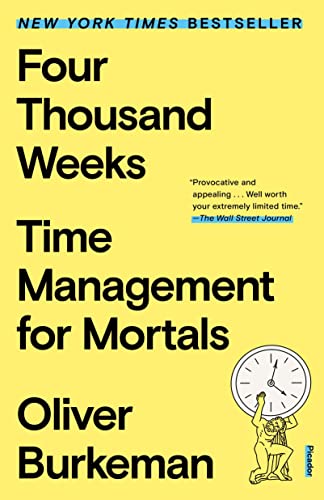
Four Thousand Weeks
4. The Book of Joy: for perspective and a gentler pace
The Book of Joy: Lasting Happiness in a Changing World draws on conversations between the Dalai Lama and Archbishop Desmond Tutu, with Douglas Abrams. It considers joy alongside hardship, friendship and compassion. The publisher’s edition page identifies the authors and the adult hardcover discussed here.
This is the most natural choice on the list for someone who wants a reflective conversation rather than a productivity framework. It can also give a reading group a starting point for discussing what encouragement actually feels like.
Trade-off: its perspective is shaped by two religious leaders. Check the recipient’s interests before choosing it as a gift, and distinguish it from the separate children’s title, The Little Book of Joy.
Edition linked: Avery hardcover, 384 pages, ISBN 9780399185045. Large-print and other formats have different edition details.

How to choose a book you will actually use
Start with one question you want to explore. “How can I make starting easier?” points toward a habit book. “Is this goal worth sticking with?” calls for a different discussion. “Why does my schedule always feel impossible?” may be better served by a book about priorities and limits.
Read a sample before buying. Notice whether you enjoy the author’s pace, examples and vocabulary. A highly recommended title is still a poor match if every page feels like homework. A library copy can be a useful way to try the full book without committing to keeping it.
For a gift, avoid implying that the recipient needs fixing. A book about a topic they have already mentioned is usually easier to receive than an unsolicited prescription for how they should live. Include a gift receipt when possible, especially if they are already an enthusiastic reader.
Check the edition before ordering
- Author and title: unofficial summaries, study guides and companion journals can have similar covers and search titles.
- Format: choose hardcover, paperback, ebook, large print or audio intentionally. The affiliate links above identify particular print editions.
- Language: these four listings are English-language editions; translations use different identifiers.
- Condition and seller: a used copy may contain highlighting or a personal inscription. Compare the delivered price and return terms for the actual offer.
Make one small thing of the reading
After a chapter, write down one idea you want to try or one question you want to discuss. Give it a realistic place in your day, then decide whether it helped. You do not need to adopt every recommendation or finish several similar books before taking a useful next step.
Bottom line: pick Atomic Habits for a practical routine, Grit for sustained effort, Four Thousand Weeks for priorities or The Book of Joy for reflection. The right choice is the book that meets your present interest and that you genuinely want to open.
Image note: Original AI-generated editorial illustration; generic objects shown, not branded product photography.


