


Choose an international law textbook around your course and reading goal. For an introductory overview, start by previewing Jan Klabbers’s International Law, fourth edition. For a much more extensive reference, compare Malcolm N. Shaw’s tenth edition. James Crawford’s ninth edition of Brownlie’s Principles of Public International Law remains a distinct option when it is assigned or you want its systematic treatment, with the important limitation that it was published in 2019.
If an instructor has specified a title and edition, that requirement comes first. Similar book names, newer covers and lower used prices can hide differences in chapter numbering, page references and coverage. The choices below are public international law texts, rather than international business-law manuals or books focused only on a specialist subject.
Quick comparison
- Jan Klabbers, fourth edition: an introductory route that places legal rules in political and ethical context.
- Malcolm N. Shaw, tenth edition: a broad, extensive reference for readers who need more detail and further-reading leads.
- James Crawford, Brownlie’s ninth edition: a systematic account with substantial treatment of statehood, jurisdiction and responsibility; pair its older publication date with current course materials.
These are judgments about the books’ documented scope and organization, based on publisher descriptions, contents and edition information. They are not claims that we read every page or measured students’ results with the books.
Jan Klabbers: International Law, fourth edition
Cambridge’s fourth-edition listing presents Klabbers’s book as an undergraduate text that connects international law with its political and economic setting. Its structure moves from how the legal system works to substantive areas and then to the wider context. This makes it a sensible first preview for someone who wants a coherent overview rather than an exhaustive reference volume.

Cambridge International Law by Jan Klabbers, 4th Edition Paperback, One Book
As an Amazon Associate we earn from qualifying purchases.
The paperback ISBN is 9781009304320. Cambridge lists its print publication in January 2024 and the digital edition in October 2023. The selected Amazon paperback uses ISBN-10 1009304321. Matching that identifier is more dependable than relying on the generic title International Law.
Its published contents include treaties, legal subjects, jurisdiction, responsibility, courts, use of force, armed conflict, human rights, the environment and the global economy. The contents also make room for the relationship with domestic courts and questions of politics and ethics.
Choose it when: you are beginning a broad public-international-law course or want a manageable framework for further reading. Check first: whether your syllabus needs a casebook with lengthy primary-source extracts or a more detailed treatment of a particular topic. An overview may need to be supplemented rather than stretched into every role.
Malcolm N. Shaw: International Law, tenth edition
Shaw’s tenth edition is the larger reference option. Cambridge identifies it as a 2026 edition and lists the paperback at 1,438 pages. The publisher highlights expanded treatment of subjects including the law of the sea, outer space, the International Court of Justice and international humanitarian law.
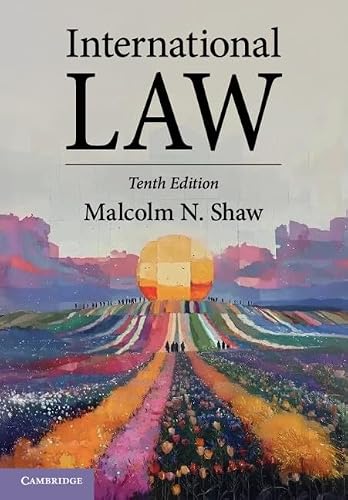
The paperback ISBN is 9781009662192, corresponding to the selected Amazon listing’s ISBN-10 1009662198. The hardback has a different ISBN, 9781009662208. Check both edition and binding in the order summary, particularly when a marketplace page lets you switch between used copies, hardback and electronic versions.
Choose it when: you want extensive coverage and references for essays, deeper study or a substantial desk resource. Main trade-off: its size. A broad reference can be valuable without being the easiest book to carry or the most efficient starting point for every weekly assignment.
Before purchasing, preview a section on a topic you already know a little about. Can you follow the explanation and use its references productively? That is a more useful personal test than assuming that the longest book will automatically teach the subject best. A current edition also still needs current primary sources for developments after its writing and production cutoff.
James Crawford: Brownlie’s Principles, ninth edition
Oxford’s ninth-edition record identifies James Crawford as the author and gives the paperback ISBN 9780198737445. “Brownlie’s” is part of the established title; it should not lead you to order a different author or an earlier edition by mistake.
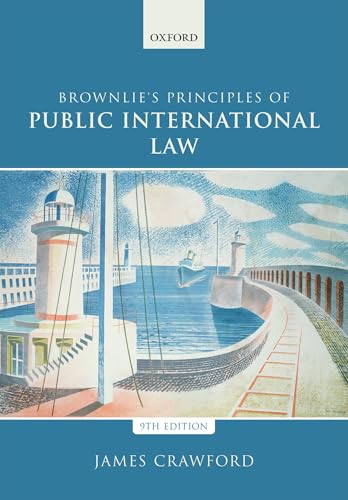
The publisher’s contents organize the subject into areas including legal personality, territorial sovereignty, the sea, international transactions, jurisdiction and responsibility. It is worth previewing when those systematic foundations are central to your course or research. Oxford also emphasizes the references that support further study.
Choose it when: this specific edition is assigned, or its organization fits the kind of doctrinal reference you need. Important limitation: it is a 2019 publication. Do not mistake a recent retailer restock or a newly printed copy for a newly revised edition. Later judgments, treaty developments and scholarship need separate checking.
It can be useful alongside a current syllabus, but that is a different purchase decision from wanting a single book with the most recent publication date. Ask your instructor whether an older required edition remains appropriate before substituting another text based on this comparison.
Match the book to the type of course
Read the course description before shopping. Public international law, private international law, international commercial transactions and international criminal law overlap in places, but they are not interchangeable course titles. A specialist book can be excellent for its subject while leaving gaps in a general survey.
Also distinguish a textbook from a casebook or treaty collection. A textbook explains and organizes; a course may separately require primary materials and problems. Check the syllabus for companion readings, editions and access arrangements instead of expecting one purchase to include everything.
Check editions and formats without overspending
- Copy the assigned ISBN: then verify author, edition and binding together.
- Look for library access: your institution may already offer a print reserve or licensed digital edition.
- Evaluate the digital license: check access duration, offline use, device support and printing limits before paying.
- Inspect used-copy details: confirm that pages are complete and readable and that the book is the required edition.
- Check assessment rules: if a course permits books in an examination, confirm any restrictions on digital access or annotations.
Prices and availability vary, so compare the complete offer rather than an old quoted price. A rental that ends before your exam or an electronic edition that will not work offline may be a false economy for your situation. Conversely, a library copy can be enough for previewing before committing to a substantial reference book.
Use primary sources alongside the textbook
The United Nations Treaty Collection provides treaty texts, status information and depositary notices. The International Court of Justice case list is a starting point for locating the Court’s case materials. Follow your course’s instructions about which documents and passages to read.
When a textbook cites a treaty or judgment, use that reference to find the original source and distinguish the author’s explanation from the underlying material. Record the edition and page number in your notes so you can retrace the argument. For live legal problems, a general textbook is a research aid, not a substitute for qualified advice.
If your syllabus leaves the choice open, preview Klabbers for a first overview, Shaw for depth and Brownlie’s for its systematic approach with its publication-date limitation clearly in mind. Buy the book you can use well for the actual course, then fill specific gaps with the assigned sources.
Image note: AI-generated editorial illustration; not a photograph of the named product.


