
The right low-profile shower drain depends on the shower construction and the space around the waste pipe. For a built-up tile shower with a compatible pan liner, the EZ-FLO 15301 is a relevant compact PVC option. For a bonded-waterproofing linear-drain design, compare the Schluter KERDI-LINE system. The Scandvik 10307 belongs in a separate category: it is a cockpit or shower fitting with a one-inch hose-barb outlet, not an interchangeable substitute for a residential tile-shower drain.
This is a specification-based buying guide, not a hands-on test or an installation design. A low-profile description does not establish total installed depth, compliance with your local plumbing code, or compatibility with your shower base. Have the installer confirm the complete drain, waterproofing, trap and pipe arrangement before ordering.
Three drain options for different installations
| Option | Intended context | Verified connection detail | Main buying concern |
|---|---|---|---|
| EZ-FLO 15301 | Built-up tile shower with membrane or composition pan liner | Over 2-inch or inside 3-inch Schedule 40 DWV pipe | PVC body and liner-clamping arrangement must suit the installation |
| Schluter KERDI-LINE | Bonded waterproofing shower system | Standard 2-inch no-hub outlet | Select compatible channel, outlet position and grate assembly |
| Scandvik 10307 | Cockpit or shower application using a hose connection | 1-inch hose-barb outlet | Application approval and hose routing differ from building DWV plumbing |
EZ-FLO 15301: for compatible built-up tile showers
The EZ-FLO manufacturer listing identifies 15301 as the PVC version of its low-profile floor and shower drain. It is intended for built-up tile showers using a waterproof membrane or composition pan liner. The published description specifies a connection over two-inch Schedule 40 pipe or inside three-inch Schedule 40 DWV pipe, with a four-inch screw-on stainless steel strainer.
The branded retail listing also identifies a membrane clamping ring and tailpiece. This makes it worth discussing with an installer who is building that type of shower pan. It should not be selected merely because the visible grate looks similar to one already in the bathroom.
Match model 15301, the PVC body and the specified pipe arrangement. EZ-FLO also lists an ABS version, 15342; the material choice is part of the plumbing specification. Ask for the dimensional drawing or an installer-confirmed measurement before assuming this drain fits the available vertical clearance.
EZ-FLO 15301 PVC Low-Profile Floor and Shower Drain
As an Amazon Associate we earn from qualifying purchases.
Schluter KERDI-LINE: for a planned linear-drain system
Schluter KERDI-LINE is designed for bonded waterproofing assemblies. Its stainless steel channel incorporates a KERDI collar, and the standard outlet is a two-inch no-hub connection. Center and offset outlet configurations allow different layouts; the grate assembly is selected separately.
Consider this system when the project is being designed around a linear drain. It is a more involved purchase than replacing a round cover: the channel length, outlet position, finish assembly and waterproof connection all need to be specified together. A photograph of a finished shower does not tell you which components are included in a particular carton.
Use the manufacturer’s product selector and installation documents with your installer. Keep KERDI-LINE and KERDI-LINE-VARIO specifications separate; they are distinct systems. No single retail link in this guide stands in for a fully specified KERDI-LINE assembly, because the correct components depend on your project.
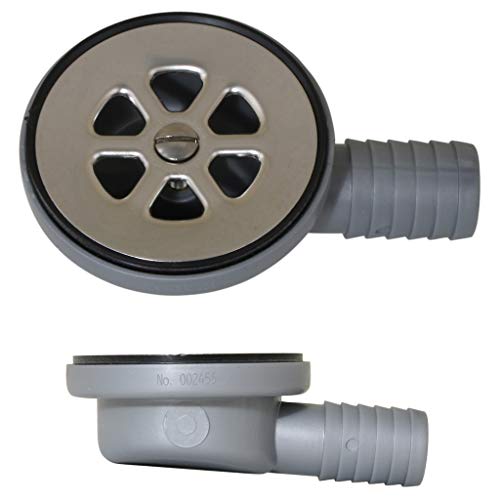
Scandvik 10307: a low-clearance hose-barb fitting
The Scandvik 10307 product page states that it fits a 2-1/16-inch drain hole, has a one-inch hose-barb outlet and a 2-3/4-inch strainer diameter, and requires two inches of clearance below the floor. Those dimensions give a buyer concrete checks for a compatible cockpit or shower installation.
The outlet detail is crucial. A hose barb is a different connection from the Schedule 40 pipe sockets and no-hub outlets above. Do not buy this fitting for a house shower solely because an elbow appears to save space. Ask the appropriate installer to confirm the intended application, drainage arrangement and applicable requirements.
The exact retail item is model 10307 in gray. Scandvik’s 10306 has a stopper and is a different model. If a product title uses both names loosely, verify the manufacturer’s part number before you order.
Measure the whole assembly, not just the grate
“Low profile” can describe the drain body, the visible cover, the shower base or a complete system. These are different measurements. A shallow cover may sit above a deeper body, and a short body still needs a properly designed connection to the trap and waste line. Ask the supplier which reference points its stated height uses.
Give the installer a drawing or clear photographs showing the structural floor, available cavity, drain opening and pipe position. The useful measurement is not simply the gap under the tray. Tile, adhesive, mortar, the waterproofing connection, supports and the pipe route all affect whether the finished assembly can be installed as intended.
- Record the existing pipe material, nominal size and orientation.
- Measure the shower-base opening using the base manufacturer’s drawing.
- Identify obstructions, including joists and slab edges.
- Allow working space for the specified connection and any required access.
- Confirm the finished floor build-up and the drain’s height-adjustment range.
Do not cut structural members or change the planned trap arrangement to accommodate a drain purchased on guesswork. If the fitting does not fit the approved layout, resolve the layout with the installer before work proceeds.
Match the drain to the waterproofing method
A drain’s connection to the waterproofing is as important as its outlet. Traditional liner-clamping drains, bonded-waterproofing drains and drains for preformed bases are designed around different interfaces. A part that connects to the waste pipe can still be wrong for the shower floor above it.
For comparison, Oatey’s no-caulk shower-drain instructions describe a drain for preformed shower bases, with a compressed gasket securing the specified pipe and washers sealing the body to the base. That document does not make a liner-clamping drain suitable for a preformed pan, or authorize substituting components between systems.
Ask who is responsible for the complete waterproofing detail, and keep the approved instructions for both the drain and the shower base or membrane. If the two documents seem inconsistent, obtain clarification before assembly rather than filling the difference with extra sealant.
Pipe sizes, flow and local approval
The numbers in a drain listing need context. A two-inch outlet designation, a two-inch-high body and a two-inch drain hole refer to separate things. Nominal pipe sizes are also not a substitute for checking the manufacturer’s specified connection. Compare the drawing and connection type, not just the largest number in the title.
Your installer should verify that the complete arrangement handles the planned shower outlets and meets the rules applicable to the project. Multiple showerheads or body sprays make that discussion especially important. This guide does not assign a universal minimum outlet size, flow capacity, trap depth or floor slope to every installation.
A product listing or certification mark does not by itself approve a particular installation. Oatey’s instructions expressly direct installers to check local building and plumbing requirements. Give the relevant authority or installer the exact product information if approval is uncertain, particularly for a side-outlet or hose-connected fitting.
Plan installation access and maintenance
Decide whether the drain can be reached from below before selecting the assembly. Schluter’s KERDI-LINE installation guidance distinguishes work with and without plumbing access from below; where access is unavailable, its drain is set and connected before the shower base is installed. The sequence belongs in the project plan, not as a surprise after the floor is closed.
Also check how the grate lifts out and which cleaning tools or replacement parts are specified. Ask whether a hair catcher is included, optional or unsuitable for the selected drain. An improvised insert can obstruct the opening or prevent the cover from seating, so use accessories approved for the exact assembly.
Keep the model number and instructions after installation. When drainage slows, those details make it easier to identify the proper cleaning procedure or replacement cover. A new decorative grate will not solve a blocked waste pipe or an incorrectly installed shower floor.
Before you order
Have the installer approve the model, body material, pipe connection, waterproofing interface, installed depth and complete parts list. Check the seller’s return conditions before any fitting is glued, altered or embedded. Choose EZ-FLO 15301 only for its intended liner-based construction, specify KERDI-LINE as a coordinated system, and keep the Scandvik hose-barb fitting within a confirmed compatible application.
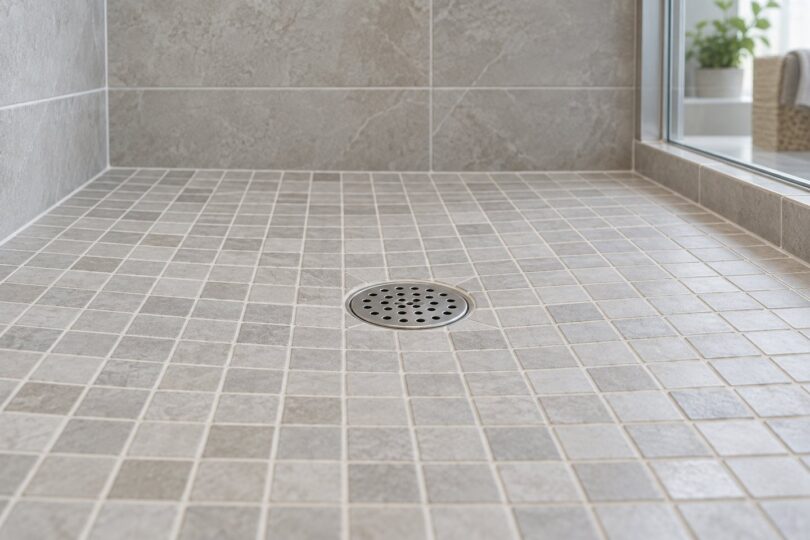
Image note: AI-generated editorial illustration of generic items; not a photograph of a named or tested product.