
Frozen scones are easiest to shop for when you start with the format: unbaked dough that needs cooking, fully baked pastries that need thawing or reheating, or a dry mix that you prepare yourself. Those are different purchases. For a small household, a manageable box of pre-portioned dough is usually more practical than a foodservice case. For a café or a large event, case size, oven capacity and freezer space matter just as much as flavor.
This guide compares identifiable products using manufacturer specifications and preparation directions. The choices below are based on format and intended use, without claiming a hands-on taste test.
Frozen scone options at a glance
- Smaller home-baking packs: David’s Cookies Ready to Bake Frozen Scone Dough, with 4-ounce portions and listed 12- or 18-piece options.
- Large batches of fruit scones: Pillsbury Place & Bake Blueberry or Cranberry Orange dough, each listed as 96 portions of 3.75 ounces.
- Flexible portion sizes: Rich’s Chocolate Chunk Scone Dough, product 05420, supplied as forty 10-ounce dough squares for cutting.
Match the exact flavor, size and pack before ordering. A smaller portion count does not always mean less dough, and a “piece” can mean a whole slab rather than one ready-to-bake serving.
1. David’s Cookies: a smaller-pack starting point
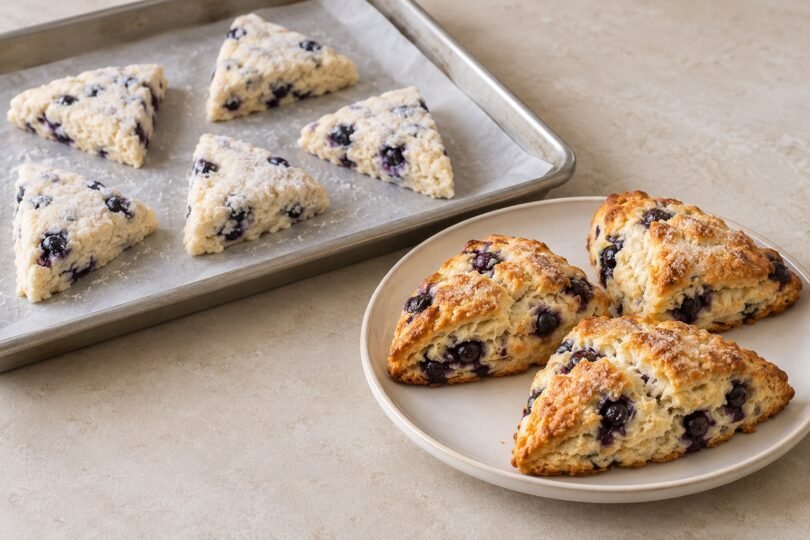
David’s Ready to Bake Frozen Scone Dough comes in pre-portioned 4-ounce pieces with egg wash and crystal sugar already applied. Listed flavors include Blueberry, Cinnamon Chip and Cranberry Orange, plus combinations. The page offers 12- and 18-piece selections; check the chosen combination because the sizes and flavor options are not necessarily interchangeable.
This is the most sensible place to start among these examples if a 96-count case would crowd your freezer. Twelve 4-ounce portions total 3 pounds of dough; eighteen total 4.5 pounds. That is still worth planning around if you bake only occasionally.
The maker says to keep the dough frozen and lists nine months frozen or two to four days after baking. Follow the instructions supplied with your box for the actual baking schedule. Do not substitute settings from another brand, and request the ingredient and allergen information for your selected flavor if it is not readable before purchase.
2. Pillsbury Place & Bake: foodservice-size fruit scones
Pillsbury Blueberry, product 108150000, is unbaked freezer-to-oven dough in a 96-count case. Each portion is 3.75 ounces, and the case is arranged as eight slabs containing twelve portions apiece. The manufacturer lists barley, wheat and milk ingredients.
Cranberry Orange, product 108152000, has the same 96-count, 3.75-ounce format and a 22.5-pound net case weight. Its listed ingredients include cranberries and oranges, with wheat and milk identified in the allergen statement.
These cases make more sense for regular service than an occasional afternoon tea. Before checkout, confirm that the seller is supplying the stated flavor and whole case, rather than a different assortment or a smaller repack. Check delivery restrictions and your freezer’s available dimensions, too.

Pillsbury Cranberry Orange Frozen Scone Dough, 3.75 oz, 96-Count Case
As an Amazon Associate we earn from qualifying purchases.
Baking the Cranberry Orange product
For product 108152000, General Mills specifies frozen dough on a parchment-lined tray. Its listed oven schedules are 325°F for 24–29 minutes in convection, rotating halfway; 350°F for 29–34 minutes in a rack oven; or 375°F for 29–34 minutes in a standard/reel oven. Load and oven affect timing. The center should spring back when lightly touched, and the instructions call for complete cooling before removing the scones from the sheet. Use the directions on your current case if they differ.
3. Rich’s Chocolate Chunk: dough squares for custom portions
Rich’s product 05420 contains forty 10-ounce chocolate-chunk dough squares in a 25-pound case. These are not forty individual breakfast scones. Cutting each square into four creates 160 portions, although other shapes and sizes are possible.
The maker’s directions are different from the Pillsbury example: keep the dough frozen between 0°F and −10°F, space pieces about an inch apart on a paper-lined tray, and allow 15–20 minutes at room temperature for best results. Bake in a preheated rack or convection oven at 350°F for approximately 20–25 minutes. This short tempering instruction is specific to this dough; it is not permission to leave all frozen pastries out for extended periods.
The label lists egg, soy and wheat, with possible peanut, tree-nut and milk cross-contact. Choose this format when portioning flexibility matters and you have room for a large case, rather than simply because its piece count looks low.
How to compare packs without buying too much
Calculate cost per usable portion from the delivered total, including cold-shipping charges. Then consider how many portions you will actually use. A lower unit price is not a saving if most of a large case remains forgotten in the freezer. For an event, include a little room for damaged portions and a separate test bake using the package directions.
Plan the baking session as well as the purchase. How many trays fit without crowding? Will the oven also be needed for other food? Can the pastries cool before guests arrive? A case meant for commercial ovens may demand more tray changes in a domestic kitchen than its simple preparation description suggests.
Flavor descriptions are useful for choosing fruit, chocolate or cinnamon. They do not establish which product you will enjoy most. Compare the ingredient list, portion size and preparation effort before treating marketing words such as “bakery-style” as a reason to buy.
Check frozen deliveries immediately
Before ordering, find out how the seller packs perishable dough, the expected transit time and the process for a warm or damaged delivery. Arrange for someone to receive it and clear freezer space in advance. An insulated box or a “ships frozen” statement does not prove that the food stayed cold throughout its journey.
USDA’s mail-order guidance says perishable food should arrive frozen, partly frozen with ice crystals, or refrigerator-cold below 40°F as measured with a thermometer. If it arrives above 40°F, notify the supplier and do not eat or taste it. Do not assume baking will make a suspect delivery acceptable. For dough that arrived cold but softened, ask the manufacturer how to handle that product rather than improvising a thaw-and-refreeze routine.
Allergens and safe preparation
Read the complete label for every flavor. A fruit filling does not make a scone dairy-free, and a nut-free-looking recipe does not rule out cross-contact. For a serious allergy, get a current answer from the manufacturer if the package or seller leaves anything unclear. Keep the original packaging so that the ingredients, lot code and handling directions remain available.
Unbaked scone dough is not a snack. FDA guidance on flour advises against tasting raw dough and calls for following cooking directions. Wash hands and clean utensils and surfaces after handling it. Keep raw dough separate from ready-to-eat food.
Frequently asked questions
Can every frozen scone go straight into the oven?
No. Some dough is designed for freezer-to-oven use, while other products specify a short tempering step. Fully baked frozen scones have a different thawing or warming process. The exact package instructions take priority.
Are scone mixes a substitute for frozen dough?
They can suit someone who wants to mix and portion the dough, but they are dry ingredients rather than a frozen ready-to-bake product. Check which ingredients you must add and how much preparation you want to do.
What should I buy for a small household?
Start with the smallest suitable pack and a flavor you already like. A manageable quantity, a readable label and clear storage directions are more useful than a long ranking of products that do different jobs.