
Plain sunflower seeds, nut pieces and peanut butter are commonly cited chipmunk attractants, but bait should not be your first response to a chipmunk in the yard. Start by removing spilled food and protecting the specific area being disturbed. Consider a live trap only when it is legal, necessary and backed by a humane plan for the animal.
Food bait is different from poison bait. This guide does not recommend rodenticides, insecticides, glue traps or drowning traps for chipmunks. A product labeled for mice, rats, moles or insects is not automatically suitable for a chipmunk problem.
Research checked October 4, 2026 using university extension, wildlife-welfare, pesticide-safety and trap-manufacturer guidance. We have not tested bait effectiveness or established trapping rules for your location. Check your state or local wildlife authority before trapping, transporting or releasing any wild animal.
Food options to discuss for a lawful live-trapping situation
Kansas State University’s chipmunk guidance lists peanut butter, nut meats, sunflower or pumpkin seeds and several other foods as attractants. That supports using ordinary food rather than buying a mysterious “super bait,” but it does not establish one bait as best in every situation.
| Food option | Why it is a reasonable comparison | Important limitation |
|---|---|---|
| Plain sunflower or pumpkin seeds | Listed by extension guidance as chipmunk attractants | Can also attract birds and other animals |
| Small plain nut pieces | Another familiar food-based attractant | Not selective for chipmunks; consider household allergies and pet access |
| Peanut butter | A commonly listed food bait | Nut-allergy concerns and attraction of other animals remain |
These are food comparisons for a limited, appropriate situation, not advice to scatter feed around the property. Adding a food source can make an outdoor wildlife conflict harder to resolve. There is no need to buy a bulk bag or a special brand before deciding whether baiting is justified.
Prevent the attraction before buying a trap
Humane World for Animals recommends nonlethal ways to reduce chipmunk conflicts, including cleaning up spilled bird seed and protecting vulnerable plantings. Seeing a chipmunk outdoors does not by itself establish a problem requiring removal.
- Clean up seed that collects below bird feeders and consider a feeder arrangement that reduces spillage.
- Bring pet food indoors and keep stored seed or feed in secure containers.
- Use suitable plant or bulb protection rather than leaving extra food nearby.
- Have entry points assessed and repaired without trapping animals or dependent young inside.
- If you are concerned about a structure, have the actual damage and its cause assessed instead of assuming every nearby burrow is responsible.
The Internet Center for Wildlife Damage Management also discusses reducing access to bird seed and using exclusion. For vents or openings around a building, obtain appropriate advice: improvised screening can create ventilation or fire hazards, and sealing an occupied space can harm animals.
Before live trapping, know what happens next
A live-catch cage does not automatically make the overall process humane. An animal can suffer from stress, weather exposure, injury or prolonged confinement, and moving it elsewhere may be restricted or harmful.
Havahart’s own FAQ tells users to determine the lawful release method with local authorities before setting a trap. It also recommends checking traps every 30 minutes because prolonged confinement can lead to distress and injury. That manufacturer interval is not permission to ignore stricter local requirements or leave an animal exposed.
Before proceeding, confirm:
- Whether trapping is permitted for that species and situation.
- Whether a permit or licensed wildlife professional is required.
- What handling and release arrangements are lawful and appropriate.
- How dependent young and unintended captures will be protected.
- Whether you can monitor the trap closely and respond promptly.
If those questions are unresolved, do not set the trap. Contact a qualified humane wildlife-control professional or the local wildlife authority. Do not follow a generic instruction to drive an animal a certain number of miles away; there is no universally lawful or humane relocation distance.
What to check if a professional recommends a cage trap
Use a trap the manufacturer identifies as appropriate for the species and follow that exact model’s instructions. Size, mesh, door and trigger design matter. A generic mouse trap, glue board or fishing trap is not an equivalent product.
Check for damaged wire, sharp edges, sticking mechanisms and missing instructions. Keep children and pets away. Do not reach into a trap, shake it, attempt to restrain a wild animal with bare hands or improvise a release when you are unsure what to do. Seek help for an injured or distressed animal.
We have not verified a particular cage for your location, animal or release plan, so no model is presented here as universally suitable. The more useful first purchase may be secure food storage or plant protection rather than trapping equipment.
Why poison and insecticide listings do not belong in a bait shortlist
The EPA’s rodent-bait guidance stresses following the pesticide label and protecting children, pets and wildlife. “Peanut butter flavor” on a rodenticide container does not make it ordinary food or prove it is intended for chipmunks.
Do not mix pesticide into food, repurpose insecticide as wildlife bait, or assume a rat-and-mouse product is appropriate for another species. “Natural,” “poison-free” and “pet-safe” marketing also does not establish that a product or trapping method is harmless in every use.
This guide favors prevention and humane professional help instead of poison selection. If a child, pet or other animal may have been exposed to a pesticide, contact the appropriate poison-control or veterinary service promptly and have the product label available.
Frequently asked questions
What is the best bait for chipmunks?
Extension guidance commonly lists seeds, nut pieces and peanut butter. None is a guaranteed winner, and choosing a bait is secondary to deciding whether trapping is legal and appropriate.
Will food bait attract only chipmunks?
No. Other wildlife and pets may be interested. That is one reason not to scatter bait or leave a trap unattended.
Can I release a chipmunk in a park?
Do not assume so. Ask the local wildlife authority before trapping or transporting the animal. Public land and relocation rules vary.
Should I feed chipmunks to draw them away from the house?
Adding food can attract more activity instead of solving the cause. Focus on removing accessible food near the problem area and protecting the specific plants or entry points involved.
Bottom line: ordinary food attractants can be relevant to a lawful, humane live-trapping plan, but prevention comes first. Avoid poison and glue-trap shortcuts, and resolve monitoring, handling and release requirements before buying or setting a trap.
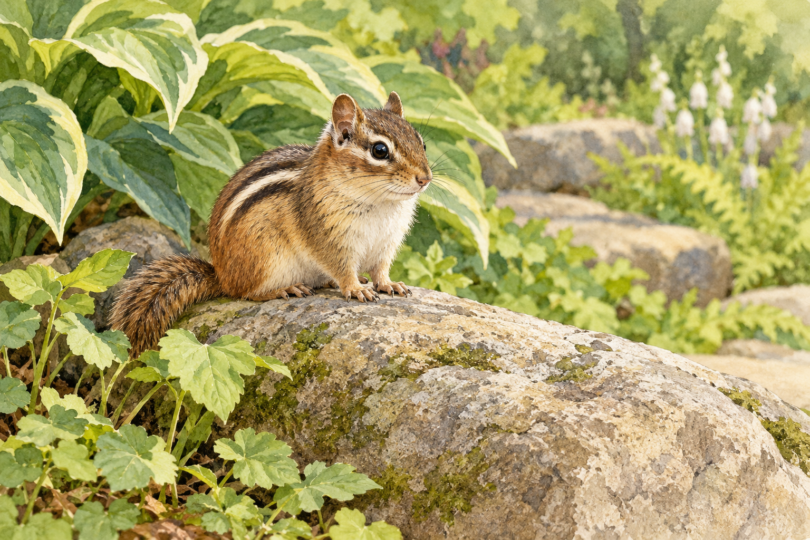
Image note: AI-generated generic wildlife illustration; it does not identify a local species, prove property damage or demonstrate baiting or trapping.