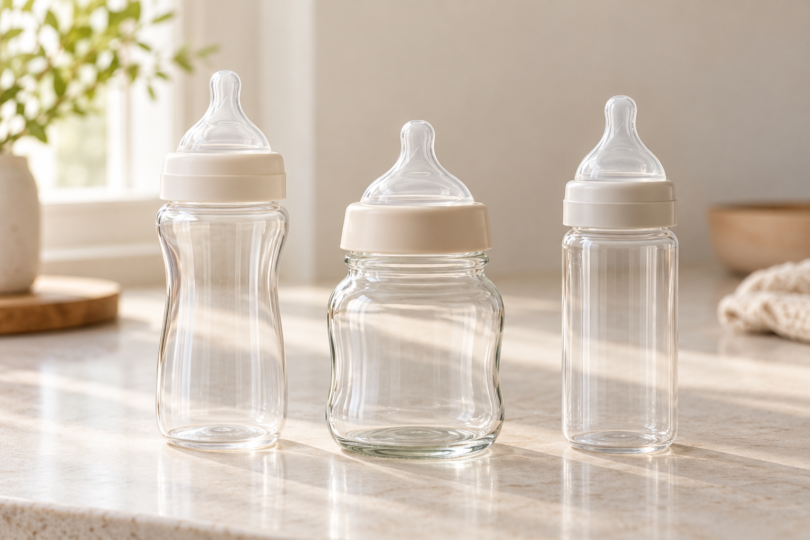

Shopping for bottles for a baby with tongue-tie? Start by matching the bottle and nipple to how your baby actually feeds. Dr. Brown’s Options+ Narrow, Lansinoh NaturalWave and Philips Avent Natural Response Glass offer different shapes, materials and cleaning routines. These are ordinary infant bottles; none treats or cures tongue-tie or guarantees safe feeding.
If feeding is difficult, ask your baby’s pediatrician or feeding team to assess a feed and weight gain. The NHS notes that some babies with tongue-tie feed well, while others have prolonged feeds, dribbling, choking or slow weight gain. A shopping list cannot tell you why your baby is struggling or which nipple is appropriate.
Three bottle options to compare
| Bottle and selected pack | Body and capacity | Included nipple | Cleaning tradeoff |
|---|---|---|---|
| Dr. Brown’s Options+ Narrow, clear, 4-pack | Polypropylene; 8 oz/250 mL each | Level 1 Slow Flow silicone | Separate vent insert and reservoir tube; top-rack dishwasher cleaning |
| Lansinoh NaturalWave, 5 oz, 3-pack | Polypropylene; 5 oz each | Slow Flow, labeled S in the selected listing | Three feeding pieces plus cap; top-rack dishwasher or gentle handwashing |
| Philips Avent Natural Response Glass, SCY910/04, 4-pack | Glass; 4 oz/120 mL each | Slow Flow Natural Response, Flow 2 | Dishwasher-safe; inspect glass for damage and avoid metal cleaning tools |
The flow labels above identify what is supplied, not a recommendation for every baby with tongue-tie. Nationwide Children’s explains that a nipple can be too slow as well as too fast, and that there is no need to move up a level just because a baby reaches a particular age. Bottle capacity is not a feeding target; follow your baby’s fullness cues.
1. Dr. Brown’s Options+ Narrow: a separate vent system
Consider this option if you want a narrow bottle with a removable internal vent assembly. The selected clear four-pack holds 8 oz/250 mL per bottle and includes Level 1 Slow Flow nipples. Its polypropylene body is the plastic version; do not confuse it with similarly named glass or wide-neck sets.
The main tradeoff is washing and assembling the vent insert and reservoir tube as well as the usual bottle parts. Dr. Brown’s instructions allow top-rack dishwasher cleaning and say to use its own compatible nipples. The vent is a design feature, not evidence that this bottle corrects tongue restriction or is the right flow for your baby.
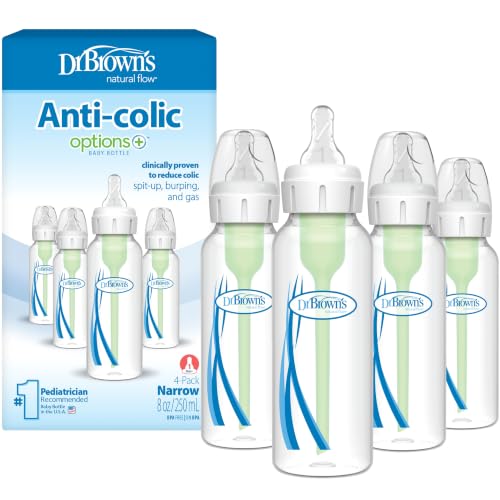
Dr. Brown’s Options+ Narrow baby bottles, 8 oz, Level 1 Slow Flow, 4-pack
As an Amazon Associate we earn from qualifying purchases.
2. Lansinoh NaturalWave: fewer parts to assemble
Lansinoh’s wide-neck polypropylene bottle has three feeding pieces: bottle, collar and silicone nipple, plus a protective cap. It is a practical option when fewer loose parts matter in your cleaning routine. The selected listing is the 5 oz three-pack with Slow Flow S nipples; other packs use Extra Slow or different flows. Check the exact pack and nipple marking before buying.
Lansinoh allows top-rack dishwasher cleaning but recommends gentle handwashing to extend nipple life. The selected listing uses S in its bullets and 2S in its components section; older maker documentation also uses 2S. Neither label establishes suitability for a particular baby. Use the manufacturer’s matching bottle parts and ask your feeding team about flow if feeds remain difficult.

3. Philips Avent Natural Response Glass: a glass-body option
Choose this model to compare a glass body with the plastic options above. The SCY910/04 set contains four 4 oz/120 mL bottles with Natural Response Flow 2 nipples. Philips describes a nipple opening that releases milk during active drinking. That mechanism still needs to suit your baby’s ability to draw milk; it does not make feeding difficulty self-correcting.
The bottle is dishwasher-safe, but glass can break. Philips says to inspect for cracks or glass fragments and avoid metal tools inside the bottle. Its wider shape and different nipple mechanism are reasons to compare it with the other options, not a reason to assume Flow 2 will suit every tongue-tied baby.

What matters before buying
Start with a small purchase rather than a large supply of one style. Check the exact nipple supplied, the parts you will need to clean and replacement-part compatibility. A broad nipple, narrow nipple or anti-colic label does not establish which bottle will work for your baby. Persistent difficulty deserves assessment, including other possible feeding causes.
Do not cut or enlarge a nipple opening, add cereal, or improvise thickened feeds to solve a feeding problem. CDC guidance warns that cereal in bottles can increase choking risk, and Nationwide Children’s says not to cut nipples. If a clinician has prescribed thickened feeds, follow that individual plan and discuss bottle or nipple changes with the treating team.
Take bottles apart after feeding and clean every component, including any valves or vent pieces. Follow the exact maker’s cleaning instructions and let parts dry fully before storage. CDC’s cleaning guidance explains washing, drying and sanitizing, including extra precautions for babies under two months, born prematurely or with weakened immune systems.
Frequently asked questions
Is there one best bottle for every baby with tongue-tie?
No universal choice follows from the diagnosis. Some babies with tongue-tie feed without problems; others need assessment. This comparison helps you distinguish bottle features, not choose treatment.
Should I always use the slowest nipple?
No. A flow that is too slow can make feeding hard work, while a fast flow can be difficult to manage. Ask your feeding professional to help assess the baby and nipple together; do not automatically change levels by age.
Does anti-colic mean suitable for tongue-tie?
No. A vent system describes the bottle’s design. It does not establish that the bottle treats tongue-tie or that its supplied nipple suits your baby’s feeding skills.
Can I mix nipples and bottles from different brands?
Use parts the bottle manufacturer specifies as compatible. Dr. Brown’s warns that other nipples can leak or change flow, and Lansinoh says its nipples are designed for its own bottles. A part that appears to fit is not enough evidence of compatibility.
What if a new bottle does not help?
Contact your pediatrician or feeding team if feeding problems continue, particularly coughing or choking, poor intake or slow weight gain. The AAP supports coordinated assessment and follow-up rather than assuming every feeding problem is caused by tongue-tie.