


For an everyday latte, Lavazza Super Crema is a useful starting point if you want a medium-roast espresso blend and will use a large bag steadily. Choose Peet’s Espresso Forte for a darker-roast direction, Intelligentsia Black Cat Classic if you actively enjoy a fruitier espresso profile, or Counter Culture Slow Motion for a decaf option. The best choice is the one whose roast, bag size and flavor direction fit the latte you actually make.
All four selections below are whole-bean coffee. The flavor notes are the roasters’ descriptions, and the milk-drink pairings are editorial suggestions. Milk type, espresso extraction and the amount of milk can change the result substantially, so treat the shortlist as a way to choose your next bag, not a promise of an identical cup.
The shortlist by latte preference
| Coffee and selected pack | Roast and roaster-described direction | Who should consider it | Main trade-off |
|---|---|---|---|
| Lavazza Super Crema, whole bean, one 2.2 lb bag | Medium; Arabica–Robusta blend with honey and nutty notes | A household making milk drinks regularly | A large bag is a bigger commitment if you make one latte occasionally |
| Peet’s Espresso Forte, whole bean, one 32 oz bag | Dark; chocolate truffle, lemon curd and hazelnut notes | Someone who prefers a darker espresso base | Dark roast is a preference, not an automatic solution to a weak latte |
| Intelligentsia Black Cat Classic Espresso, whole bean, one 12 oz bag | The roaster’s lightest espresso; cherry, cola and orange notes | A drinker curious about a brighter, fruit-led latte | Less suited to someone specifically avoiding fruit acidity |
| Counter Culture Slow Motion, whole bean, one 12 oz bag | Medium-roast decaf; molasses and cocoa notes | A decaf latte with a cocoa-oriented flavor direction | Blend components change; check the current bag and roaster information |
1. Lavazza Super Crema: a medium-roast starting point for regular latte makers
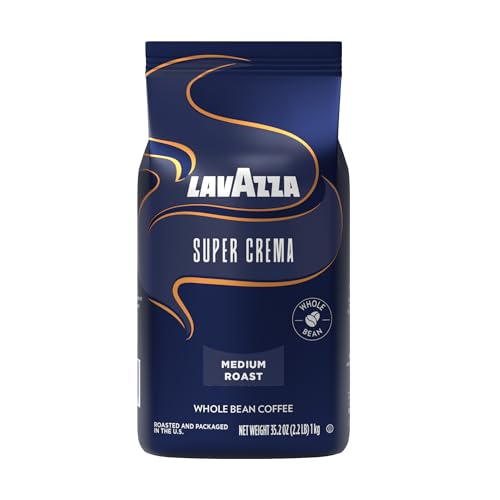
Lavazza Super Crema Whole Bean Coffee, One 2.2 lb Bag
As an Amazon Associate we earn from qualifying purchases.
Lavazza’s 2.2 lb Super Crema page identifies this as a medium-roast blend of Arabica and Robusta beans intended for espresso. Its profile lists honey and nutty notes. That is a sensible direction to explore if your preferred latte is mellow and nutty rather than deliberately fruit-forward.
The selected pack is one 2.2 lb whole-bean bag. Super Crema also appears in other sizes, and Lavazza sells several similarly named blends. Espresso, Crema e Aroma and Espresso Barista Gran Crema are not substitutes for this exact selection. Match the blend name, whole-bean format and net weight together.
The large bag is the main purchasing decision. At an illustrative 18 g dose, 1 kg provides roughly 55 doses before dialing-in losses. That can suit a household making several drinks daily; it is less convenient if you are still exploring beans or make coffee only on weekends. Buying more does not establish better value unless you will use it while you still enjoy it.
Choose it if: you want to begin with a medium-roast espresso blend and a substantial bag. Consider another option if: you want a smaller trial bag or specifically prefer the fruitier direction of Black Cat Classic. The blend’s Robusta content is not a quantified caffeine claim, and more crema is not proof that a latte will taste better.
2. Peet’s Espresso Forte: for a darker-roast latte preference

Peet’s developed Espresso Forte specifically for espresso. Its current blend page calls it a dark roast and describes chocolate truffle, lemon curd and hazelnut notes. Peet’s also identifies Espresso Forte as the coffee in its coffeebar espresso and latte descriptions, which makes it an especially relevant option for this category.
My preference-based recommendation is to put it on the shortlist if you want a darker coffee base, including for a larger milk drink or a latte with syrup. That does not mean it will overpower every milk or stay pleasantly balanced at any recipe. Someone who dislikes darker roasting should not buy it simply because the bag says espresso.
The linked Amazon selection is one 32 oz whole-bean bag. Peet’s own product page offers a 16 oz bag with grind choices; that is a different pack size. If you buy directly from Peet’s, select Whole Bean and choose the quantity deliberately. Do not confuse the Espresso grind option with whole beans.
Trade-off: this is another large bag, and the dark roast may not fit your taste. If your latte tastes thin, first check the espresso dose, yield and milk quantity before assuming a darker bean will solve it. If you use a bean-to-cup machine, follow its manual’s restrictions on beans and hopper use; this recommendation does not override them.
3. Intelligentsia Black Cat Classic: for a fruitier espresso direction

Intelligentsia describes Black Cat Classic as its lightest espresso blend, with fruit acidity and notes of cherry, cola and orange. That is a materially different choice from the expectation of a dark, smoky espresso roast. The selected Amazon listing calls it light roast; the maker uses its own roast scale, so cross-brand roast labels should not be treated as a calibrated measurement.
For a latte, this is the pick to explore when you want fruit character as part of the drink. I would start with a smaller milk addition, then increase it to taste, rather than immediately using your largest cup. If fruit acidity is the quality you dislike in coffee, Super Crema or a darker option is a more natural place to begin.
The selected pack is one 12 oz bag of whole-bean Black Cat Classic. Black Cat Analog and Black Cat Sublunar are different blends. The roaster also sells ground versions and larger quantities, so the word “espresso” alone does not identify the grind or package.
Intelligentsia gives a useful blend-specific starting recipe: 18 g of coffee producing 45 g of espresso, a 1:2.5 ratio by weight. Use a basket designed for the chosen dose and adjust the grind to suit your machine and taste. That recipe is a starting point for this coffee, not a requirement to use the same ratio for every bean.
Trade-off: it asks you to enjoy a brighter flavor direction rather than disguise it. The smaller bag makes the experiment more manageable, but it does not guarantee any particular roast date on a retailer’s shelf.
4. Counter Culture Slow Motion: a medium-roast decaf option
Slow Motion is Counter Culture’s medium-roast decaf offering, described with molasses and cocoa notes. Its product page includes an espresso recipe as well as filter-brewing guidance, so it is a relevant bean for a decaf latte rather than merely a coffee to use in a drip machine.
Choose the 12 oz bag from the roaster for a smaller commitment. Counter Culture’s ordering FAQ confirms that coffees sold through its website are whole bean; pre-ground versions can exist at grocery retailers. The product page also offers 24 oz and 5 lb sizes, which are separate selections.
The cocoa-oriented description makes this my decaf starting point for a straightforward milk drink. Counter Culture currently describes the decaffeination as Swiss Water Process unless otherwise noted and publishes blend components by roast date. Check that information for the bag you buy instead of assuming a fixed country blend or process forever.
The maker’s espresso starting point is 18 g in at a 1:2 ratio, or about 36 g of espresso. Dial it in for your equipment and then add your preferred milk. Trade-off: there is no reason to expect a decaf to use the identical grinder setting as your regular coffee. A separate setting or a small adjustment may be needed when switching bags.
What matters more than an “espresso” label
Choose whole beans only if you can grind for your brewer
A conventional espresso machine needs a suitable fine grind, and the useful setting changes with the coffee and recipe. Peet’s grind guide explains why a coarse grind can run too quickly and an excessively fine one can produce an unpleasant extraction. If you do not have an espresso-capable grinder, choose an appropriate ground option for your equipment; these whole-bean cards do not represent those alternatives.
Compare the latte at a consistent milk quantity
When trying a new bag, keep the cup, milk type and milk quantity the same for the first comparison. Changing the coffee and doubling the milk at the same time makes it harder to learn what you prefer. For dairy or plant-based milk, taste your normal drink before choosing the next adjustment. There is no single bean here guaranteed to be best with every oat, soy or dairy milk.
Match bag size to how quickly you brew
A 12 oz bag contains about 340 g, or roughly 18 doses at an 18 g dose before waste; a 32 oz bag contains about 907 g, or roughly 50 doses. These are planning calculations, not serving guarantees. Include the coffee used to adjust your grinder, and remember that making a larger latte does not automatically mean your basket can safely hold more grounds.
The National Coffee Association’s storage guidance recommends smaller purchases and keeping coffee protected from air, moisture, heat and light. Use a suitable airtight container in a cool, dark place and grind the amount you need before brewing. An online listing does not establish the roast date or storage history of the bag that will arrive.
Questions about coffee beans for lattes
Do latte beans have to be dark roast?
No. This shortlist includes medium, darker and lighter espresso directions. Espresso is a preparation method, and a latte adds milk to that coffee. Choose the roast profile you like, then adjust extraction and milk quantity instead of treating dark roast as compulsory.
Can these beans make iced lattes?
Yes, as a preference-based starting point for an espresso-and-milk drink over ice. Use the same coffee you enjoy hot, then adjust the milk and ice amount to taste. A coffee’s brand or roast label does not prevent dilution as the ice melts.
Are honey, hazelnut or cocoa notes added flavorings?
Roaster tasting notes describe perceived flavors; they are not an ingredient list. Check the specific package’s ingredients and labeling if that distinction matters to your purchase. Counter Culture explicitly says its listed tasting notes are descriptors and that it does not add flavoring agents to its coffee.
Which bag should I try first?
Start with Super Crema if you want a medium-roast espresso direction and can use the larger bag. Pick Espresso Forte when you already know you prefer dark roast, Black Cat Classic when fruit acidity sounds appealing, and Slow Motion when you want decaf. If you are undecided, prioritize a manageable bag size and change one brewing variable at a time.
