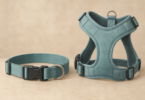

Choose a Great Dane’s collar by measured neck size and its intended job, not by the words large, giant, or heavy duty. For identification, a well-fitted flat collar can be practical. For a dog that pulls or needs to avoid neck pressure, investigate a suitable walking harness with your veterinarian or qualified trainer.
This shortlist compares the LupinePet Original Designs Dog Collar, Ruffwear Front Range Collar, and PetSafe KeepSafe. LupinePet offers the broadest upper size range here; Ruffwear separates the tag attachment from the leash ring; PetSafe offers a breakaway design. None is a guarantee that a handler can safely restrain every Great Dane.
Research checked October 4, 2026. Selections are based on manufacturer details and veterinary equipment guidance, not hands-on testing. We have not verified pulling-force ratings, buckle failure loads, or fit on individual dogs. Check the current size and instructions for the exact collar.
Comparison at a glance
| Option | Larger listed neck range | Useful distinction | Important limit |
|---|---|---|---|
| LupinePet Original Designs Dog Collar | 16–28 or 25–31 inches | Additional range for larger neck measurements | Ordinary side-release buckle, not breakaway |
| Ruffwear Front Range Collar | 20–26 inches | Separate ID attachment and tag silencer | Does not fit a neck beyond its chart |
| PetSafe KeepSafe Collar | Large: 18–28 inches | Buckle designed to separate under pressure | May release with identification attached |
1. LupinePet Original Designs: consider it for a larger neck
The LupinePet Original Designs Dog Collar is an adjustable flat nylon collar with a YKK side-release buckle and welded steel D-ring. Its larger options include 16–28 and 25–31 inches, making it a useful candidate when a collar that stops at 26 inches is too small.
The line offers several widths and size ranges. Select the actual width and neck range in the product options; do not assume the photographed configuration is the one added to an order. Optional embroidery may help keep a contact number visible without another dangling tag, although the manufacturer notes that adjustment can cover some embroidery.
Tradeoff: neither a steel ring nor a replacement guarantee establishes a published restraint rating for a lunging giant-breed dog. The side-release buckle is also different from an automatic breakaway buckle. Choose it for its fit and practical design, not an assumption of indestructibility.
2. Ruffwear Front Range: straightforward identification hardware
The Ruffwear Front Range Collar has polyester webbing, a side-release buckle, an aluminum V-ring, and a separate ID attachment with a silicone tag silencer. Keeping the ID attachment distinct makes the intended leash connection easy to identify.
The largest listed range is 20–26 inches with 1-inch webbing. Other ranges are 14–20 inches with 1-inch webbing and 11–14 inches with 0.75-inch webbing. A smaller or growing Dane may need a different range than an adult; the breed name alone does not settle that decision.
Tradeoff: this is not a breakaway collar, and its 26-inch upper limit rules it out for larger neck measurements. Do not extend it beyond the marked adjustment range or alter the buckle. Reflective accessories or lights, if needed, should be selected separately rather than assuming that a bright color provides visibility in darkness.
3. PetSafe KeepSafe: a different approach to an ID collar
The PetSafe KeepSafe uses a breakaway buckle intended to separate when the collar snags and pressure is applied. Its listed ranges are small 10–14 inches, medium 14–20, and large 18–28. PetSafe’s sizing method is to measure the neck and add one inch.
That release function may interest owners choosing identification gear for a dog whose walking leash will attach to a separate harness. Read the particular collar’s instructions carefully: a release feature changes how a collar behaves under tension.
Tradeoff: a collar designed to release can come off with the ID tags. Do not make it the primary walking restraint in the setup described here. Breakaway marketing is not proof that every snag will release safely, so supervision and avoiding entanglement opportunities still matter.
How to measure and assess the fit
- Measure the neck where the collar will sit. Use a flexible tape on a comfortably standing dog. Then apply the selected manufacturer’s instructions. Do not automatically add PetSafe’s one-inch allowance to another brand’s measurement.
- Confirm the actual adjustment range. If the neck exceeds a product’s maximum, cross it off. A 28-inch collar is not a workable substitute for a larger size simply because the dog can briefly squeeze into it.
- Check width and hardware in person. The webbing should lie flat, and the buckle should not dig into the skin or interfere with normal movement. A wider collar is not automatically more comfortable on every neck.
- Inspect fit after movement. Check that the collar stays correctly positioned while the dog looks around and lowers its head. Watch for slipping, pinching, or persistent scratching.
Ruffwear’s collar-safety guidance uses room for two fingers as a fit check and explains that both excessive tightness and looseness create problems. It also recommends removal before crating, leaving a dog unattended, and play with other dogs. Apply that guidance thoughtfully alongside the actual collar instructions and the environment.
Do not make collar strength the whole walking plan
VCA’s collar and harness guidance warns that hard pulling on a flat collar can put pressure on delicate neck structures. It recommends comfortable, gradually introduced equipment and advises against snapping or jerking the leash.
For a powerful dog, plan around what the handler can control comfortably. A properly fitted body harness and reward-based training may be worth discussing, especially if the dog coughs, pulls hard, backs out, or becomes difficult to manage. Stop and consult a vet if neck discomfort, breathing changes, weakness, or pain occurs; a new collar cannot identify or treat the cause.
Before each walk, inspect stitching, webbing, the buckle, leash clip, and connection points. Replace damaged gear. Keep the contact information current, and check that tags or accessories do not interfere with fastening. A collar is not a vehicle safety restraint, and this guide does not recommend any of these products for unattended tethering.
Frequently asked questions
What size collar does an adult Great Dane need?
Use the measured neck circumference. The ranges above overlap, and some dogs will fall outside them. Recheck a growing dog’s fit frequently rather than buying an oversized collar for future use.
Does a metal buckle make a collar safer?
Material alone does not establish safety. Construction, correct fit, condition, intended use, and verified manufacturer limits all matter. This comparison does not contain independently tested buckle-strength results.
Can a Dane wear a collar and harness together?
Often that is a practical way to separate identification from walking, provided both fit without crowding each other. Seek veterinary guidance when there is a neck, skin, or mobility concern.
Bottom line: begin with the tape measure. Choose a collar that fits now, understand whether its buckle releases automatically, and use a separate walking plan when neck attachment is unsuitable.
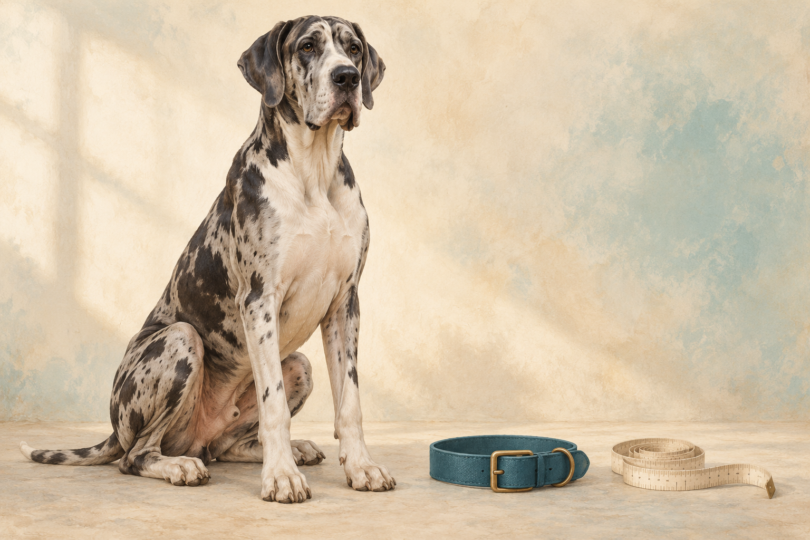
Image note: AI-generated generic editorial illustration; it does not identify a collar model, demonstrate fitted restraint or guarantee sizing.