
A gasket remover needs to suit both the old sealing material and the surface underneath it. For baked-on, solvent-based gasket residue, Permatex 80645 is a documented chemical option. For aluminum sealing faces, a suitable plastic scraper is a useful companion. Silicone RTV residue needs a different decision: Permatex specifically excludes it from 80645’s recommended uses.
This guide compares a chemical remover and a hand scraper, then explains the checks that prevent a cleaning job from damaging a sealing surface. The recommendations are based on product documentation and gasket-manufacturer guidance, not timed shop tests.
Identify the residue before buying
Look up the component’s service procedure and the sealant originally used if that information is available. “Gasket” can refer to a cut paper or fiber gasket, a formed-in-place chemical seal, or a molded rubber part. An aerosol meant to soften one type should not be assumed effective on all of them.
- Stubborn solvent-based gasket material or gasket cement: consider 80645 if the component manufacturer permits it.
- Anaerobic gasket residue: the Permatex technical sheet provides a longer dwell period.
- Silicone RTV residue: follow the equipment or sealant manufacturer’s removal procedure rather than choose 80645 on its general name.
- A removable molded seal or O-ring: determine whether the job needs careful physical removal at all, rather than adding an unnecessary chemical step.
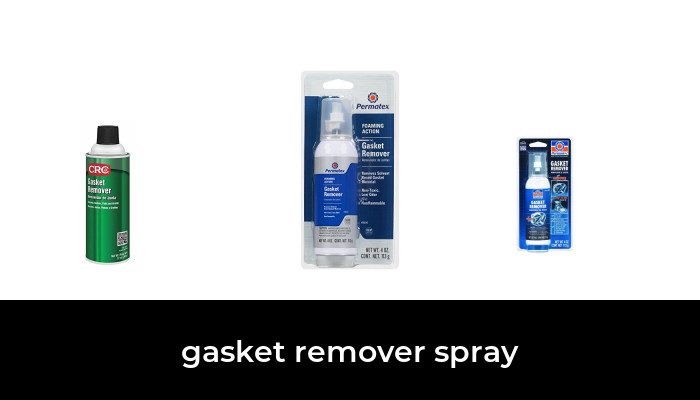
Permatex 80645 Low VOC Gasket Remover

Permatex 80645 Low VOC Gasket Remover, 4 oz Brush-Tip Aerosol, One Can
As an Amazon Associate we earn from qualifying purchases.
The selected product is the 4-ounce brush-tip aerosol, model 80645. The package identifies net weight, so do not confuse the four-ounce size with a larger can or a multipack. The brush applicator helps place the foaming remover on residue rather than relying on broad spraying.
Permatex lists solvent-based and anaerobic gasket materials among its applications. Its technical data sheet specifies at least 15 minutes before lifting softened residue, or 20–30 minutes for anaerobic gaskets, with repeat application if needed. These are manufacturer directions, not a guarantee that every old gasket will come off within that time.
The two most important limitations are silicone and paint. The same sheet says 80645 is not recommended for silicone gasket residue and that it removes paint. Protect adjacent finishes and non-metal surfaces from overspray. For plastic housings, coated parts or an uncertain material, obtain component-specific approval rather than interpret a broad compatibility claim as permission.
Choose it when the old material and work surface are known. Skip it when the main problem is unidentified RTV, when nearby finishes cannot be protected, or when the service instructions call for another method.
Permatex 80190 SaferScraper

The selected 80190 listing is a hand scraper with two plastic blades in total. Its product image shows a blue holder with an installed orange blade and an additional orange blade; it is a single set, not two handles. This is an accessory for lifting residue, so it does not replace a chemical remover when the residue needs softening.
The useful feature is the replaceable plastic edge. Inspect it during the job and replace a damaged or contaminated blade instead of trying to compensate with more pressure. The listing also says the holder accepts metal blades, but that does not make a metal blade appropriate for your sealing face.
Fel-Pro recommends a plastic scraper or plastic razor blade for aluminum surfaces, particularly those using multilayer-steel gaskets. Keep the blade at a low, flat angle and avoid digging with its corners. A plastic tool still needs controlled pressure and a clean edge; “non-marring” wording should never be read as a promise that careless use cannot leave damage.
A careful removal workflow
- Start with the service information. Confirm the component material, approved cleaner and replacement-gasket requirements. Work on a safely cooled component with access sufficient to see the sealing face.
- Prepare the area. Follow the remover’s label for ventilation and protection of surrounding surfaces. Keep old gasket fragments and cleaning waste out of passages and openings.
- Allow the chemical its specified time. Do not turn a slow-softening patch into a forceful scraping job. Follow the directions on the product in hand if they differ from an older online sheet.
- Lift residue gently. Use the approved scraper and collect the loosened material. Stop if the surface is being scratched or a stubborn patch appears to be part of the component itself.
- Finish according to the replacement gasket’s instructions. Residue removal and final surface preparation are separate checks. Use the specified final cleaner and let the surface reach the required condition before assembly.
Permatex’s online technical sheet is an older document, while the 80645 safety data sheet was revised in February 2025. Consult the current package and safety information for the product you have, especially before using it on an unfamiliar component.
Why power abrasives are a poor default
Do not choose a die-grinder disc simply because its sales page includes “gasket removal.” Fel-Pro warns against Scotch-Brite pads, Roloc discs, abrasive bristle discs, sandpaper and grinders on sealing surfaces: they can remove metal, change the surface and leave damaging abrasive contamination. A polished-looking flange is not proof that it is suitable for the replacement gasket.
Avoid treating steel scrapers as a universal answer, too. Corrosion, pits, deep scratches or suspected warping call for evaluation against the component’s service specifications. More aggressive cleaning cannot establish whether the part is suitable to reuse.
Safety and reassembly checks
The 80645 safety sheet identifies a pressurized chemical container that may explode if heated. Keep it away from heat, hot surfaces, sparks and flames; protect it from sunlight and store it in a well-ventilated place. Select suitable eye, hand and skin protection for the chemical and the work being done. Low-VOC labeling does not remove these precautions.
Do not automatically add RTV when installing the new gasket. Fel-Pro explains that many modern gaskets are designed for clean, dry installation, and extra sealant can interfere with their function. Some joints do call for sealant at specified locations, so use the directions for the actual gasket and engine rather than a universal rule.
The sensible purchase is a matched pair of decisions: select a remover approved for the residue, then a tool approved for the surface. For documented non-silicone residue, 80645 and a plastic-blade scraper are a reasonable starting point. When either material is uncertain, identify it before applying chemicals or scraping.
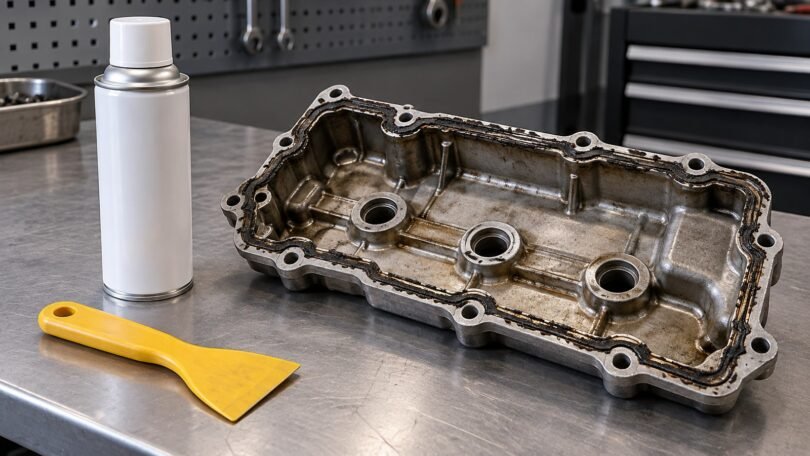
Image note: AI-generated editorial illustration; not a photograph of the named product.