
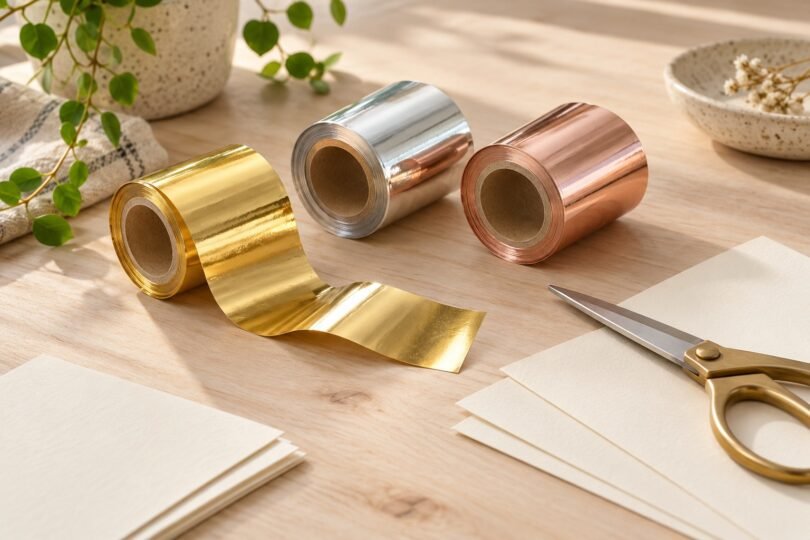

Heidi Swapp Minc foil is easiest to choose when you start with the project: what will make the design foilable, how wide it is, and which Minc machine you own. Color comes after those checks. For a first batch of cards, a single gold or silver reactive-foil roll is a sensible starting point; a specialty finish can wait until you know your paper and design work together.
The important purchase is Minc reactive foil. A shiny sticker sheet, metallic vinyl or hot-stamping foil can look similar in a shopping result while belonging to a different process. Use the package details below to compare like with like.
Minc foil sizes and packages to compare
American Crafts lists the following variants in its Heidi Swapp Minc Reactive Foil Roll range. Each entry is a separately sold roll, not a multicolor bundle.
| Exact variant | Maker SKU | Width × length | Package |
|---|---|---|---|
| Gold | 297341 | 12.25 inches × 10 feet | 1 roll |
| Silver | 297342 | 12.25 inches × 10 feet | 1 roll |
| Holographic | 297345 | 12.25 inches × 5 feet | 1 roll |
| Gold, narrow format | 485068 | 6 inches × 5 feet | 1 roll |
Choose gold or silver according to the rest of your design. The longer rolls make sense when you expect to repeat one color across invitations, place cards or scrapbook accents. The narrow gold option is worth comparing for smaller designs, but measure the design and transfer folder before choosing it. A narrow roll does not by itself establish whether the complete project fits your machine.
Watch the length when comparing finishes. The holographic roll listed here is half the length of the wide gold and silver rolls. A similar-looking tube or the word “large” does not tell you how much foil is inside. Compare width, length and quantity together.

Heidi Swapp Minc Reactive Foil, Gold, 10-foot Roll
As an Amazon Associate we earn from qualifying purchases.

A small two-color sheet pack
The Minc Reactive Foil Combo Pack in Teal & Hot Pink, SKU 297352, contains four sheets, each 6.5 × 12 inches, rolled into one container. It is a sheet assortment rather than a continuous four-roll set. American Crafts names the two colors but does not specify the per-color sheet split in the product description.
This format is useful to consider when you want a small color experiment. For a large coordinated batch, plan the individual pieces first: offcuts and the direction of a design can matter more than the total area printed on a package.
Which foil process do you actually need?
- Toner-reactive foiling: Minc reactive foil is made for toner-based designs used with the Minc applicator. For custom artwork, the Minc FAQ specifies laser printing or toner ink on smooth cardstock. A black-looking print alone does not establish that it contains toner; confirm the printing method.
- Hot-stamping foil: systems using heated metal plates need their own compatible foil. Spellbinders explicitly excludes toner foil from its Glimmer Hot Foil System. Do not choose a foil merely because both processes involve heat.
- Heat-transfer vinyl: HTV is cut into a design, weeded and heat-applied to a suitable textile. Siser explains this separate material and carrier-sheet workflow. A metallic HTV finish is not evidence of Minc compatibility.
- Laminating film: a laminating pouch adds a protective layer around a document, as described in Scotch’s laminating guide. It does not replace reactive foil or the reusable Minc transfer folder.
Keep these material families separate in your shopping list. “Foil transfer,” “heat activated” and “metallic” are not sufficiently specific compatibility descriptions on their own. If a listing does not identify the intended system, resolve that before ordering.
What else belongs in a Minc setup?
You need a compatible foilable design and the appropriate machine and transfer folder. For cut-out shapes, We R Makers Minc Toner Sheets, SKU 702954, are a separate accessory: six 6 × 6-inch sheets. The maker describes cutting shapes from them, layering them with reactive foil inside a transfer sheet, then running them through a Minc. The foil and machine are sold separately.
For stamping, the Minc Toner Stamp Pad listing specifies use with Minc Stamp Ink. Check the contents carefully: that listing describes a stamp-pad holder, so its name is not a promise of a complete ink-and-foil kit.
Adhesive techniques also need a defined process. The Minc Foil Transfer Medium is a distinct 3-ounce product intended for use with the Minc machine. Its brief product page does not provide a full application recipe. Follow the medium’s own directions; do not assume ordinary craft glue, tape or any adhesive-backed material can pass through the machine.
Prepare the project and follow your machine’s instructions
Consult the manual supplied with your exact model. The original Minc owner’s manual gives this basic sequence:
- Test a scrap using the instructions and heat guidance for your material.
- Place the project inside the correct transfer folder. Cover the toner with foil, colored side facing up, and smooth the folder closed.
- Keep the materials entirely inside. Feed the folder hinge first and let the rollers carry it through without pushing or pulling.
- After it exits, open the folder and gently remove the excess foil.
The manual calls for a stable surface, a grounded outlet and protection from water and flammable liquids. Do not feed metal embellishments or heat-sensitive materials through it. Children require adult supervision. Switch the machine off after use.
Heat settings depend on the model and material. The original manual advises the lowest setting that achieves complete transfer; it also notes that cooling takes longer than heating. Avoid borrowing a numbered setting from a different machine or an unrelated foil technique.
Reduce waste before making a full batch
Start with one representative card, including the smallest lettering or most detailed element. Keep that sample beside your supplies as a reference. If you change paper, printing method or foil, make a new sample before committing to the remaining invitations. This is a practical way to separate a design decision from a production problem.
The maker’s FAQ recommends smooth cardstock, keeping foil and the carrier free of dust, and protecting stored foil from scratches and dents. Unused areas of foil can be used again; areas whose coating has already transferred cannot supply the same coverage. Save useful offcuts in a closed container rather than flattening them under heavy tools.
If coverage is uneven, inspect the print, foil and folder before changing several variables at once. Keep a note of the exact supplies used on each sample. A successful small sample is more useful for your project than a long list of colors or a promise that every paper will work.
Before you order
Check the selected color, maker SKU, width, length and roll or sheet count against the package description. Then check your machine’s working size and approved materials, the transfer folder you have, and how the design will receive toner or a specified compatible medium. Budget for those missing components as well as the foil.
For an uncomplicated starting choice, compare the single gold and silver rolls above and pick the color your project needs. Choose the smaller or specialty formats when their dimensions and quantity fit a defined job. Keep the first order focused enough that you can establish a reliable process before buying a drawer full of finishes.


