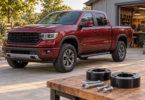
The best lift kit for a Toyota Tundra starts with the truck’s year, drivetrain and factory suspension. Our two picks cover different applications: Rough Country 76830 for eligible earlier trucks and the N3-equipped 70331 for eligible newer 4WD trucks. Neither is a universal Tundra kit.
This shortlist compares manufacturer specifications, exact kit configurations and installation manuals. We have not road-tested these kits; “best” means the stronger fit for the use described within this two-kit comparison. Confirm the exact SKU and your truck’s equipment with the manufacturer and installer before ordering.
Tundra lift kits at a glance
| Kit and best fit | Listed application | Advertised lift and package | Reasons to pause |
|---|---|---|---|
| Rough Country 76830: for retaining the original front strut assemblies | 2007–2021 Tundra 2WD/4WD listed; 2018–2021 manual coverage needs confirmation | 3.5-inch advertised kit; front spacers, control arms, rear blocks and N3 rear shocks | No TRD Pro, Rock Warrior or XSP-X; additional rear-sway-bar restriction |
| Rough Country 70331: for a newer 4WD truck needing replacement front struts | Model years twenty twenty-two through twenty twenty-six; 4WD with compatible conventional suspension | 3.5-inch advertised N3 kit; loaded front struts, rear coil springs and N3 rear shocks | No TRD Pro, AVS or factory rear air; manual includes air-dam trimming |
1. Rough Country 76830: best fit for keeping the original front struts
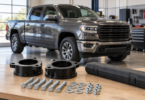
Choose the 76830 configuration if you want a spacer-based front lift with replacement upper control arms and N3 rear shocks. Its documented package also includes rear blocks and U-bolts, differential and skid-plate spacers, sway-bar brackets, bump-stop spacers and associated hardware.
The useful distinction is what the kit replaces: 76830 retains the existing front strut assemblies, so have their condition assessed before committing. A kit purchase does not resolve worn suspension components.
The current page lists 2007–2021 2WD and 4WD trucks, but the linked 76830 manual still carries a 2007–2017 heading. For a 2018–2021 truck, get the current installation document and written fitment confirmation. The page excludes TRD Pro, Rock Warrior and XSP-X. It also requires removal of the red rear sway bar on equipped TRD trucks; if retaining that equipment is a priority, choose another manufacturer-approved solution.

Rough Country 76830 3.5-Inch Tundra Lift Kit with N3 Rear Shocks
As an Amazon Associate we earn from qualifying purchases.
2. Rough Country 70331: best fit for a newer 4WD strut-and-spring package
The 70331 N3 configuration is the choice here for an eligible 4WD Tundra from model years twenty twenty-two through twenty twenty-six when you want loaded front struts as part of the package. The exact-variant documentation includes rear coil springs, N3 rear shocks, upper control arms, differential and sway-bar brackets, skid plates, brake-line brackets, a rear track-bar bracket and hardware.
Confirm 70331 on the order: the shared product page also offers spacer-based and other shock configurations. The listed application is 4WD, and the manufacturer excludes TRD Pro, Adaptive Variable Suspension (AVS) and factory load-leveling rear air suspension. Do not extrapolate this fitment to a 2WD truck or an excluded suspension package.
There is an installation caveat worth budgeting for. Although the product page advertises no cutting, the linked replacement-coil kit manual includes air-dam trimming. Follow the current manual and have a qualified installer confirm the supplied parts and required work before purchase.
What to check before buying
- Record the model year, 2WD or 4WD, trim, shock type and rear suspension. Tell the installer about existing lifts or other modifications. These two applications are separate; their rear blocks and rear coils are not interchangeable buying choices.
- Treat “3.5-inch” as an advertised kit designation, not a guaranteed final measurement at every corner or the thickness of every spacer. Measure the truck before choosing a target stance and have the installer explain the expected front and rear changes for your truck.
- Choose wheels and tires with the installer. Rough Country calls for test-fitting combinations because dimensions vary. Its manuals warn that larger, heavier wheels and tires can reduce braking performance and that a taller vehicle has greater rollover potential.
- Budget for professional installation, alignment and headlamp checks. Rough Country recommends a certified technician; both selected manuals require alignment after installation. Arrange the manufacturer’s “Warning to Driver” decal in the location specified by the current kit instructions, and keep those instructions with the truck.
- Do not add, alter or fabricate parts to raise the truck beyond the kit’s intended height. Both manuals advise against mixing component brands. Rough Country also instructs occupants to use seat belts and shoulder restraints at all times and avoid driving situations that could cause a sideways rollover.
- Arrange model-specific aftercare with the installer. The 76830 manual calls for ball-joint grease checks after 100 miles and every 3,000 miles, fastener retightening after 500 miles and component inspections during routine service. The 70331 manual specifies wheel retightening at 50 and 500 miles, with all kit components retightened at 500 miles and every 3,000 miles. Have the shop carry out the manuals’ brake, hose and steering-clearance checks and retain those checks in ongoing maintenance.
- If fitting larger tires with 70331, include speedometer recalibration in the plan: its manual explicitly requires it. This does not establish compatibility with Toyota’s driver-assistance systems.
Changing suspension height can affect vehicle safety systems. Toyota warns that aftermarket lifts can affect vehicle features or safety-system function. Before buying, ask Toyota and the installer how the exact proposed setup affects your truck’s driver-assistance systems and whether inspection or calibration is required. Do not assume these aftermarket kits have Toyota Safety Sense approval.
Do not treat a lift kit as permission to carry or tow more. Follow the truck’s owner’s manual, ratings and operating limits, and ask the installer how the proposed changes affect the way you use the truck. A higher stance is not evidence of a higher load rating.
Frequently asked questions
Will either kit fit every Tundra?
No. The 76830 and 70331 have different year and drivetrain applications plus explicit equipment exclusions. Neither shortlist entry covers the 2000–2006 Tundra; confirm a kit designed for that vehicle separately.
Can I use these on a TRD Pro or an AVS truck?
Both entries exclude TRD Pro. The newer 70331 also excludes AVS and factory rear air suspension. A familiar model name or a similar-looking truck is not sufficient fitment evidence.
Does a 3.5-inch lift guarantee a particular tire size?
No. Wheel dimensions, tire dimensions and the truck’s equipment all matter. Use the manufacturer’s exact wheel-and-tire guidance and an installer’s test fit before buying a combination.
Is this a simple driveway installation?
Rough Country recommends a certified technician and warns that missing the required knowledge can compromise vehicle safety. These kits involve suspension geometry and require post-installation checks and alignment; arrange a professional assessment before ordering.
Which of the two should I choose?
For an eligible earlier truck with serviceable front struts, start with 76830 and resolve the manual’s model-year discrepancy. For an eligible newer 4WD truck, compare the 70331 package if replacing the front struts and rear coils matches your plan. If your truck falls under an exclusion, neither is the right purchase.