
The best jewelry cleaner depends on what you own and what needs removing. A liquid for oily buildup on a diamond ring solves a different problem from a cloth for tarnished silver. Our shortlist covers three useful options: Weiman Fine Jewelry Cleaner for compatible fine jewelry, Connoisseurs Diamond Dazzle Stik for targeted brushing, and Connoisseurs UltraSoft Silver Jewelry Polishing Cloth for silver maintenance.
These are recommendations based on manufacturer directions and gemological care guidance, not a hands-on cleaning test. Identify the metal, every stone, any treatments and the condition of the setting before buying. If those details are unknown, have a jeweler assess the piece before using a chemical cleaner or machine.
Best jewelry cleaners at a glance
| Cleaner | Our pick for | Selected version | Main tradeoff |
|---|---|---|---|
| Weiman Fine Jewelry Cleaner | A dip with a tray and brush | One 6 fl oz jar | Material exclusions; not a silver tarnish remover |
| Connoisseurs Diamond Dazzle Stik | Targeted diamond-ring touch-ups | One 0.05 fl oz pen, model 1072 | Needs rinsing; not for pearls |
| Connoisseurs UltraSoft Silver Jewelry Polishing Cloth | Accessible surfaces of plain silver jewelry | One 11 × 14-inch cloth, model 1013 | Cannot reach every recess; must not be washed |
1. Weiman Fine Jewelry Cleaner: best dip-and-brush option
Choose the 6 fl oz Weiman Fine Jewelry Cleaner for compatible gold, platinum or titanium jewelry and suitable diamonds or sapphires. Its tray and brush make it a practical choice when you prefer a small cleaning station to a pen.
Swish the item in the tray, soak for no more than 30 minutes, rinse, then dry and buff with a soft cloth. Do not mix different metal types or colors in the bath.
What works: a ready-to-use liquid with the retrieval tray and brush included. What to watch: Weiman excludes costume jewelry, pearls, opal, coral, ivory, amber, malachite, jade, emeralds and turquoise. Its promotional copy inconsistently includes emeralds, but its FAQ and back label exclude them; follow that restriction. It is not our choice for silver tarnish. A stone’s name alone does not establish compatibility if it is filled, coated or otherwise treated.
2. Connoisseurs Diamond Dazzle Stik: best for targeted touch-ups
The Diamond Dazzle Stik, model 1072, puts a small quantity of cleaner onto a brush. That format suits someone who wants to clean around an accessible diamond setting without preparing a jar. The manufacturer specifies 0.05 fl oz and recommends it for diamonds, precious stones, and platinum or gold settings.
Its package directs you to wet the brush, turn the silver base until cleaner appears, brush the diamond and inside the setting, then rinse and dry the jewelry and rinse the brush. It is explicitly not for pearls. “Precious stones” is not clearance for every treated gem or mixed-material piece.
What works: controlled application and a compact format. What to watch: it still needs water for rinsing, and brushing requires care around prongs. Choose a cloth instead when the task is polishing a plain silver surface. Do not mistake a pen’s convenience for permission to clean an unidentified stone.
3. Connoisseurs UltraSoft Silver Cloth: best for plain silver surfaces
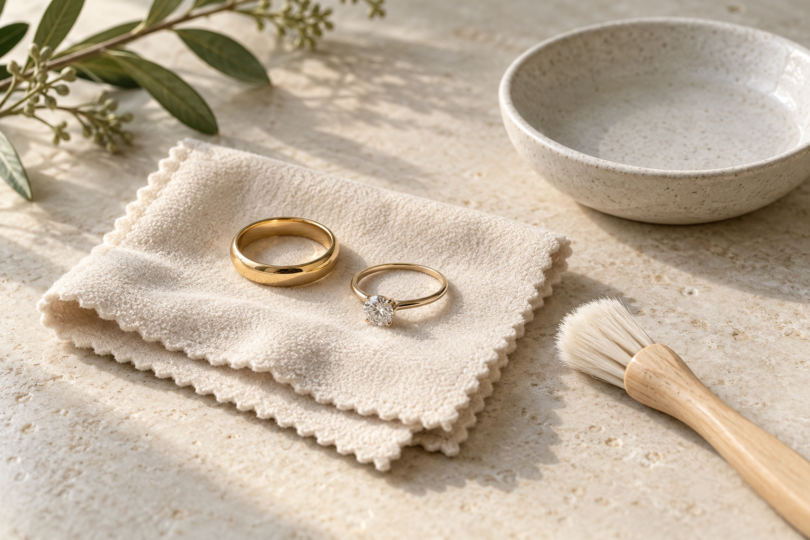
The 11 × 14-inch UltraSoft Silver Jewelry Polishing Cloth, model 1013, is our choice for a plain silver chain or bracelet whose accessible surfaces need tarnish removal. Select that size on the manufacturer page; it also lists a smaller 8 × 10-inch version.
Use the lighter inner cloth to clean and treat the silver, followed by the darker outer layer to buff. Connoisseurs says it can be reused but should never be laundered.
What works: no liquid bath, a generous working area and separate cleaning and buffing layers. What to watch: a cloth only cleans surfaces it can contact. This recommendation is deliberately limited to compatible silver surfaces; do not rub the treated layer over pearls, unknown gemstones, plated finishes or intentionally darkened details without the jewelry maker’s approval. Removing tarnish may be the wrong goal for a piece whose darker finish is part of its design.
How to choose without damaging your jewelry
Start with the whole piece. A ring can combine a durable stone, a fragile setting, a coating and other decorative materials. The most vulnerable part determines the cleaning method. A product’s long list of compatible metals does not answer questions about filled stones, glued components or an antique finish.
Separate dirt from tarnish. If your goal is removing residue around a compatible diamond setting, a brush-based product is useful. If the problem is darkened plain silver, the silver cloth is the more relevant purchase. Buying both makes sense only if your collection actually needs both jobs. Neither format promises to repair scratches, tighten prongs or restore missing plating.
Check the exact product. Connoisseurs sells several similarly named cleaners and multiple cloth sizes. Match the product name, size and package instructions before use. A silver dip, a fine-jewelry dip and a silver polishing cloth are not interchangeable. Follow the container you receive, and stop if it conflicts with the jewelry maker’s care instructions.
Know when a purchased cleaner is unnecessary. For suitable diamond jewelry, GIA describes gentle cleaning with water and a little mild dish soap, followed by a soft dedicated brush, rinsing and drying. Be especially gentle with fragile or tension settings and close the drain if working over a sink. Avoid toothpaste, household abrasives and chlorine bleach. This diamond-care advice is not a universal recipe for every gemstone.
What about ultrasonic jewelry cleaners?
An ultrasonic machine is a separate buying decision, not an automatic upgrade from these products. GIA warns that ultrasound can harm certain gems and treatments, and vibration can loosen stones. Pearls and other organic gems, fracture-filled stones, and gems with sensitive coatings or impregnations require particular caution. Opal, turquoise and topaz are among the materials GIA says should not be ultrasonically cleaned.
Before purchasing a machine, ask a jeweler whether your particular pieces are suitable. Then check the exact machine manual and solution directions together. A solution that permits use in a machine does not make the jewelry safe for ultrasound. We are not recommending a machine here because the simpler choices serve the stated cleaning jobs without assuming ultrasonic compatibility.
Pearls and emeralds need a different decision
For pearls, GIA recommends a very soft, clean cloth after wearing. It allows warm, soapy water for occasional thorough cleaning and says to let the string dry completely before wearing strung pearls. Never use an ultrasonic or steam cleaner. None of the three products above is our recommendation for cleaning pearl surfaces.
For emeralds, GIA favors warm, soapy water and gentle cleaning; heat, chemicals and ultrasonic vibration can affect fractures and their fillings. Ask about the actual treatment and setting before using a commercial dip. Do not use the Weiman product above on emeralds, even if a retailer repeats its broader marketing claims.
Which one should you buy?
Pick Weiman if your compatible jewelry benefits from a tray and a separate brush. Pick Diamond Dazzle Stik if a portable, targeted applicator better fits your routine. Pick the 11 × 14-inch UltraSoft Silver Cloth for accessible plain silver surfaces. For a collection dominated by pearls, emeralds, fragile antiques or unidentified stones, professional identification and care advice should come before the purchase.
Frequently asked questions
Is one jewelry cleaner safe for every gemstone?
No. Match the cleaner to the metal, every stone, treatments and setting. A broad compatibility claim does not establish that a particular filled, coated, fragile or mixed-material piece can tolerate it.
Can I use Weiman Fine Jewelry Cleaner on emeralds?
No. Weiman’s FAQ and back label exclude emeralds, despite broader promotional wording elsewhere on its page. Follow the narrower restriction.
Does Diamond Dazzle Stik need rinsing?
Yes. Its package instructions call for rinsing and drying the jewelry after brushing, and rinsing the brush. Do not use it on pearls.
Can I wash the Connoisseurs silver polishing cloth?
No. Connoisseurs says the UltraSoft Silver Jewelry Polishing Cloth can be reused but should never be laundered. Its inner layer is treated for cleaning and the outer layer is for buffing.
Are ultrasonic cleaners safe for diamond rings?
Not automatically. Treatment, inclusions and the setting matter. GIA warns about fracture-filled diamonds and loose or vulnerable settings. Have a jeweler assess the ring before using an ultrasonic cleaner.