
Choose a pool chlorine dispenser by chemical compatibility and installation type, not by appearance or tablet capacity alone. A Pentair 330 floating dispenser is one option for a pool that permits a floater; a Pentair Rainbow 320 is an installed feeder to discuss with a qualified pool professional.
Never mix pool chemicals in a dispenser. “Chlorine” covers different chemical formulations, and products that look like similar white tablets are not automatically interchangeable. Use only the exact chemical type allowed by both the feeder instructions and the chemical label.
Research checked October 4, 2026. We reviewed Pentair product documentation and CDC pool-care guidance. We have not tested dosing consistency, material durability or water-treatment performance. This guide compares equipment; it does not prescribe a tablet count, valve setting or chemical dose for an unspecified pool.
Floating dispenser or installed feeder?
| Option | Why compare it | Verified design | Main limitation |
|---|---|---|---|
| Pentair 330 floating dispenser | A removable dispenser without plumbing installation | Twist-lock cap and adjustable control ring; compatible labeled tablet sizes | Can drift, become trapped or allow concentrated chemical contact near surfaces |
| Pentair Rainbow 320 feeder | A fixed component in a compatible circulation system | Installed, enclosed tablet feeder with an external control valve | Requires correct installation, pressure-safe servicing and ongoing testing |
1. Pentair 330: a simple floating option when the pool permits it
The Pentair 330 has a twist-lock cap, adjustable control ring and foam-filled construction. The manufacturer lists it for slow-dissolving trichlor or bromine tablets. That means an allowed choice of chemistry, never a mixture in the same dispenser.
The product page lists capacity for six 3-inch tablets or 3 pounds of 1-inch tablets. Capacity tells you what fits; it does not tell you how much your pool needs. Confirm that your pool manufacturer allows a floating dispenser and the intended chemical before buying one.
Tradeoff: a floater is not a fixed dosing system and can collect near steps or other surfaces. Pentair’s 330 instructions warn that tablets escaping an unsecured cap can bleach the pool surface. The manual also says the dispenser is not a toy and recommends removal when children or a heavy bather load use the pool.
Follow the pool and chemical instructions for handling and temporary storage. Do not leave a loaded dispenser where a child or pet can reach it. Ask the manufacturer about the correct protective-screen accessory for your exact version rather than assuming every similarly numbered part fits.
2. Pentair Rainbow 320: for a professionally checked installed system
The Rainbow 320 family uses an enclosed feeder in the pool’s circulation plumbing. It is a different purchase from a floating container: model selection, plumbing arrangement, flow and servicing access all need to fit the existing system.
Its installation guide specifies slow-dissolving trichlor or bromine tablets and warns against calcium hypochlorite and other incompatible chemicals. It also contains important instructions for opening, pressure control and installations below water level.
Our recommendation: use a qualified pool professional to confirm the exact feeder, chemical and installation. Do not improvise connections, bypass safety components or open a pressurized feeder. Have the installer explain the correct refill and shutdown procedure using the current manual.
Tradeoff: an installed feeder costs more than its purchase price once fitting and maintenance are included. It still needs water testing and adjustment; an adjustable valve is not a sensor that automatically knows your pool’s chlorine level.
Compatibility checks before purchase
- Identify the chemical precisely. Read the active ingredient and formulation on the original container. Tablet diameter alone is not a compatibility test.
- Check the pool and surface instructions. Confirm whether a floater is permitted and whether concentrated tablet contact can damage the liner, steps or other materials.
- Match the equipment configuration. For an installed feeder, a professional should check the plumbing, operating conditions and manufacturer requirements.
- Check replacement parts. Confirm the correct cap, seals, control parts and any screen for the model revision. Do not choose a seal lubricant without the feeder manufacturer’s approval.
- Know the used equipment’s history. If a secondhand dispenser’s previous chemical is unknown, do not refill it on guesswork. Ask the manufacturer or a qualified pool professional what to do.
A dispenser does not replace water testing
The CDC recommends testing chlorine concentration and pH at least twice daily, and more often with many swimmers. It identifies DPD testing as more accurate than ordinary strips and emphasizes following the test manufacturer’s directions.
Sunlight, contamination and swimmer load can change demand. A fixed number of tablets or a remembered dial position is therefore not a reliable promise of suitable water. Follow the chemical label and professional pool-care advice, and do not allow swimming when the readings or conditions are outside the applicable limits.
Trichlor contains cyanuric acid, so stabilizer management also matters. CDC distinguishes pools using stabilizer from those without it and advises against cyanuric-acid-containing chlorine products in hot tubs. This pool comparison should not be transferred automatically to a spa or hot tub.
Handle and store pool chemicals carefully
CDC’s chemical-injury prevention guidance says to read the label before use, use the required protective equipment and handle chemicals in a well-ventilated area. Keep different products separate. Mixing chlorine with acid can release toxic gas; mixing different chlorine products can also cause dangerous reactions.
Keep chemicals in their original labeled containers, closed and secured away from children and pets according to the label. Keep the dispenser and refill supplies separate from food, drinks and ordinary household containers. Do not crush tablets or put shock granules, cleaning products or liquid chemicals into a tablet dispenser unless its exact instructions explicitly permit that product.
If there is an unexpected reaction, strong fumes, smoke or a spill you are not trained to handle, move people away and seek emergency help. Do not lean over the opening, add another chemical to neutralize it, or improvise a cleanup.
Frequently asked questions
Can any chlorine tablet go in any dispenser?
No. Match the chemical formulation and size to the exact equipment manual. The trichlor-compatible products discussed here are not automatically suitable for calcium-hypochlorite tablets.
Does a larger dispenser mean less maintenance?
It may hold more product, but it does not reduce the need to test water, inspect the equipment or follow the chemical label. Buying extra capacity is not a dosing plan.
Which type should I compare first?
Consider the 330 only if your pool and chemical instructions allow a floater. Discuss the 320 with a professional when you want an installed feeder compatible with your circulation system.
Bottom line: begin with the pool, chemical and manual. A compatible dispenser plus regular testing is more useful than a large container chosen without those checks.
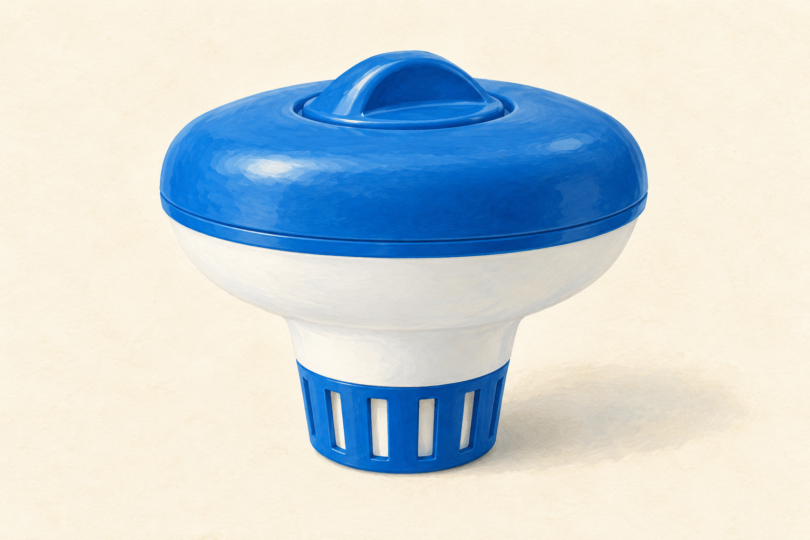
Image note: AI-generated generic editorial illustration; it does not identify a product or demonstrate chemical loading, dosing or safe installation.