

The best resin for jewelry depends on what you are making. For small molded pieces, start with a casting epoxy such as LET’S RESIN Crystal Clear Epoxy Resin. For a thin decorative coating, consider ArtResin. For small, light-accessible designs, LET’S RESIN Clear UV Resin – Hard Type is an option if you also have a compatible curing lamp.
The important distinction is whether the formula suits the shape, thickness and curing conditions of your project. A fast-looking surface finish does not establish that the entire piece has cured. Below, we compare three real products, explain the trade-offs and link the manufacturers’ instructions and safety information.
Research checked October 4, 2026. This is a manufacturer-documentation comparison, not a hands-on test. We have not independently tested clarity, wear resistance or long-term yellowing.
Which type of jewelry resin should you buy?
| Product | Best fit in this comparison | Curing information | Main limitation |
|---|---|---|---|
| LET’S RESIN Crystal Clear Epoxy Resin | Small molded jewelry and shallow castings | The linked casting manual distinguishes 8–24-hour demolding from a 2–3-day full cure under its stated conditions. | Check the manual’s project-size and environmental limits; thin pieces can take longer. |
| ArtResin Epoxy Resin | Thin decorative coatings on jewelry components | The technical sheet lists a 24-hour hard cure and a 72-hour full cure. | Designed for thin layers of about 1/8 inch; confirm the cure requirements for your design. |
| LET’S RESIN Clear UV Resin – Hard Type | Small, transparent or translucent designs with good UV-light access | Requires a suitable UV resin lamp and the product’s specified exposure conditions. | Deep or opaque molds and light-blocking decorations can prevent complete curing. |
Cure figures are the manufacturers’ guidance, not a promise for every mold or workspace. See the LET’S RESIN casting manual, ArtResin technical data sheet and LET’S RESIN UV-curing guidance before choosing.
1. LET’S RESIN Crystal Clear Epoxy Resin: for small molded pieces
This two-part casting epoxy is a sensible starting point when you want to make several pendants or other small mold-based pieces in a batch. The manufacturer identifies jewelry among its intended craft applications and provides a casting manual plus separate safety data sheets for the resin and hardener on its product page.
Why consider it: a casting formula is the relevant category when the resin forms the body of the piece. Unlike a light-cured formula, this product does not depend on UV reaching every part of the design.
What to watch: the manual gives different times for removing a piece from a mold and for reaching full cure. It also notes that small, thin castings may need additional time. Plan the finished-piece deadline around full cure, and confirm that the exact mold and inclusions fit the current instructions. This guide does not reproduce a mixing recipe or recommend changes to the formula.
2. ArtResin Epoxy Resin: for thin decorative coatings
ArtResin is a coating-focused option for a shallow glossy finish over a jewelry component. The manufacturer describes its original purpose as a high-gloss artwork coating and includes jewelry among creative uses. That makes it a more relevant comparison for a surface finish than for a large, thick casting. See ArtResin’s explanation of its coating formula.
Why consider it: the maker publishes separate hard-cure and full-cure times, making it easier to plan finishing and packaging. Its technical sheet also gives a cured heat limit of 122°F / 50°C. Finished resin jewelry should not be treated as heatproof.
What to watch: a resin described as suitable for coating is not automatically suitable for every thick mold or unsupported dome. ArtResin’s FAQ describes a formula designed for thin layers of about 1/8 inch. Check the design against that guidance before buying.
3. LET’S RESIN Clear UV Resin – Hard Type: for small light-cured designs
This is worth considering when you prefer a single-component craft resin for small details rather than preparing a two-part epoxy batch. Choose the exact Clear UV Resin – Hard Type; the brand also sells other UV formulas, and their properties should not be assumed identical.
Why consider it: UV curing can suit small decorative pieces whose resin receives the necessary light exposure. Lamp compatibility belongs on the shopping list alongside the bottle.
What to watch: the manufacturer warns about deep or opaque molds, incompatible pigments and excessive fillers blocking light. A metal bezel or dense decoration may complicate light access. Ask the maker whether the complete design can cure properly; a hard-looking top alone is insufficient evidence. Its curing troubleshooting page explains these restrictions. We do not give a universal minute count because lamp output, geometry and additives matter.
What to check before buying jewelry resin
Match the formula to the job
A molded pendant, a thin coating and a raised dome are three different purchasing problems. Start with a drawing or mold dimensions, then find a formula whose instructions cover that use. If the label only discusses coating, ask before treating it as casting resin. A large bottle does not make an unsuitable formula a bargain.
Check the whole design, including color and inclusions
Ask about the mold, pigments, flowers, paper, metal findings and any other materials you plan to include. Compatibility is specific to the formula. With UV resin, light transmission is especially important. For epoxy, moisture and unsuitable additives can also interfere with the result, as the casting manual explains.
Budget for the complete setup
Compare the total kit contents and usable quantity, then add the cost of suitable molds, required protective equipment and, for UV resin, a compatible lamp. Check whether a listing includes both epoxy components or only a replacement bottle. Buy an amount you can realistically use within the maker’s storage and shelf-life guidance.
Separate appearance claims from proven performance
Terms such as crystal clear, bubble-free and yellowing-resistant are marketing descriptions unless supported by relevant testing. We have not run comparative aging tests. For an important keepsake, prioritize clear instructions, accessible support and a documented fit for your project over an unsupported promise that a resin will stay perfect indefinitely.
Safety, curing and the limits of finished jewelry
Read the current label and safety data sheet for every component before purchase and use. Review the required ventilation, chemical-resistant gloves, eye protection and any additional exposure controls. A low odor does not remove those requirements. The linked safety sheets identify irritation or sensitization hazards; being sold for crafts is not proof that uncured resin is harmless.
- LET’S RESIN epoxy: read its resin Part A SDS and hardener Part B SDS, linked from the product page.
- ArtResin: use the country-appropriate resin and hardener sheets in its official SDS library.
- LET’S RESIN UV: read the maker’s UV Resin SDS and confirm that it matches the exact product supplied and your location.
Do not wear, gift or sell a piece that remains tacky, soft or has uncertain curing. Keep it out of use and consult the maker rather than trying an improvised fix. Complete curing is necessary, but it does not by itself certify a finished piece for prolonged skin contact. This comparison makes no skin-safe, food-contact, body-piercing or medical-use claims. Confirm the intended finished use with the manufacturer, including any added pigments or coatings.
Frequently asked questions
Is epoxy or UV resin better for jewelry?
Choose by the project. A small-casting epoxy is a useful starting point for mold-based batches. UV resin is a candidate for small designs with adequate light access. A thin decorative coating calls for a coating-compatible formula. None is the best choice for every piece.
Can I wear the jewelry as soon as it comes out of the mold?
Do not equate demolding with full cure. Follow the exact product’s complete cure requirements and confirm its suitability for the finished use before wearing it.
Does UV-resistant epoxy cure under a UV lamp?
No. UV resistance describes resistance to light-related aging; it does not turn a two-part epoxy into a UV-curing resin. Buy a product specifically designed for your curing method.
Can I use any UV lamp?
Do not assume so. Match the lamp to the resin maker’s requirements, including the relevant light output and exposure instructions. A lamp timer alone does not establish a complete cure.
Which is the cheapest option?
There is no fixed winner without your project size and existing equipment. Compare total setup cost and usable kit quantity, including a lamp if needed. We do not quote live prices or availability because they change.
How we chose these options
We selected three identifiable products that illustrate small casting, thin coating and UV-curing choices, then checked official product pages, instructions and safety documents. Recommendations describe the project each formula is worth considering for. They are not test scores or an exhaustive ranking of every resin. Manufacturer links are provided so you can check the current version and resolve project-specific questions before purchase.
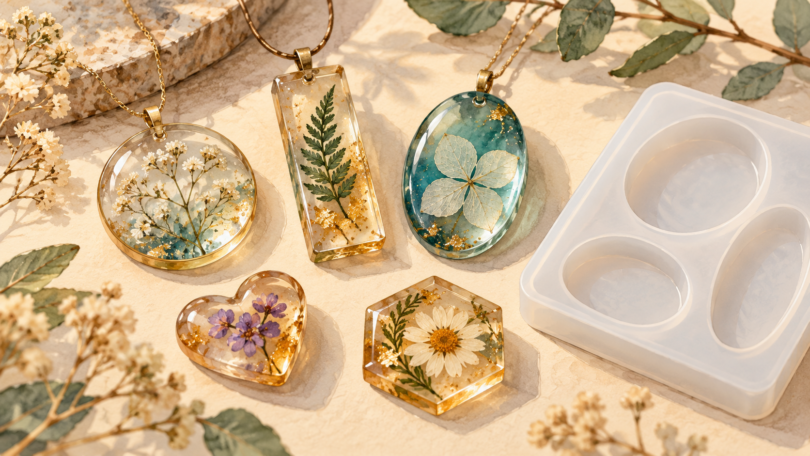
Image note: Illustrative resin-jewelry still life showing finished pieces and an empty mold; no specific product, formulation or suitability is represented.


