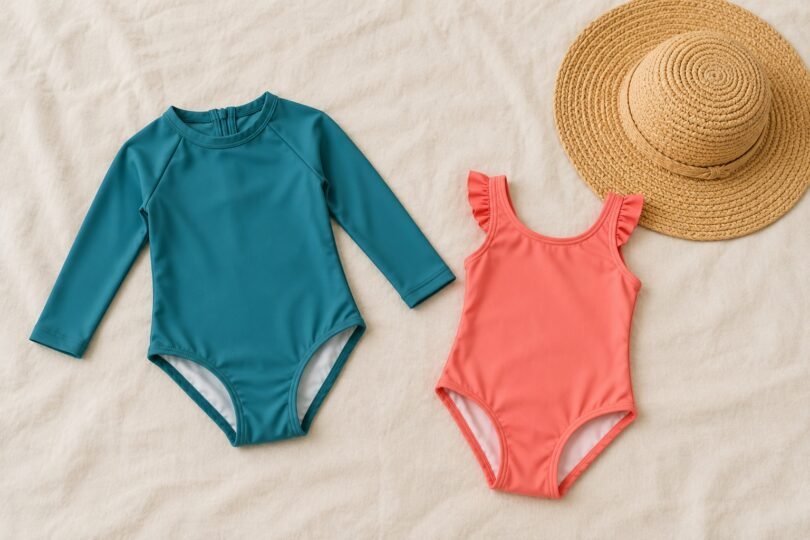

The best toddler girl swimsuit is the one that fits comfortably, gives you the coverage you want, and comes off without a struggle when it is time for a diaper change or bathroom break. For outdoor swimming, start by comparing long-sleeve rashguard options with a stated UPF rating. For indoor lessons, a straightforward one-piece can be a practical choice. In either setting, fit matters more than buying a bigger size to last another season.
This guide compares useful features and specific manufacturer-listed examples. It does not rank swimsuits by unverified scores or claim hands-on testing. No swimsuit replaces close adult supervision around water.
Choose the swimsuit style around your routine
- Classic one-piece: A simple option when you want one garment to keep track of. Check the straps, neckline, and torso length. Sleeveless designs leave more skin exposed outdoors, and many require removing the upper half for bathroom breaks.
- Long-sleeve one-piece rashguard: Combines arm and torso coverage without a separate top that can ride up. Look closely at the zipper and whether the chosen size has bottom snaps. A long-sleeve suit with brief-style legs still leaves much of the legs uncovered.
- Rashguard top and separate bottoms: Worth considering during toilet training because the bottoms can be removed separately. Check that the top overlaps the waistband when your child reaches overhead. A cropped top and a longer rashguard provide different coverage.
- Rashguard with swim shorts: A useful alternative when you prefer more thigh coverage. Confirm that both pieces are included; a product photo showing a complete outfit does not always mean it is sold as a set.
Decorative ruffles and favorite colors can make a suit appealing, but first narrow the options by coverage, changing access, and fit. Then let your toddler choose between the practical options.
How to get toddler swimsuit sizing right
Use the size chart on the exact product page, rather than treating 2T or 3T as a universal measurement. For example, the RuffleButts chart linked below lists 2T at 34–36 inches and 26–31 pounds. The Little Planet strawberry set chart lists 2T at 35–36.5 inches and 29–31 pounds. Those ranges overlap, but they are not identical.
Measure current height and weight before ordering, and follow any additional measurement instructions the brand supplies. If measurements fall into different sizes, ask the manufacturer which dimension should guide that particular style. A longer torso can change how a one-piece fits even when its width looks right.
For a dry try-on, keep the tags and hygiene liner intact and follow the seller’s return conditions. If your child wears a swim diaper, check the intended layers together without damaging or soiling the garment.
- Have your toddler raise both arms, squat, and sit. Look for pulling at the shoulders or crotch.
- Check for large gaps at the neckline, arm openings, waist, and leg openings.
- Run a finger along seams and the zipper backing to check for rough edges.
- Make sure sleeves allow comfortable movement and that a two-piece top stays over the waistband.
Do not buy an obviously loose suit just for growing room. If moving up a size fixes torso length but creates large gaps elsewhere, try a different cut or separates.
Three manufacturer-listed designs to compare
These examples illustrate different buying priorities. Features are taken from the linked manufacturers, and comfort still needs to be checked on your child. Confirm the selected size, color, included pieces, delivery terms, and return eligibility before ordering.
For a ruffled long-sleeve one-piece: RuffleButts Beach Day
The Beach Day Long Sleeve One Piece Rash Guard Swimsuit, SKU 1SW0337-00-P1101, is described with UPF 50+ fabric, a quarter zipper, snaps, and rear ruffles. Its one-piece construction is worth considering if you want continuous torso coverage rather than a separate shirt.
Check before buying: The page labels this item final sale. Verify the size carefully and confirm the changing features for your selected size. The manufacturer describes stretch and resistance to snagging and pilling; those are product claims, not results from our own wear testing.
Separate-bottom feature reference: Little Planet Strawberry Print two-piece
Availability note: Carter’s page showed this style as out of stock when checked on October 7, 2026. It is included as a feature-comparison reference, not a current purchase recommendation.
The Little Planet toddler Strawberry Print rashguard set at Carter’s, style V_2U787610, pairs a long-sleeve top with separate bottoms. The listed features include UPF 50+, a functional half zipper, and a protective tab over the zipper. The fabric is specified as 83% recycled polyester and 17% elastane.
What to look for in a similar set: Two pieces mean a top and bottoms, not two complete swimsuits. Assess waistband fit and top overlap during a try-on. Separate bottoms may suit bathroom breaks, but both pieces still need to fit well together.
For bottom-snap access: Primary baby one-piece rash guard
The Primary baby one-piece rash guard is another long-sleeve option. The product page lists UPF 50+, a front half zipper, bottom snaps, and an 80% recycled nylon/20% spandex fabric. Despite the baby name, its size selector includes sizes 2 and 3 alongside month-based sizes.
Check before buying: Follow Primary’s own size guide rather than assuming size 2 matches another brand’s 2T. The snaps are a relevant feature for diaper access; they do not make the swimsuit a swim diaper. Select the single garment if that is what you need, rather than a similarly named bundle.
What UPF 50+ does, and what it cannot do
UPF describes ultraviolet protection provided by clothing. Cancer Council Australia explains UPF ratings and classifies UPF 50 and 50+ as excellent protection, with about 98% of UV blocked in the relevant rating conditions. That does not mean a child wearing the garment has full-body protection.
Coverage is just as important as the number: bare legs, hands, the face, and exposed areas around openings remain uncovered. Stretching and wetness can affect protection, so read the manufacturer’s guidance for the specific fabric and avoid assuming every material performs identically when wet.
Use shade, a suitable sunhat, and sunscreen on exposed skin as part of the plan. The American Cancer Society recommends broad-spectrum SPF 30 or higher. Follow the sunscreen label for application and reapplication, including after swimming. UPF on a clothing label and SPF on sunscreen are different ratings.
Swim diapers need their own fit check
If your toddler is not toilet trained, check the pool’s swim-diaper requirements before choosing layers. A regular swimsuit is not automatically a reusable swim diaper, even when it has a lining or snug leg openings. Make sure the required diaper fits under the suit without distorting the waistband or leg openings.
The CDC’s swim-diaper guidance says these products may hold some solid stool but are not leakproof and do not stop diarrhea-causing germs from entering water. Check them frequently, about every hour, and change them in a designated changing area away from poolside. Wash hands afterward. A child with diarrhea should stay out of the water.
Keep water safety separate from swimwear features
The American Academy of Pediatrics advises an adult to be in the water within arm’s reach of infants and toddlers. Choose a responsible supervising adult who can swim and stay focused. A bright print, rashguard, or familiar pool does not replace that attention.
CDC drowning-prevention guidance also stresses continued supervision after swim lessons and when lifeguards are present. Children should wear life jackets for activities in and around natural water. Air-filled or foam pool toys are not safety devices. Treat swimwear as clothing, not flotation equipment.
A quick checklist before you order
- Choose the coverage and changing access that suit your usual swim routine.
- Compare current measurements with the exact garment’s chart.
- Confirm whether the listing contains one garment, a two-piece outfit, or a multipack.
- Read the care label and return conditions, especially for final-sale styles.
- Plan the required swim diaper, sun protection, and adult supervision separately.
For many outdoor outings, a well-fitting long-sleeve rashguard is a sensible starting point. Choose separate bottoms for easier bathroom access or a snap-bottom one-piece when diaper changes are the bigger concern. The most useful purchase is the suit that fits today’s needs and is comfortable enough for your child to move in.