
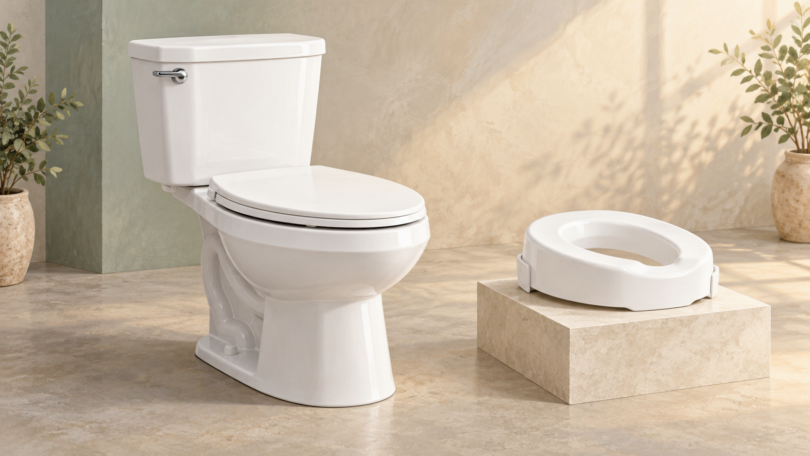

The best toilet for an older adult is the one that fits the person, the room and the way they sit down and stand up. Start by separating three decisions: replacing the toilet, raising an existing seat, or adding a purpose-built support. Those options solve different problems; a product marketed for seniors does not automatically solve all three.
If toilet use feels unstable, needs hands-on help or has become difficult because of weakness, ask a healthcare professional about an occupational or physical therapy assessment. MedlinePlus recommends this referral when bathroom modifications are uncertain. This guide explains what to compare; it cannot assess a person’s balance, strength or transfer technique.
Choose the right type of toilet equipment
A replacement toilet changes the permanent fixture. It is worth investigating when the existing toilet needs replacement or the planned bathroom layout is changing. A raised seat keeps the existing fixture and adds a seating surface; a support frame provides handholds rather than necessarily changing seat height. Decide which function is missing before comparing brands.
A toilet footstool, shower chair, bidet attachment and commode are not interchangeable purchases. A footstool is not a seat riser, and a shower-chair label does not establish over-toilet use. Ask for the exact intended use in the manufacturer’s instructions rather than repurposing an item because it appears in a bathroom-products list.
Choose seat height for the user, not the label
The 2010 ADA Standards, section 604.4 specify 17–19 inches from the finished floor to the top of the seat for the adult toilets they cover, with a 15–19-inch residential-dwelling exception. These are accessibility requirements within the standards’ scope, not a prescription for every private home or every older adult. “Comfort height” and “Universal Height” labels still need to be checked against actual measurements.
More height is not automatically better. Kingston and Richmond NHS guidance says users of its assessed raised-seat equipment must be able to place both feet flat on the floor. Treat this as a reason to check the person’s seated position, not to order the tallest riser. Compare the finished seating surface, including the intended seat or attachment, rather than a bowl-only measurement.
Also ask whether the opening, front-to-back seating space and distance between any arms suit the user. A product’s maximum load does not answer those fit questions. If a wheelchair or caregiver is involved, have the whole approach and transfer reviewed rather than selecting equipment from height alone.
Three manufacturer examples, with different jobs
The following are specification examples to help you compare equipment, not a ranked list or a claim of hands-on testing. None is a universal recommendation. The exact model, installation and individual fit must all be appropriate before purchase; similarly named versions can have different dimensions or fittings.
TOTO Drake CST776CEFG: a complete replacement toilet
TOTO lists the Drake CST776CEFG as a two-piece elongated toilet with a 12-inch rough-in and a separately purchased seat. The specification sheet gives water use as 1.28 gallons per flush and identifies the CST776CEFRG variant as having a right-hand trip lever. Do not assume a different Drake model or a retailer’s bundle contains the same bowl, tank, seat or lever configuration.
This is a useful example when a permanent replacement is the intended project, not when the only goal is adding removable handholds. Confirm the completed seat height with the selected seat. TOTO’s ADA note also depends on the trip lever being on the approach side; the label does not certify the rest of your bathroom layout.
Use the manufacturer-linked installation manual with the installer. It defines rough-in from the finished wall to the flange center and distinguishes 10-inch models with a different suffix. It also gives a special warning for back-to-back toilet installations, cautions against overtightening china fittings and requires leak checks. Existing plumbing and a stable installation need checking before this model can be treated as a suitable replacement.
Drive 12013: an add-on raised seat for elongated bowls
The Drive 12013 is a raised seat, not a replacement toilet. Drive specifies a nominal 5-inch rise, a 300-pound capacity and removable arms with 21 inches between them. Its listed application is most elongated bowls, not every toilet. Confirm the exact bowl shape, front rim and secure fit; the same brand name on another riser is not compatibility evidence.
The currently linked 12013 owner’s manual is marked revision 2.02.28.14. It warns that the arms assist sitting and standing but must not carry the user’s full body weight during a transfer. It also requires a secure, stable attachment and says not to use the seat if it cannot be fitted properly. The manual also calls for assistance or supervision for users with physical limitations; the seat capacity does not override its arm-load warning.
Drive RTL12000: support arms without a raised seat
The Drive RTL12000 support frame is a separate category. Drive lists a 300-pound capacity and two arm-spacing settings: 19 or 23.5 inches. Its comparison chart gives an adjustable arm height of 28–32 inches. These are support-frame measurements, not toilet-seat heights. Consider it only if hand support is the identified need and its footprint and mounting arrangement fit the existing toilet and room.
The RTL12000 instructions attach its bracket at the toilet’s existing seat-bolt positions and require the adjustment buttons to be securely engaged. A frame that can be assembled is not automatically appropriate for a wheelchair transfer or a person who needs lifting assistance. Have the transfer method and clearance assessed; do not substitute a frame’s weight rating for that assessment.
Check the room, not just the product
The US Access Board’s toilet-room guide treats approach space, transfer clearance, grab bars and controls as part of the same layout. Its ambulatory toilet compartments serve a different purpose from wheelchair-accessible ones. For a home project, discuss the user’s route, door swing, side access and any helper’s working space with the assessor and installer. A taller toilet alone does not establish an accessible room.
Where grab bars are needed, their location and secure mounting matter. MedlinePlus warns against using towel racks as supports. Avoid assuming that a convenient nearby fitting is a handhold designed for body weight. A wall-mounted bar and a seat-mounted arm have different instructions and load paths; use the directions for the actual equipment.
Include the route to the toilet in the plan. CDC fall-prevention guidance recommends removing trip hazards, adding grab bars beside the toilet and improving lighting. Keep those changes on the shopping and installation checklist alongside the fixture, rather than treating a toilet purchase as the entire fall-prevention plan.
Compare flushing and everyday maintenance
A WaterSense label indicates independent certification for water efficiency and flushing performance. It does not establish comfort, hand-support strength or personal transfer safety. Compare flushing features after basic fit is resolved, and ask whether the user can reach and operate the control in the intended seated position.
Read the cleaning instructions for each component instead of applying one cleaner to the toilet, plastic riser and frame alike. For example, TOTO’s manual warns against in-tank bowl cleaners because they can damage tank fittings and cause leaks. Keep the exact instructions accessible to whoever will clean or maintain the equipment.
What to confirm before ordering
Make a short written comparison for the person choosing the equipment, the installer and, where needed, the therapist. Leave unknowns visible instead of filling them with assumptions from a marketplace title.
- Exact model and variant, with the current manufacturer instructions.
- Finished seat height, bowl shape, opening and usable space between arms.
- How the person approaches, sits, stands or transfers, including any help needed.
- Mounting points, floor and plumbing conditions, and room clearance.
- All required parts, installation cost, cleaning access and the seller’s return conditions.
For the bracket-fitted raised seat covered by the NHS leaflet, loose fittings, poor toilet fit, or balance problems and spasms that could loosen the brackets are reasons not to use that equipment. Follow the actual product’s checks before use, and ask for reassessment if it no longer fits the person or the toilet.
Frequently asked questions
What height toilet is best for seniors?
There is no single best height for everyone. The ADA’s adult 17–19-inch range measures to the seat top in covered settings; it is not a universal home prescription. Choose height around the person’s assessed seated position and transfer needs.
Is a raised toilet seat always better than replacing the toilet?
No. A riser keeps the existing toilet, while a replacement changes the fixture. Compare the actual problem, fit, maintenance and installation requirements. If the existing seat height is suitable and hand support is the missing function, raising it may not be the right project.
Can I use raised-seat arms for a full-body-weight transfer?
Do not assume so. Drive’s 12013 manual specifically says its arms must not carry full body weight during transfers. Follow the exact equipment instructions and get advice on the transfer method; a seat’s weight capacity is not an unrestricted arm-load rating.
Does an ADA-labeled toilet make the bathroom wheelchair accessible?
No. The complete layout must address access, transfer space, controls and supports. The Access Board distinguishes ambulatory compartments from wheelchair-accessible arrangements, so a product label or taller bowl alone cannot establish wheelchair access.
Who can help choose a safer toilet setup?
Ask your healthcare provider about an occupational or physical therapist if you are unsure which bathroom changes are needed. MedlinePlus notes that a therapist can assess the bathroom and recommend changes. An installer then checks the specific fixture, mounting and plumbing work.


